Bricks On Display 2.0: The Bricks
Posted by Huw,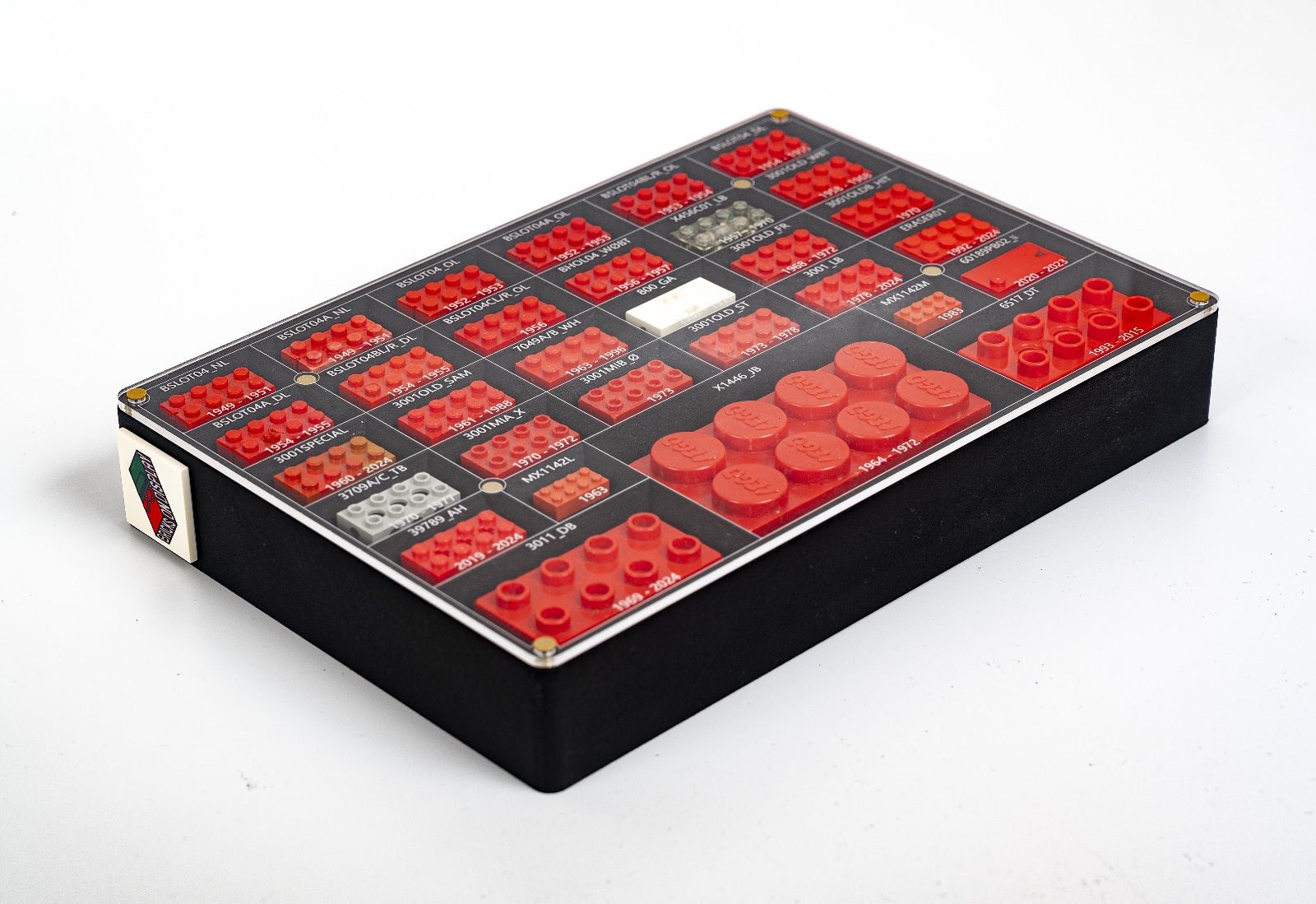
This is a follow-up to the article Bricks On Display 2.0 by Carlos José Baragaño Móner that we published last week.
In this part, he details the history, provenance, and unique features of all the bricks included in the display case.
Now, let's look at every brick in detail: I have ordered this list as they appear in the display case rather than chronologically.

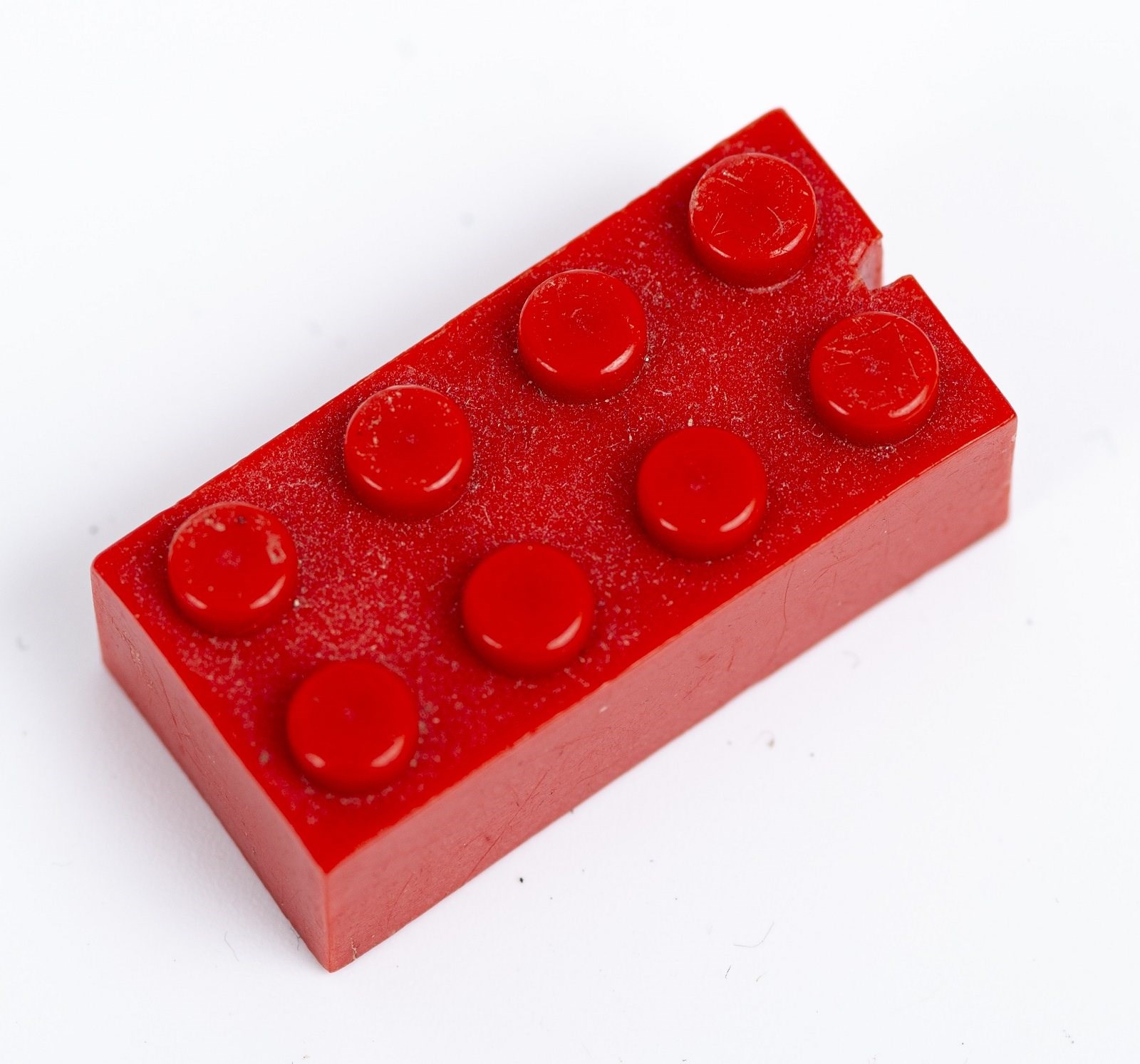
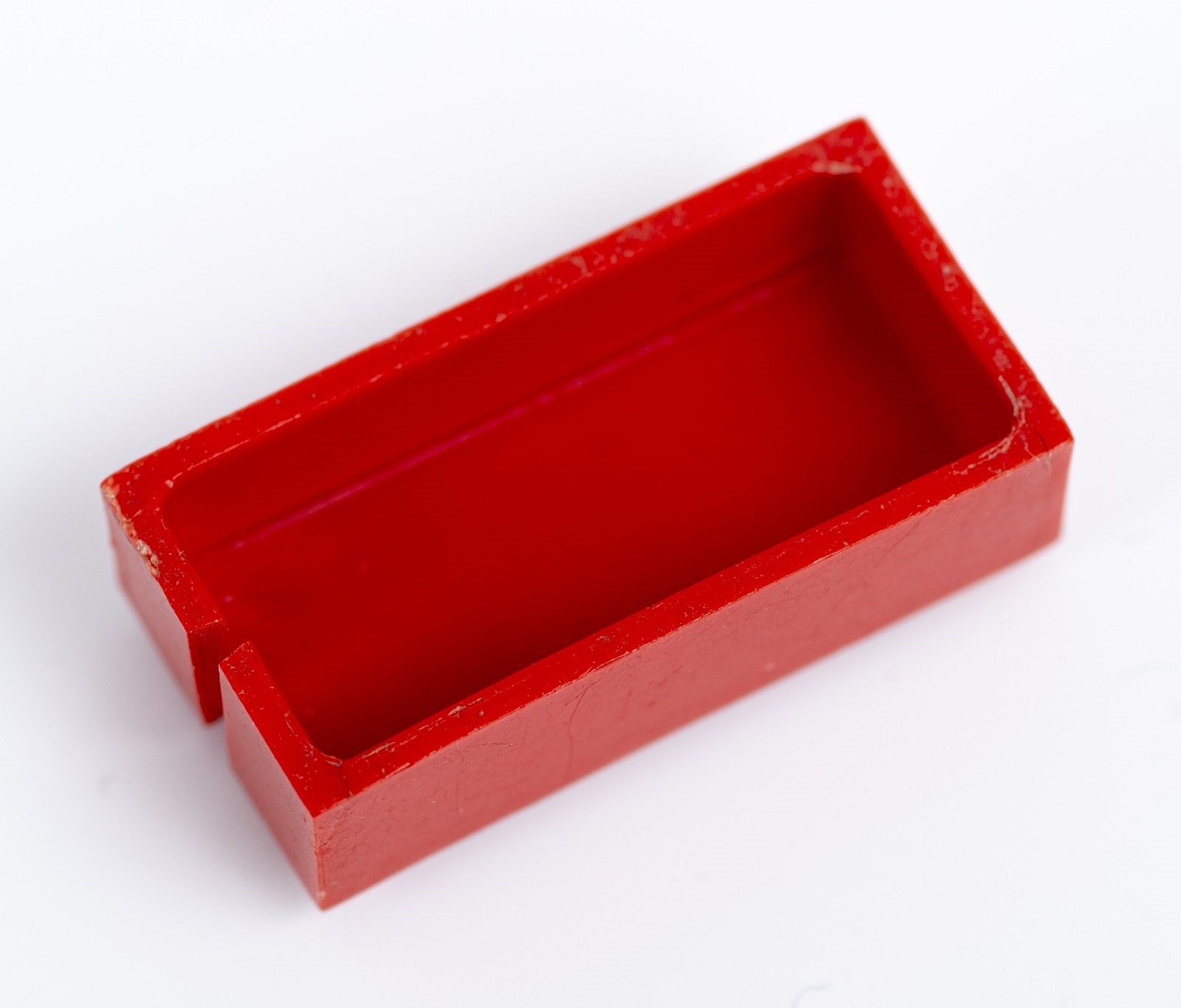
BSLOT04_NL 1949–1951
Brick 2x4 without Bottom Tubes, Slotted (with 1 slot): manufactured between 1949 and 1951 in cellulose acetate, belongs to the earliest LEGO Mursten. It features eight studs, a hollow interior, and a single side slot characteristic of the initial moulds. Its red colour is typical of the period, although it may vary due to material ageing. The BSLOT04_NL variant was used in the first sets distributed in Denmark and the Netherlands. The side slot facilitated mould release and disappeared after the introduction of the tubular system in 1958.
Origin: Billund, Denmark. Manufacturer: LEGO System A/S.
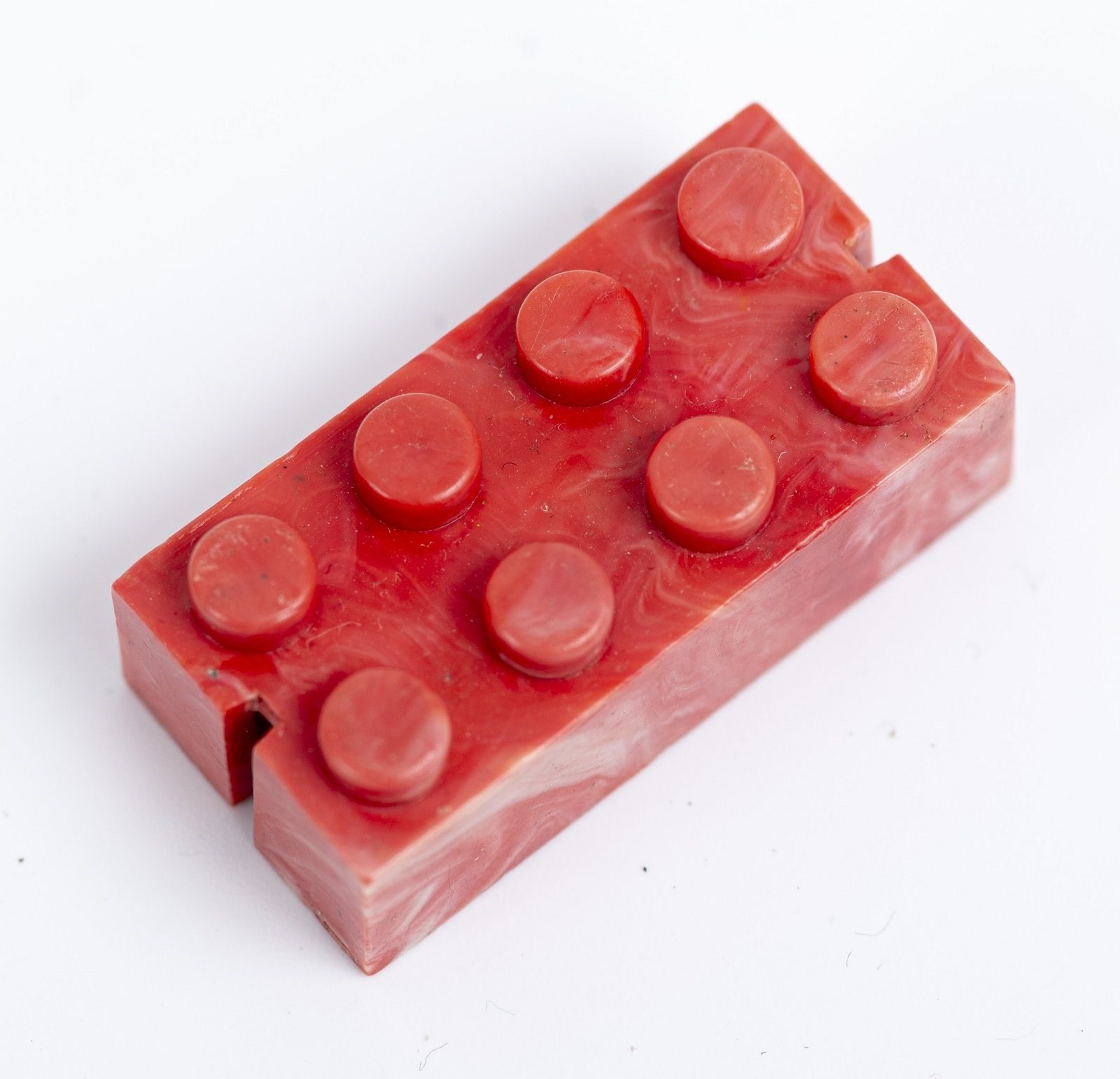
BSLOT04A_NL 1949–1951
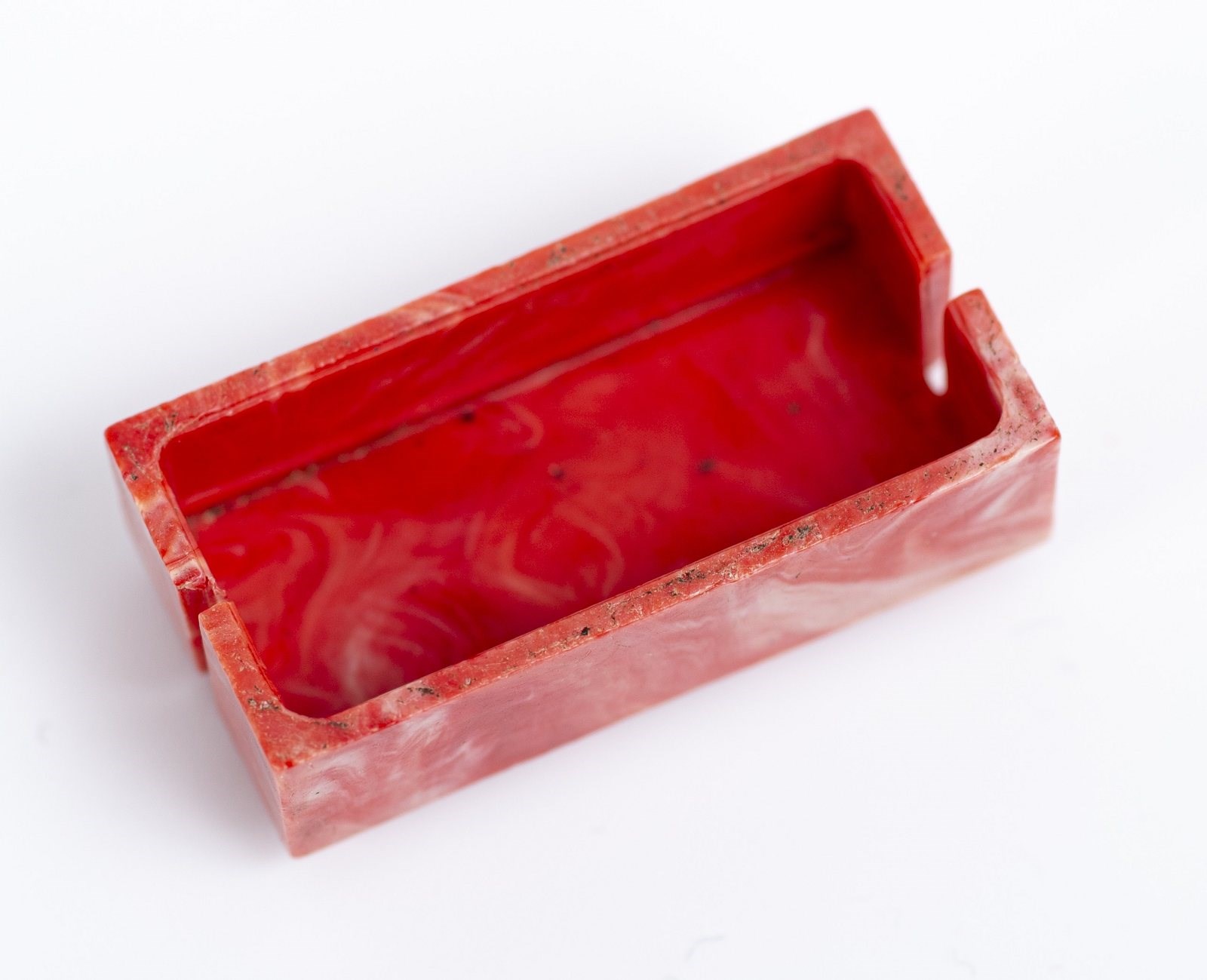
Brick 2x4 without Bottom Tubes, Slotted (with 2 slots, opposite): produced in cellulose acetate between 1949 and 1951, this LEGO 2×4 brick belongs to the early LEGO Mursten distributed in Denmark and the Netherlands. The BSLOT04A_NL variant is identifiable by two side slots and retains the hollow design without interior tubes. The example shown displays an unusual red marbled finish. The double slot was an early solution to improve fitting and mould release prior to the introduction of the tubular system in 1958.
Origin: Billund, Denmark / Nordic countries. Manufacturer: LEGO System A/S.
BSLOT04_OL 1952–1953
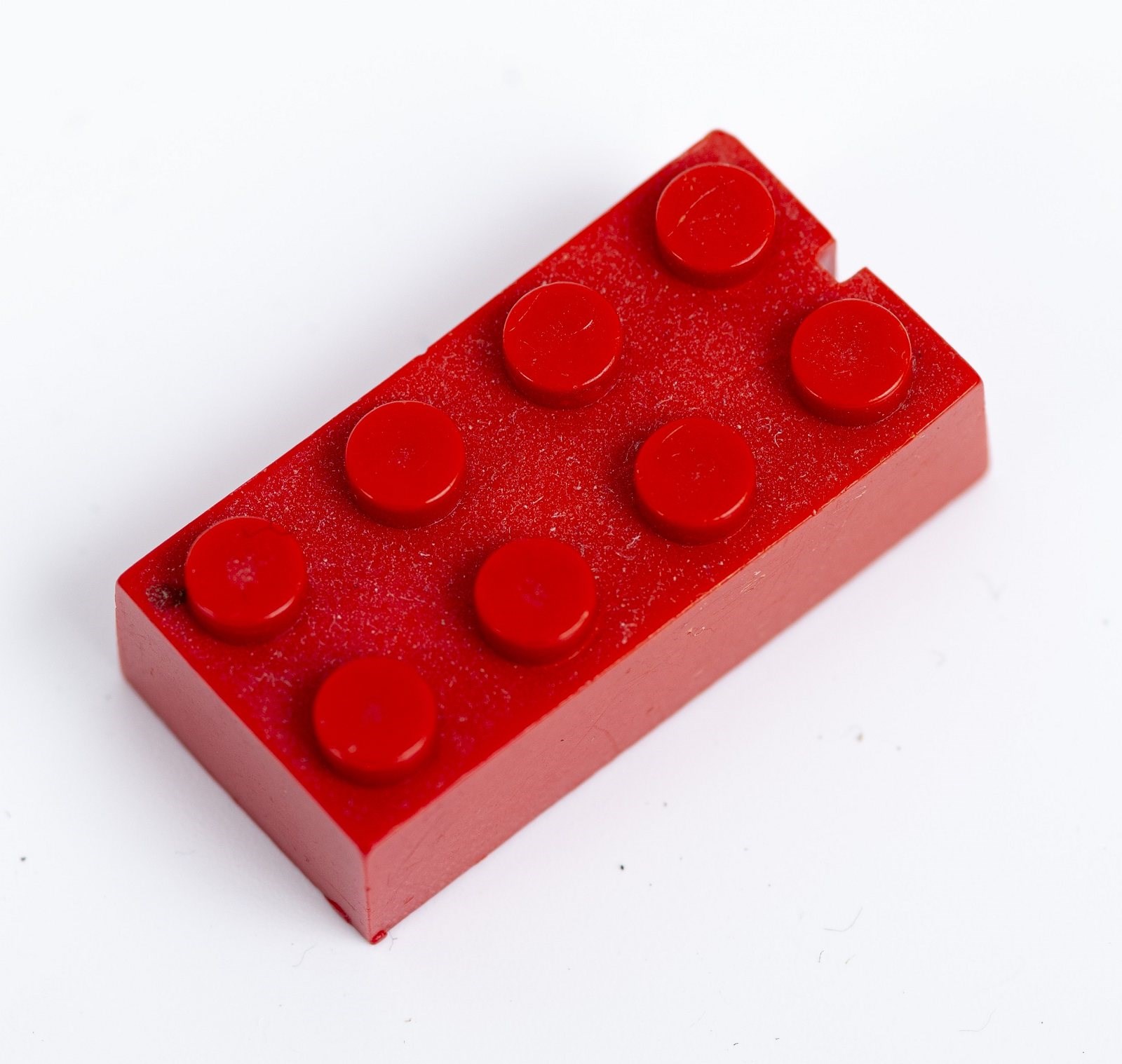
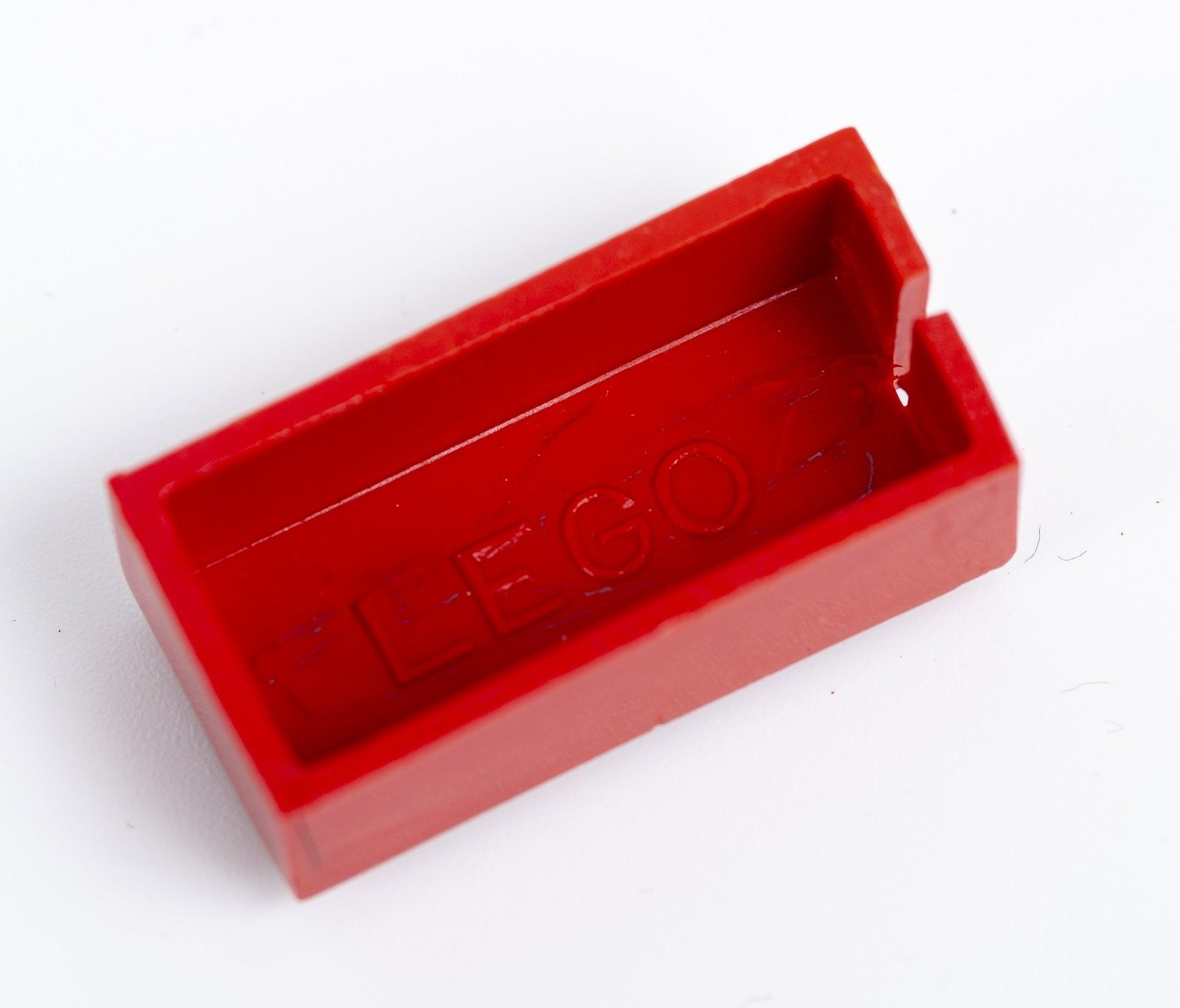
Brick 2x4 without Bottom Tubes, Slotted (with 1 slot and with “block-letter” logo): manufactured between 1952 and 1953 in cellulose acetate, represents a transitional stage in the evolution of LEGO Mursten. It is distinguished by a single side slot and by incorporating, for the first time, the “block-letter” LEGO logo engraved on the interior. It retains the hollow design without interior tubes, preceding the tubular system introduced in 1958. The BSLOT04_OL variant reflects both the final functional traces of the earliest moulds and the beginnings of the brand’s graphic identity.
Origin: Billund, Denmark / Nordic countries. Manufacturer: LEGO System A/S.
BSLOT04A_OL 1952–1953
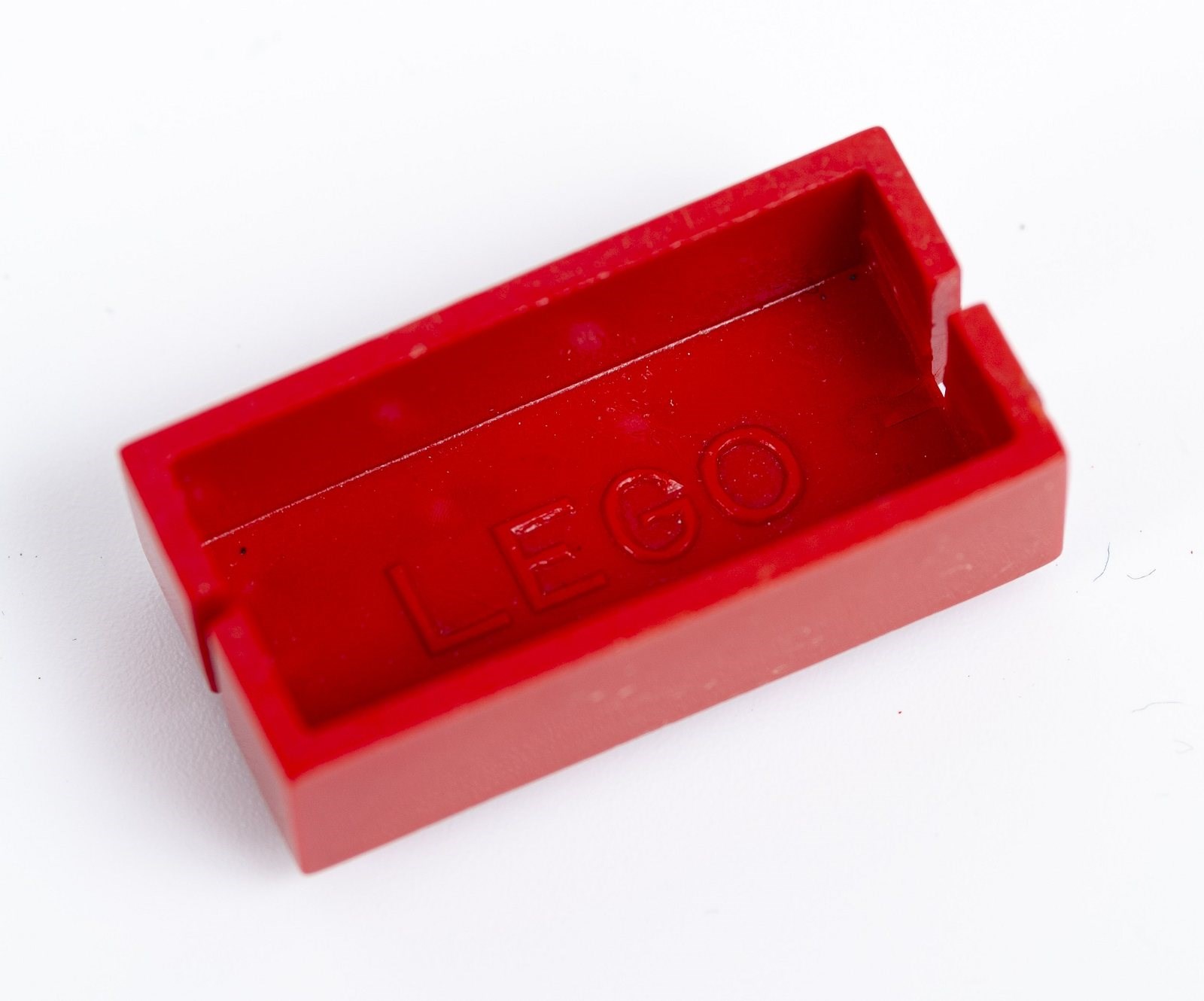
Brick 2x4 without Bottom Tubes, Slotted (with 2 slots, opposite and with “block-letter” logo): produced in cellulose acetate between 1952 and 1953, this LEGO 2×4 brick also represents a transitional phase within LEGO Mursten. It is characterised by two side slots and by incorporating the “block-letter” LEGO logo, with thin, spaced lettering. It retains the hollow design without interior tubes, preceding the tubular system introduced in 1958. The BSLOT04A_OL variant improves upon its predecessor by adding a second slot and reflects the early development of the brand’s visual identity.
Origin: Billund, Denmark / Nordic countries. Manufacturer: LEGO System A/S.

BSLOT04BL/R_OL 1953–1954
Brick 2x4 without Bottom Tubes, Slotted (with 2 slots, opposite corner left/right and with “block-letter” logo): manufactured between 1953 and 1954 in cellulose acetate, belongs to the final stage before the logo change. It is distinguished by two corner slots and by incorporating the “block-letter” LEGO logo, featuring thin, separated lettering. It retains the hollow design without interior tubes, just before the technical breakthrough of 1958. The BSLOT04BL/R_OL variant combines the functional double corner slot with the brand’s earliest graphic identity.
Origin: Billund, Denmark / Nordic countries. Manufacturer: LEGO System A/S.
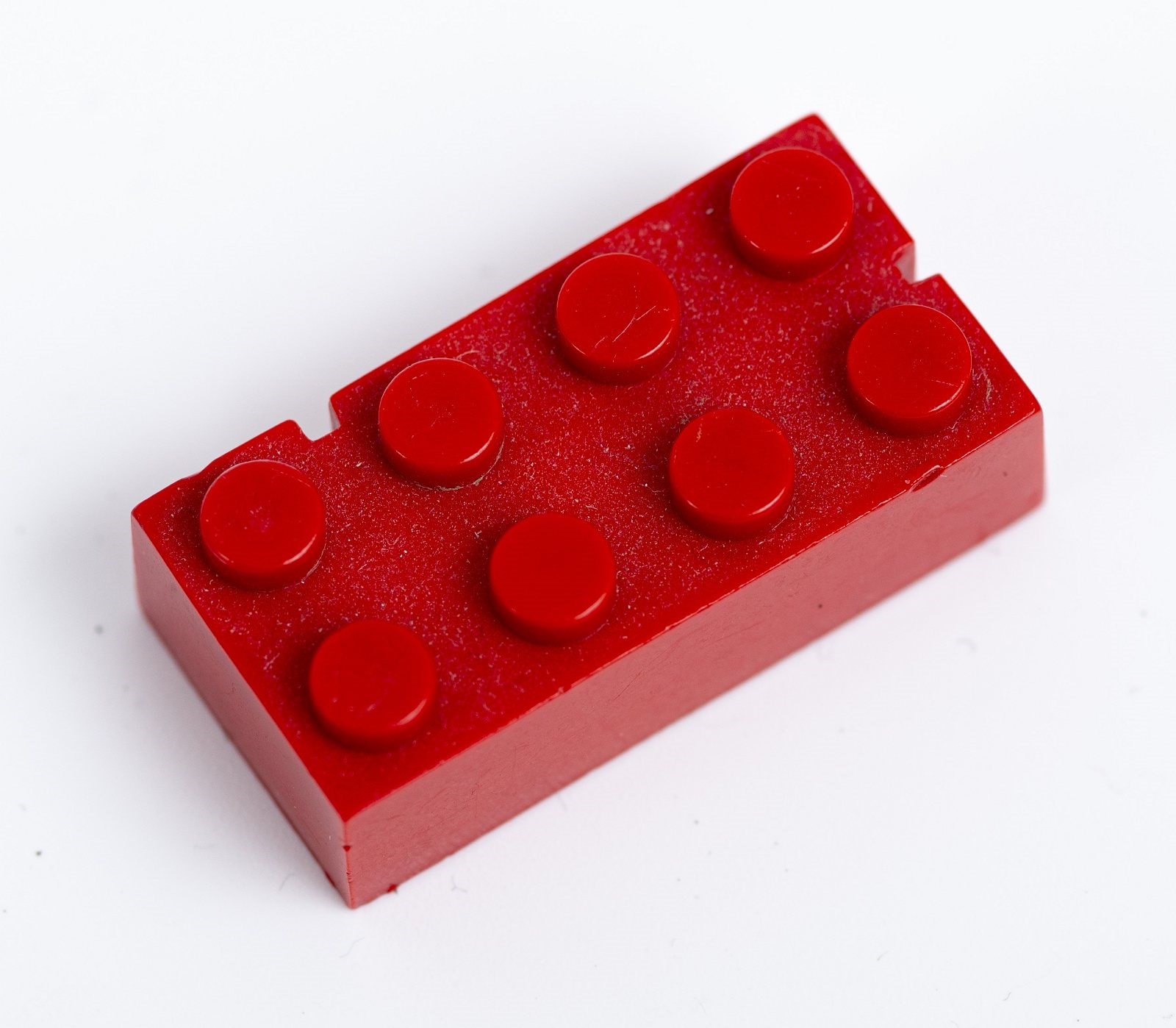

BSLOT04_DL 1954–1955
Brick 2x4 without Bottom Tubes, Slotted (with 1 slot and with "dogbone” LEGO logo): produced in cellulose acetate between 1954 and 1955, this LEGO 2×4 brick represents an advanced transitional phase toward the definitive tubular system. It is characterised by a single side slot and by incorporating the "dogbone” LEGO logo, with thicker, connected lettering. It retains a hollow design without interior tubes, preceding the 1958 standardisation. The BSLOT04_DL variant combines this functional solution with a graphic evolution from the earlier “block-letter” logo, marking a key step in the consolidation of LEGO’s design.
Origin: Billund, Denmark / Nordic countries. Manufacturer: LEGO System A/S.
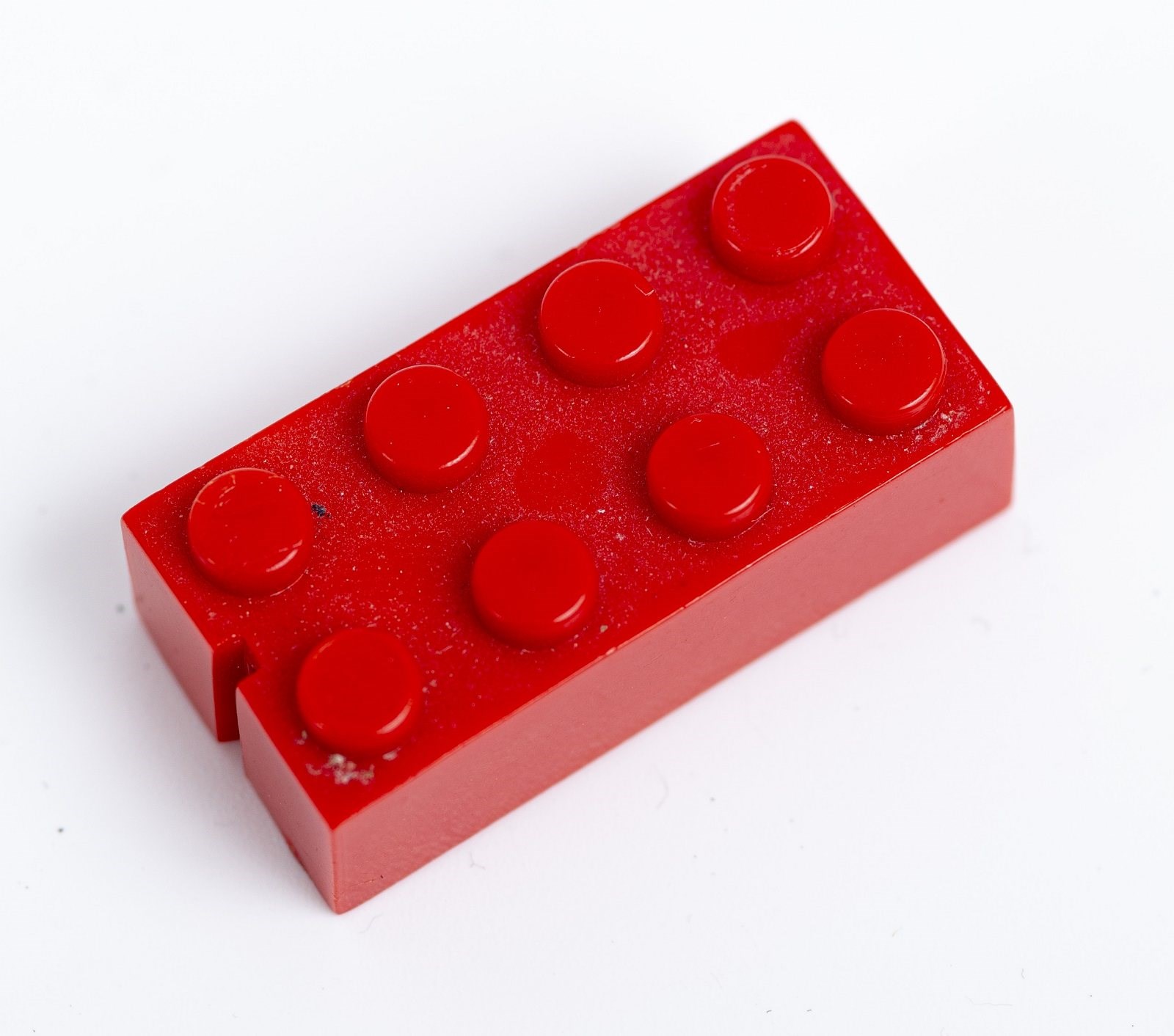
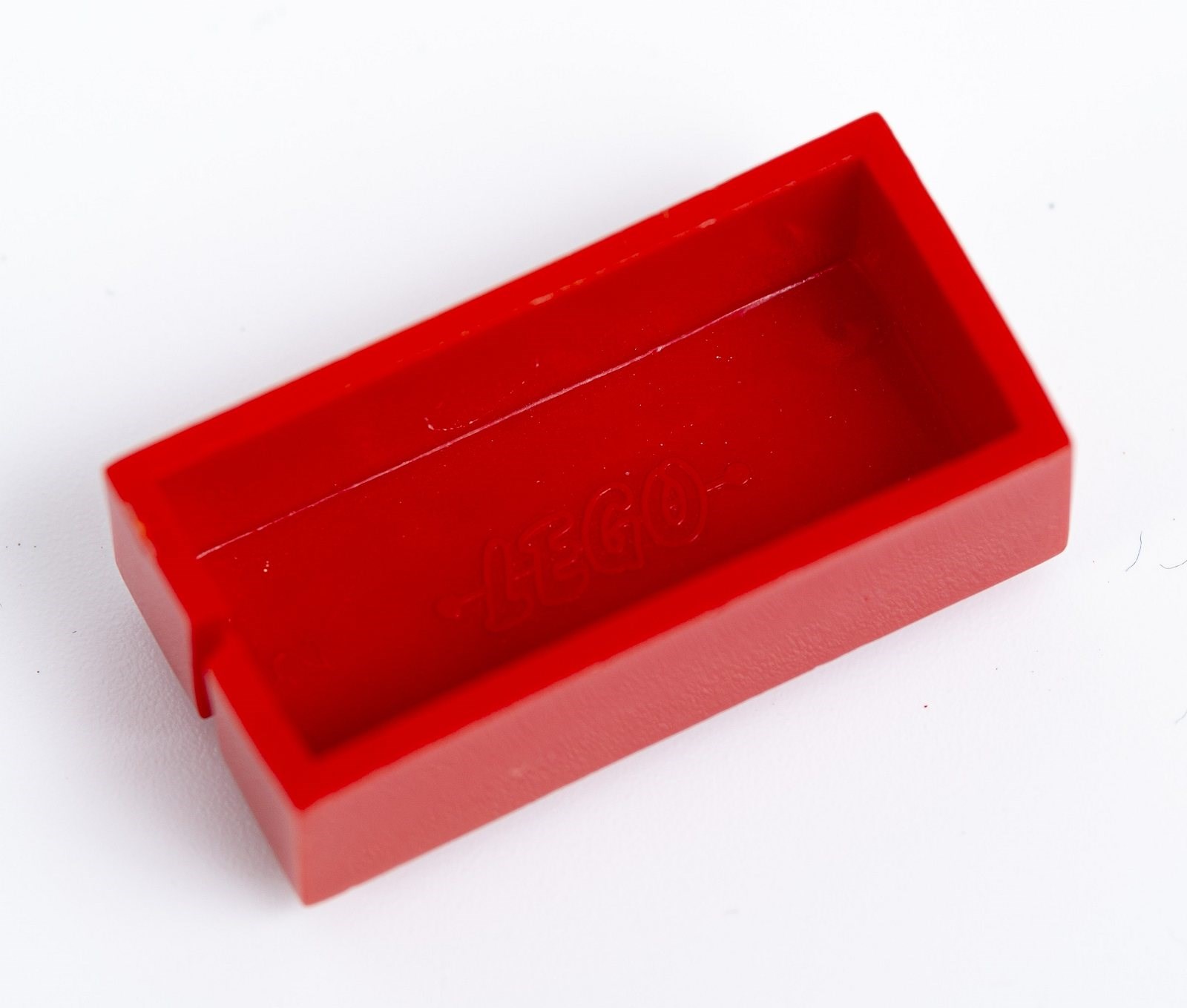
BSLOT04A_DL 1954–1955
Brick 2x4 without Bottom Tubes, Slotted (with 2 slots, opposite and with "dogbone” LEGO logo): manufactured between 1954 and 1955 in cellulose acetate, belongs to the final pre-tubular phase of the LEGO Mursten system. It is distinguished by two side slots and by incorporating the “dogbone” LEGO logo, with thicker, connected lettering. It retains a hollow design without interior tubes, preceding the 1958 standardisation. The BSLOT04A_DL variant combines the functional double slots with this graphic evolution, marking the culmination of the pre-tubular era.
Origin: Billund, Denmark / Nordic countries. Manufacturer: LEGO System A/S.
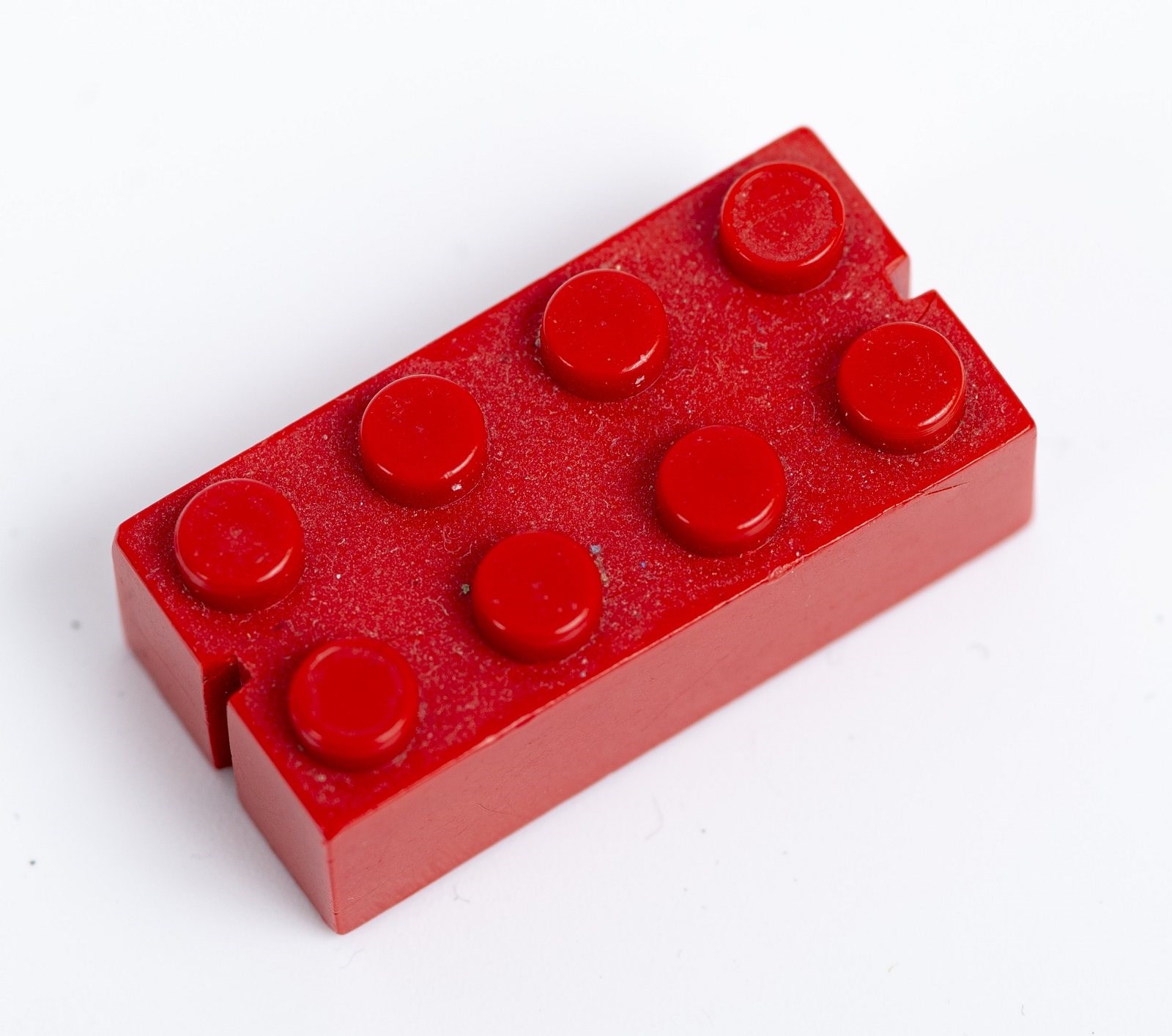
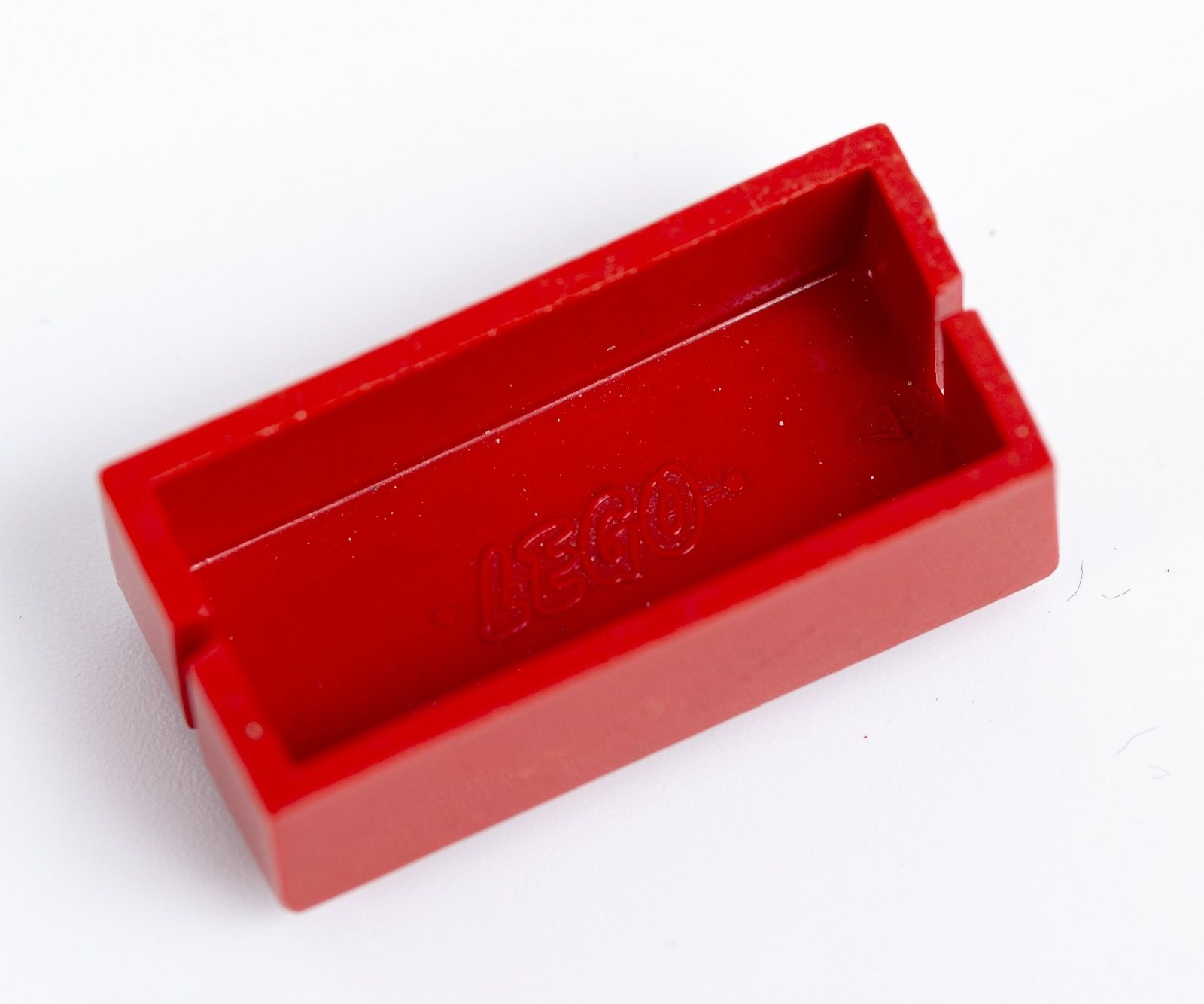
BSLOT04BL/R_DL 1954–1955
Brick 2x4 without Bottom Tubes, Slotted (with 2 slots, opposite corner left/right and with “dogbone “logo”): produced in cellulose acetate between 1954 and 1955, this LEGO 2×4 brick belongs to the final pre-tubular phase of the LEGO Mursten system. It is distinguished by two corner slots and by incorporating the “dogbone” LEGO logo, with thicker, connected lettering. It retains a hollow design without interior tubes, preceding the 1958 standardisation. The BSLOT04BL/R_DL variant combines this functional double corner slots with the graphic evolution of the “block-letter” logo, marking the culmination of the pre-tubular era.
Origin: Billund, Denmark / Nordic countries. Manufacturer: LEGO System A/S.
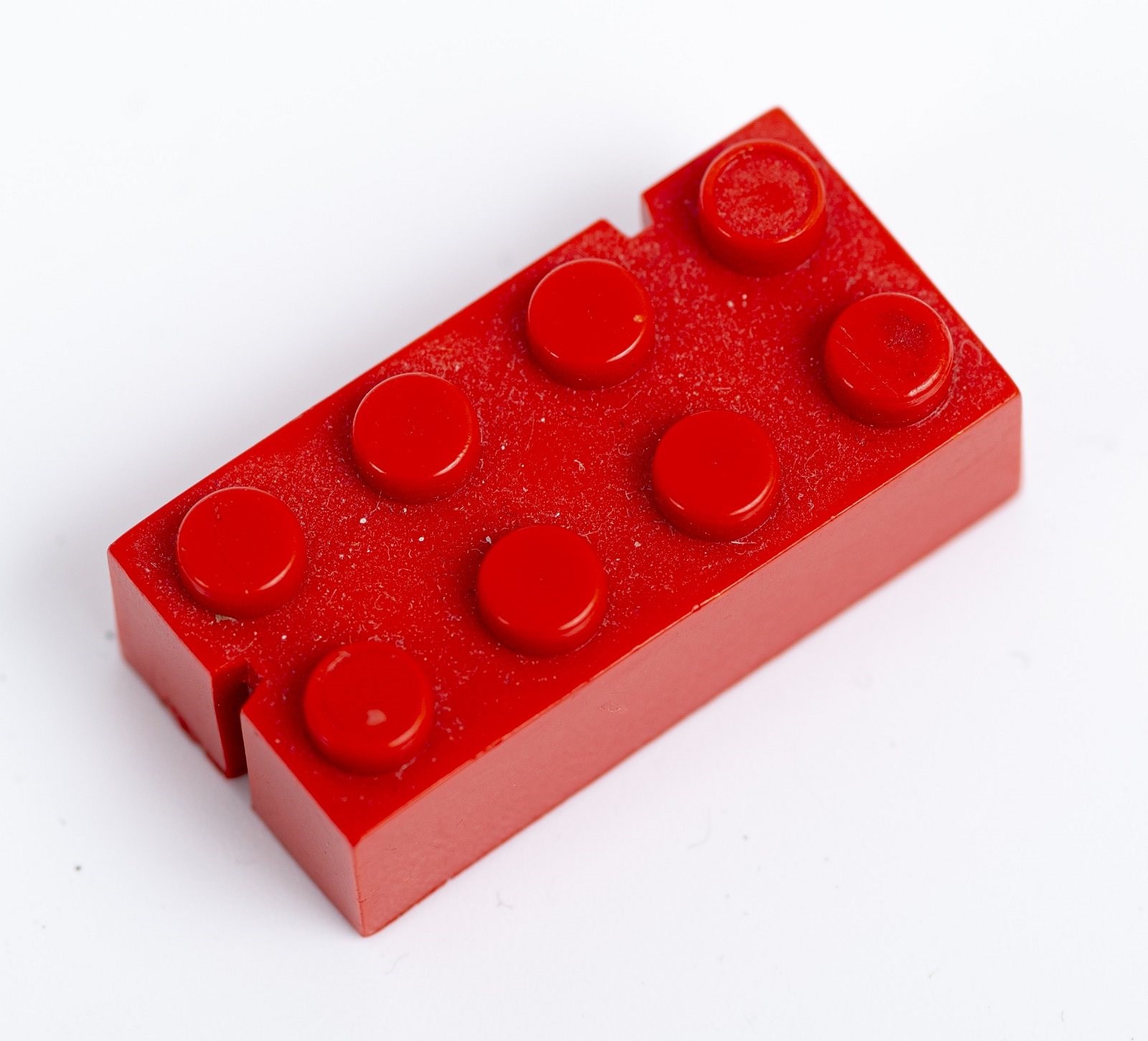

BSLOT04CL/R_OL 1956
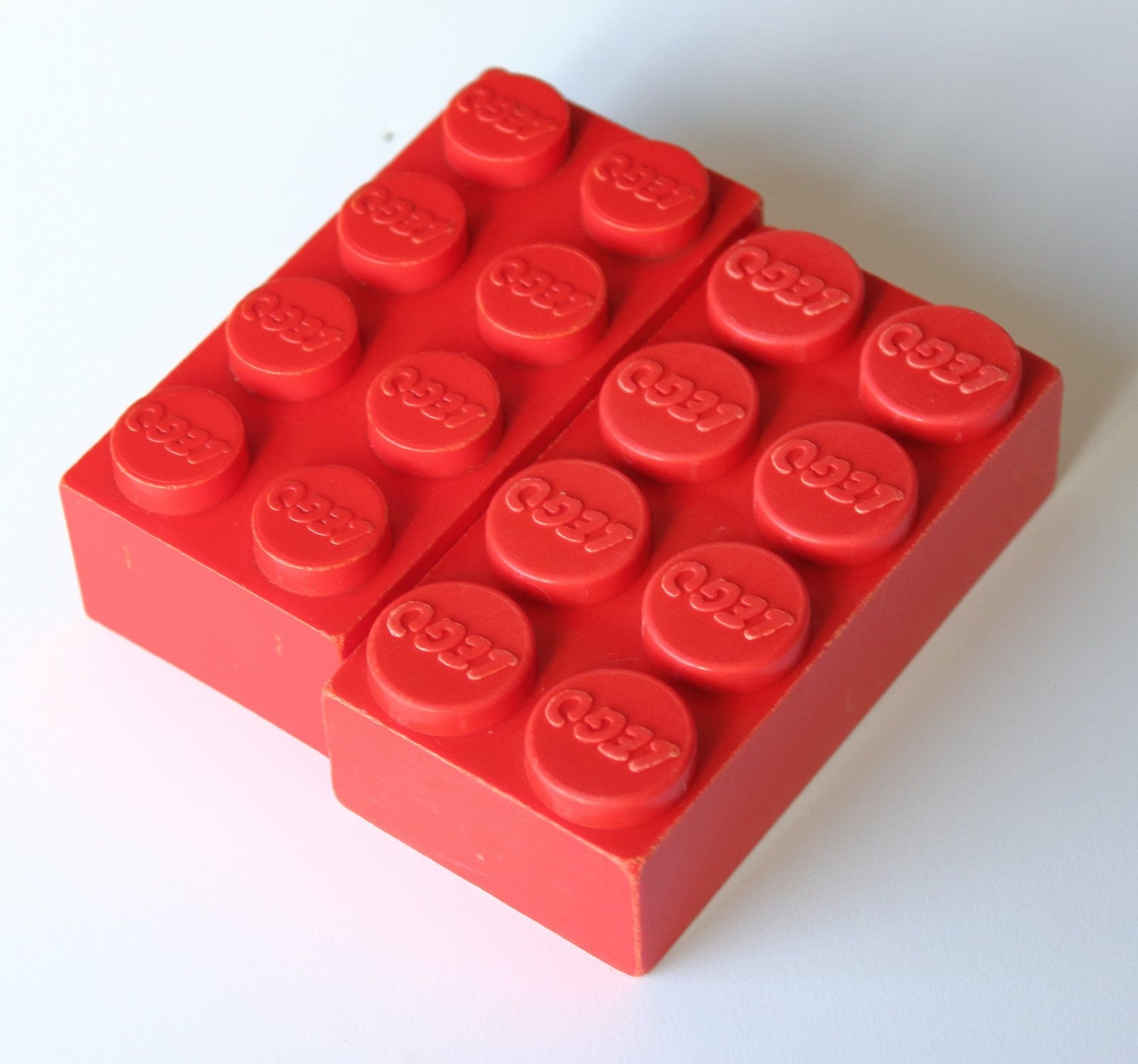
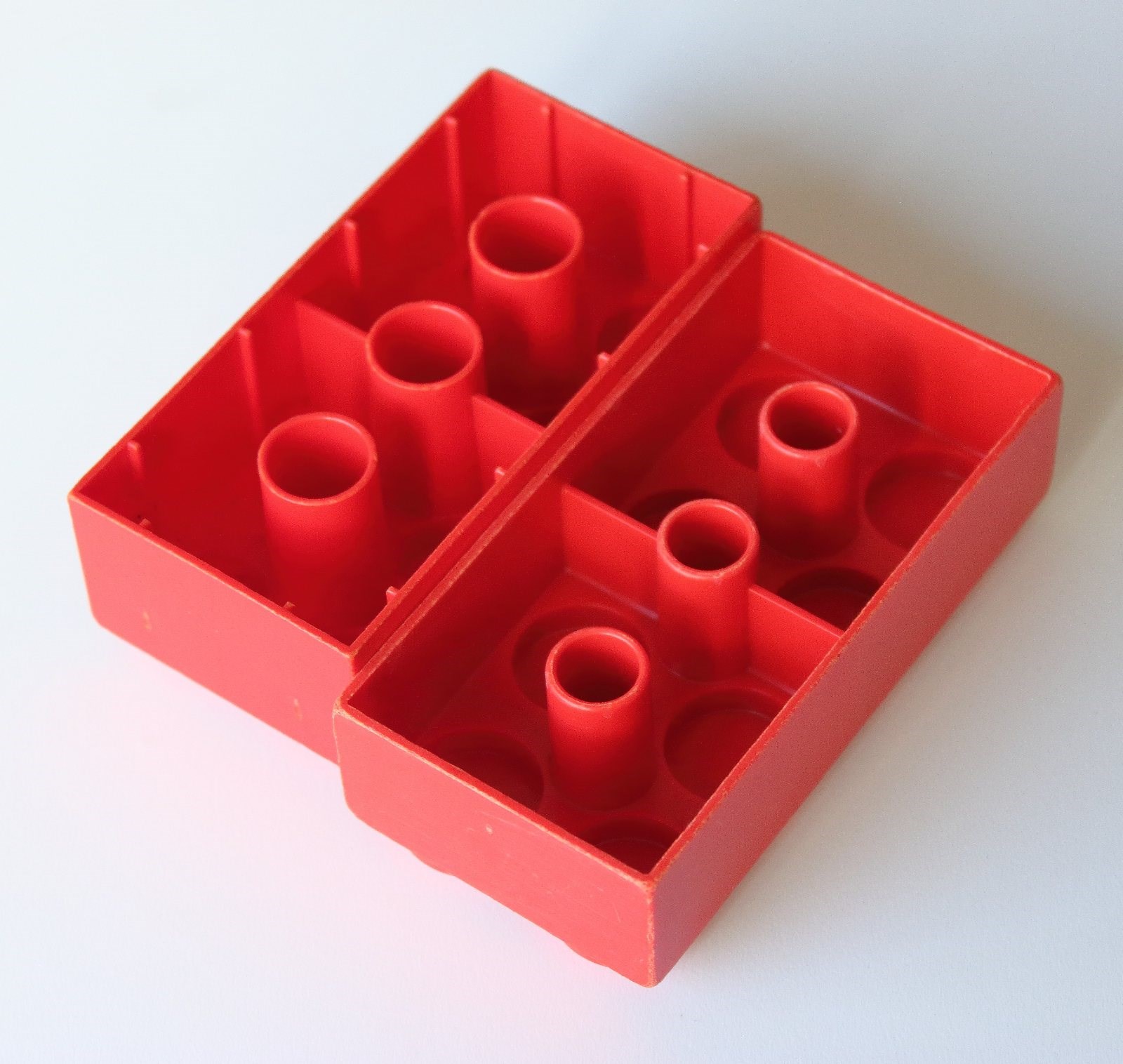
Brick 2x4 without Bottom Tubes, Slotted (with 2 slots, near corner left/right and with “block-letter” logo): manufactured in 1956 in cellulose acetate, belongs to an advanced transitional phase toward the definitive tubular system. It features two closed corner slots and a late “block-letter” LEGO logo, with thin, separated lettering. It also incorporates four functional interior holes that anticipate the future tube system. The BSLOT04CL/R_OL variant combines these internal improvements with the functional corner slots, marking one of the final steps before the 1958 standardisation.
Origin: Norway. Manufacturer: LEGO System A/S.
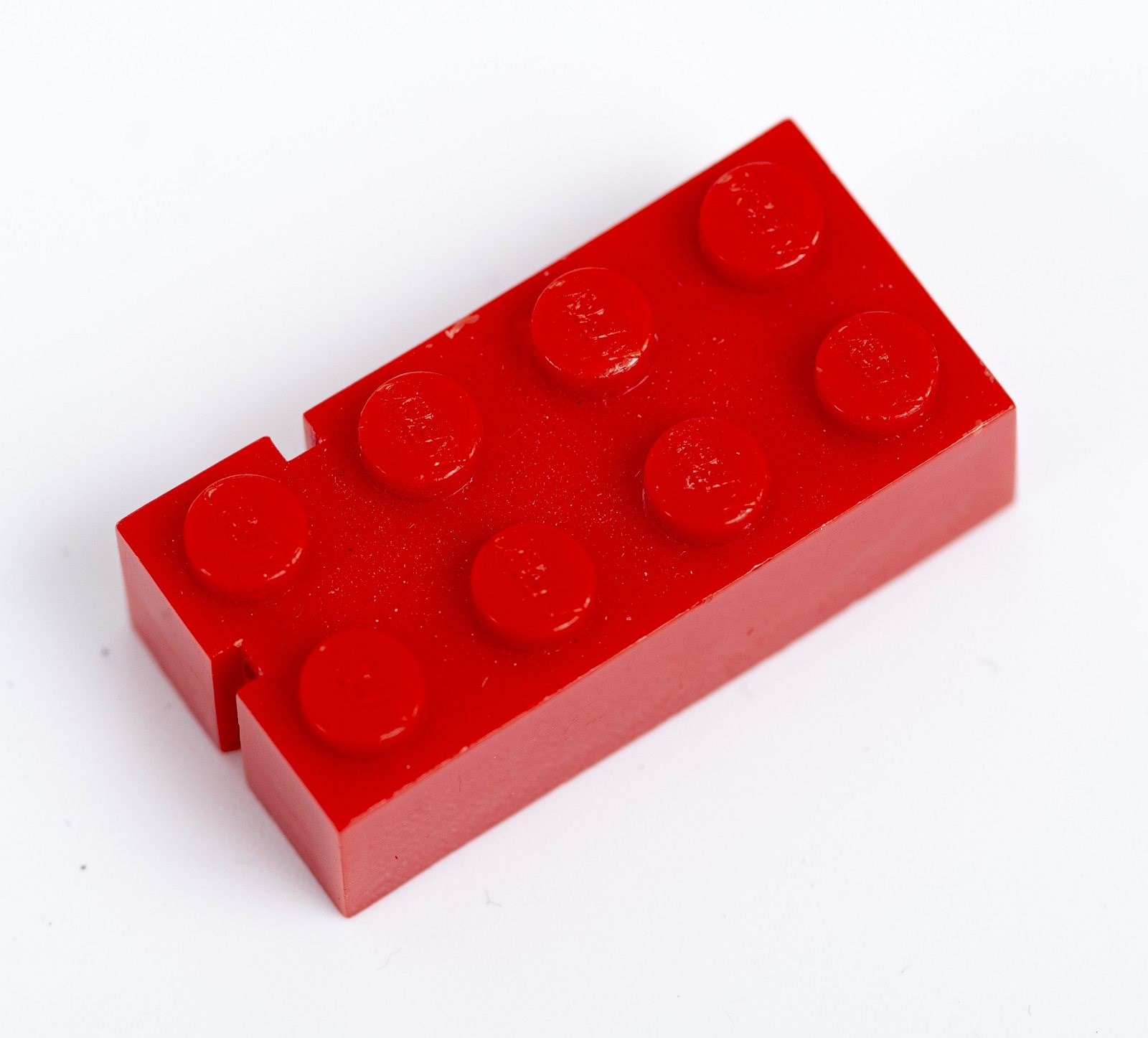
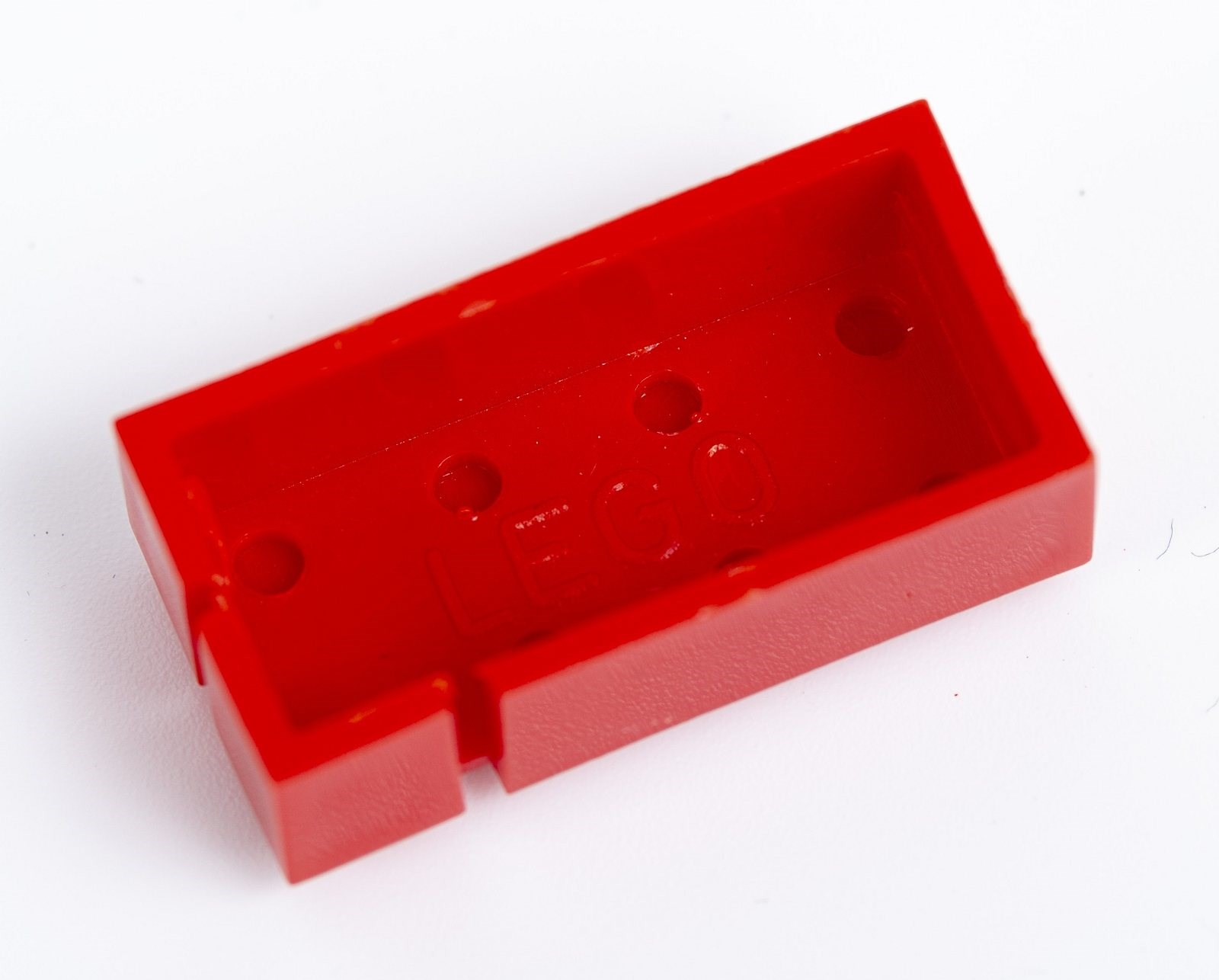
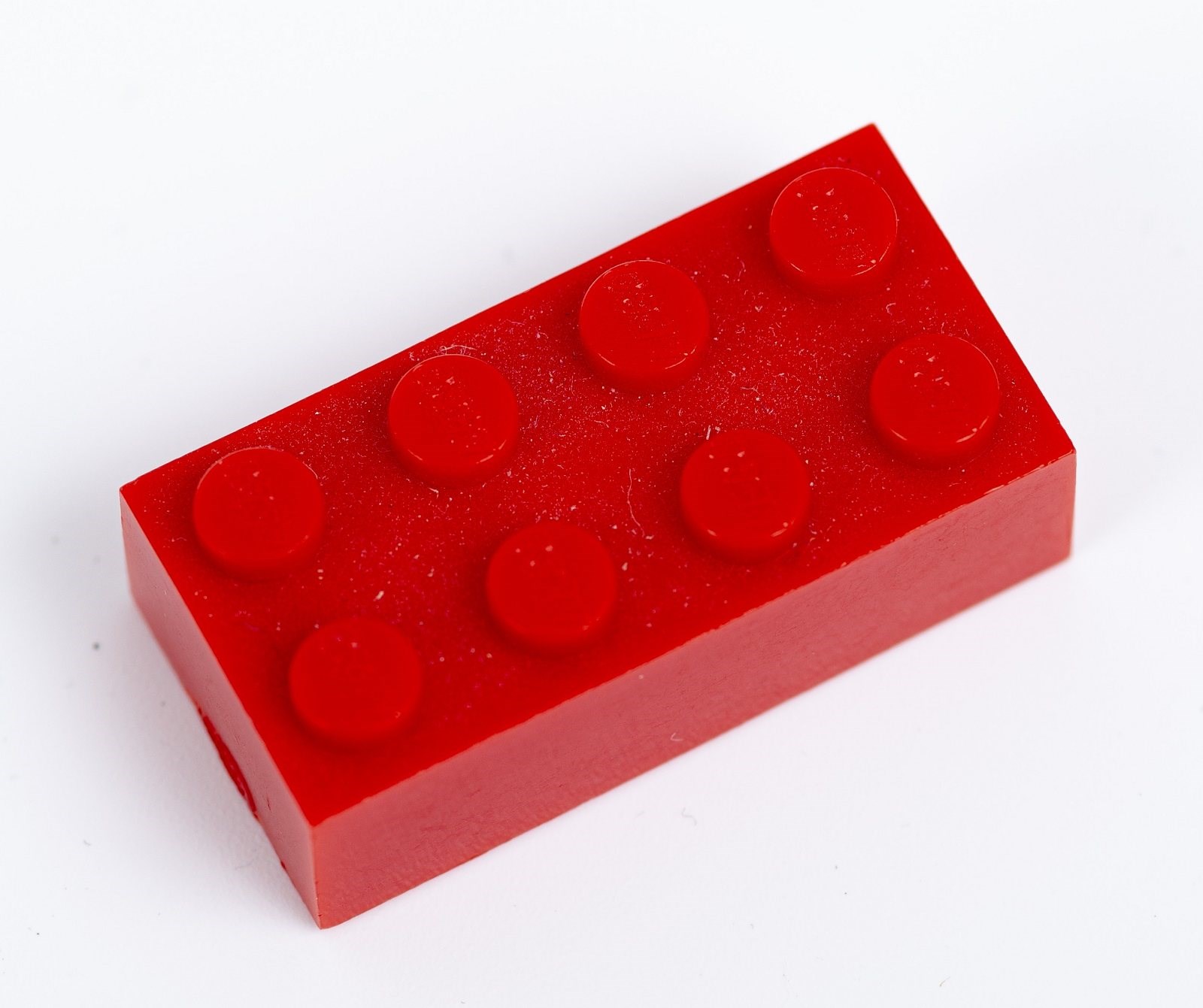
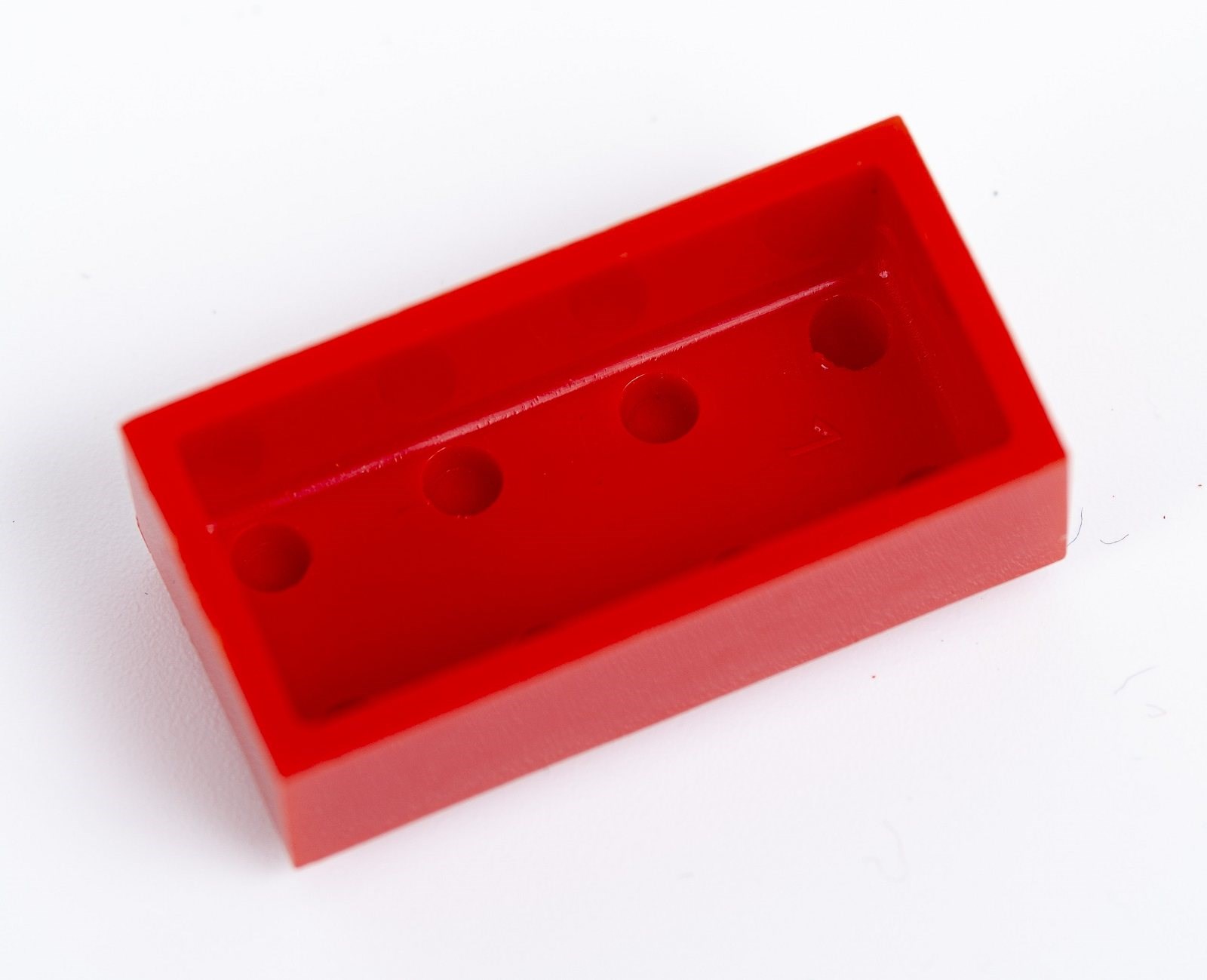
BHOL04_WØBT 1956–1957
Brick 2x4 without bottom tubes: produced in cellulose acetate between 1956 and 1957, this LEGO 2×4 brick belongs to the final transition toward the tubular system. It features a hollow interior (with eight visible holes on the base) that improves clutch power and anticipates the modern design. It incorporates, for the first time, the LEGO logo engraved on the studs, with an “oval Wide O”, and separated lettering. The BHOL04_WØBT variant marks the beginning of the brand’s external visual identity and one of the last steps before the technical standardisation of 1958.
Origin: Billund, Denmark / Nordic countries. Manufacturer: LEGO System A/S.
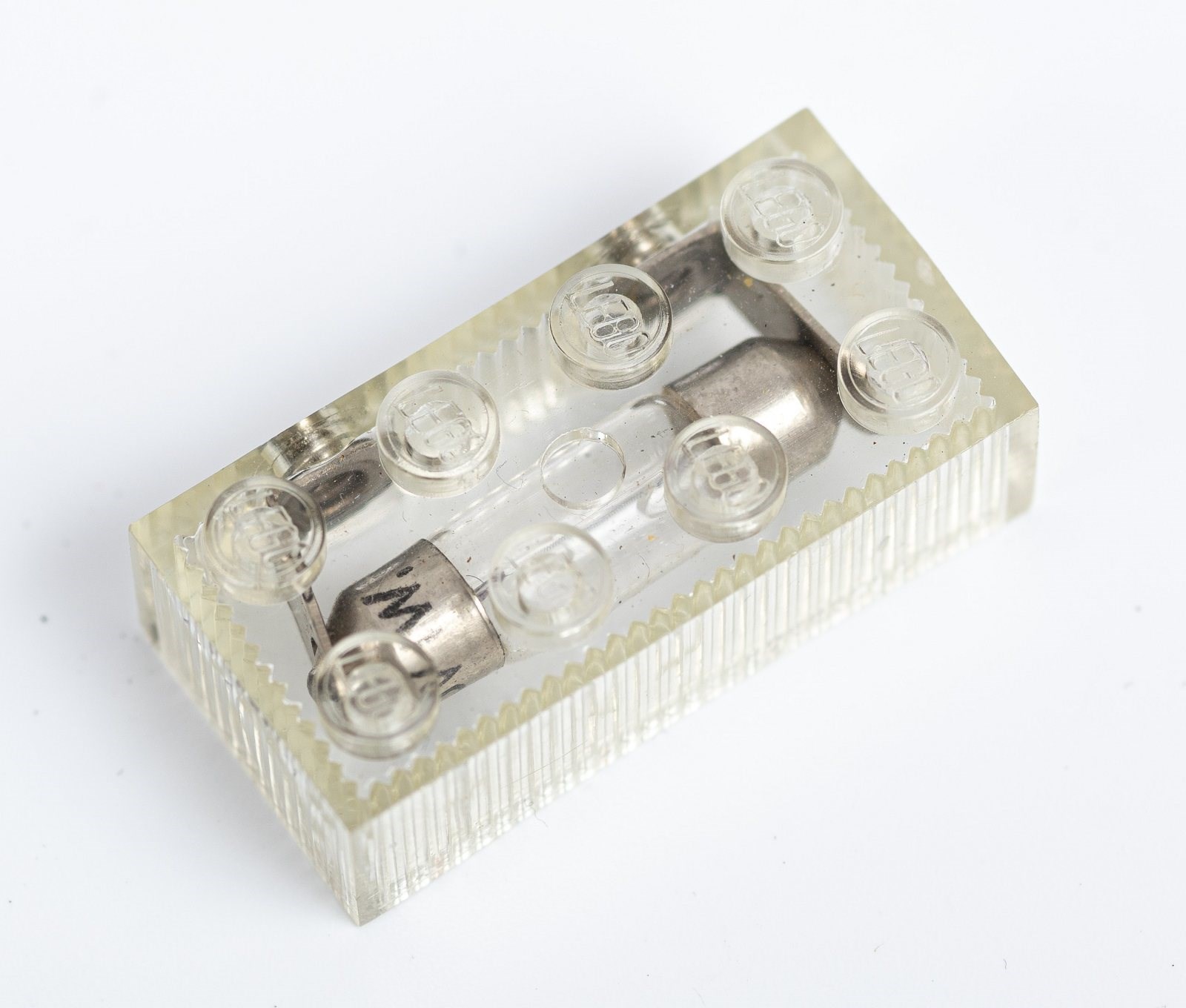
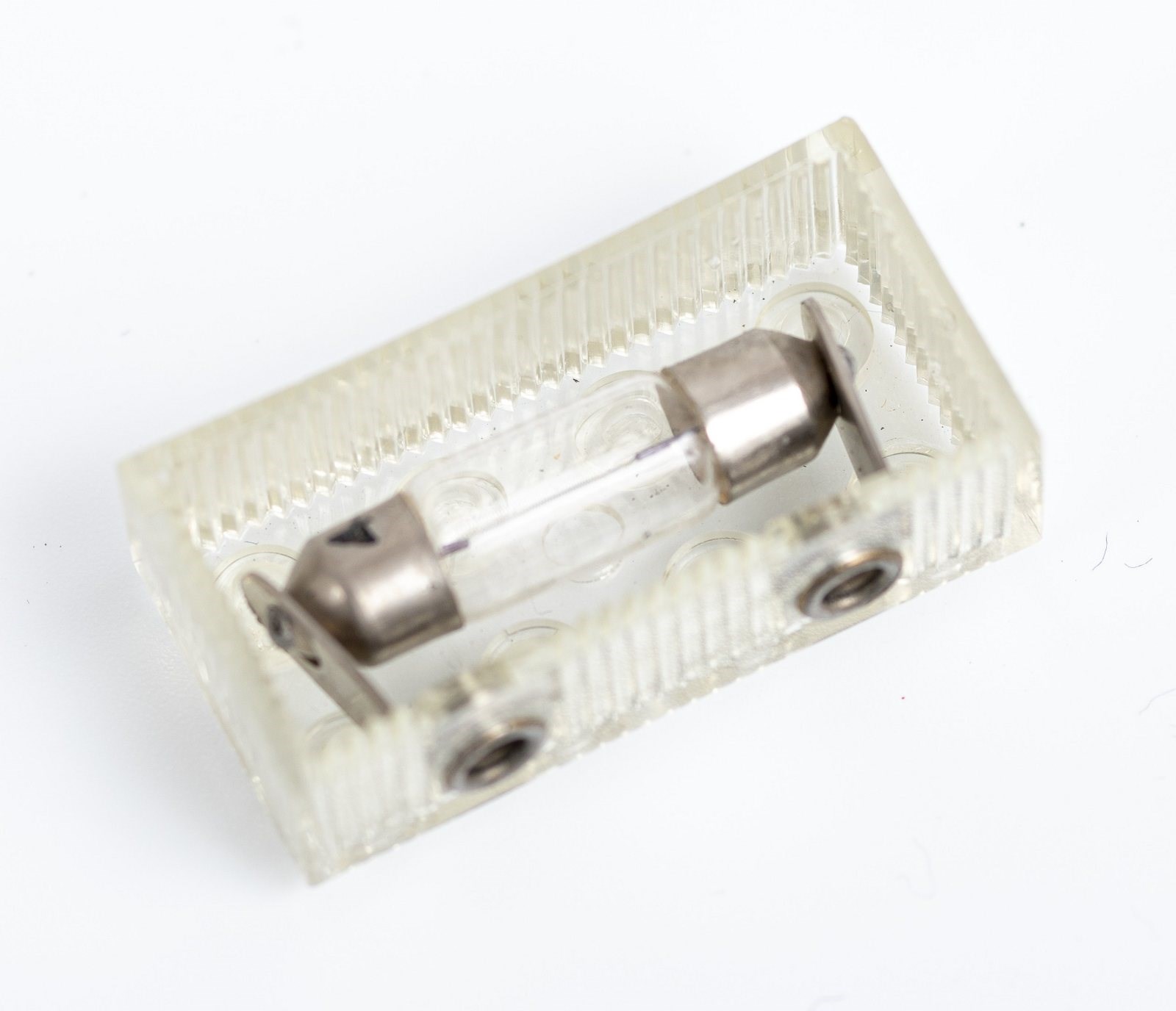
X456C01_LB 1957–1970
Electric, Light Brick 4.5V 2x4 with Removable Bulb: manufactured between 1957 and 1970, integrates a small bulb as part of the earliest LEGO electrical systems. It features a textured finish and a translucent body that distinguish it from standard bricks. Inside, it houses a glass cartridge with metal terminals visible from the exterior. The X456C01_LB variant enabled the creation of basic lighting or protection circuits and represents one of LEGO’s first attempts to combine modular construction with electrical functionality.
Origin: Billund, Denmark. Manufacturer: LEGO System A/S.
3001OLD_WBT 1958–1968
Brick 2x4 with bottom tubes: produced in ABS between 1958 and 1968, this LEGO 2×4 brick belongs to the definitive LEGO system following the patent of the clutch connection. It features the “oval Wide O” logo on the studs and an interior with a central tube and two secondary tubes, ensuring a firm and stable clutch. The 3001OLD_WBT variant marks a technical and graphic turning point for the brand: ABS provides durability, the “oval Wide O” logo becomes the visual standard, and the tube system defines the structural design that would endure for decades.
Origin: Billund, Denmark. Manufacturer: LEGO System A/S.
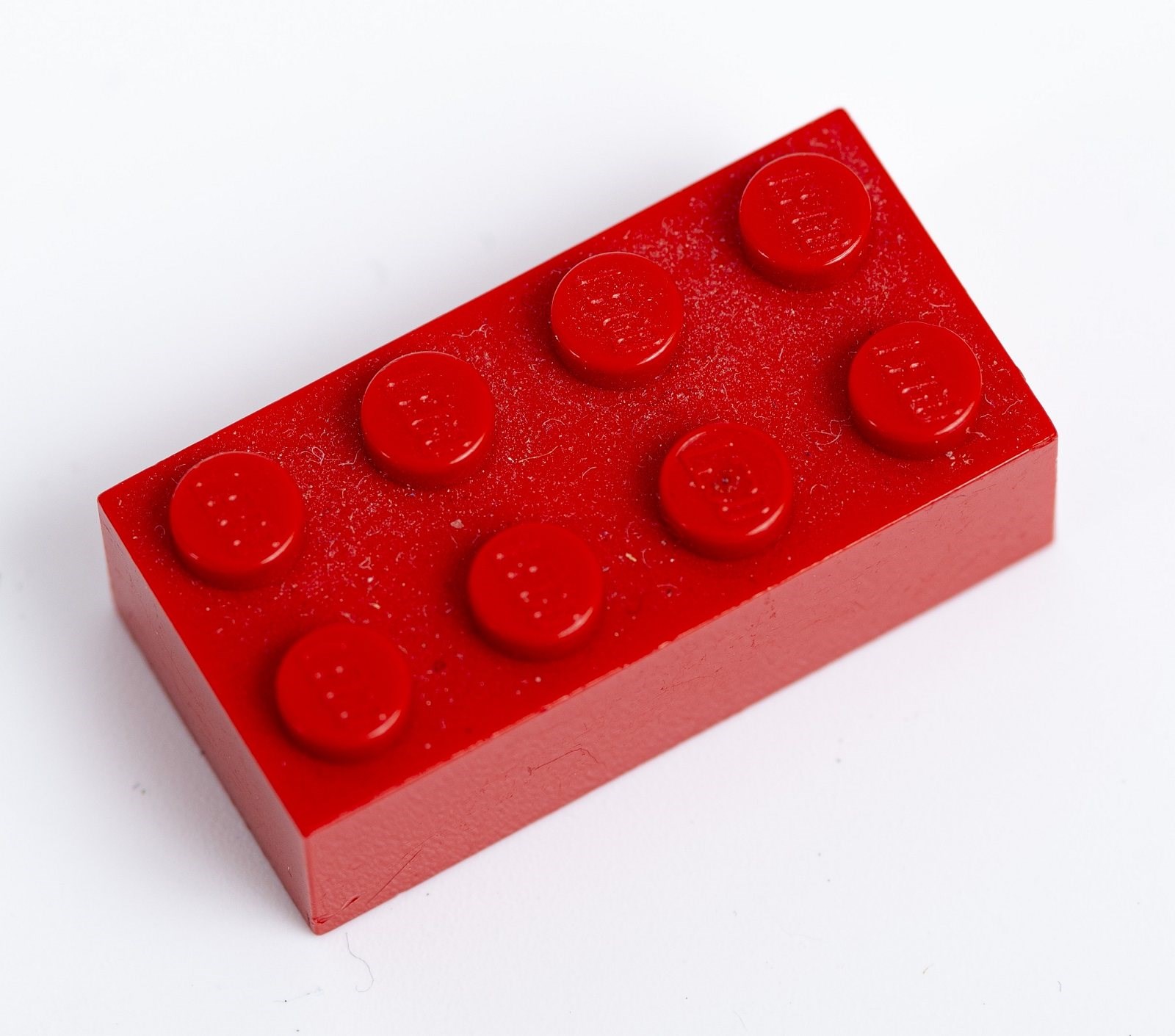
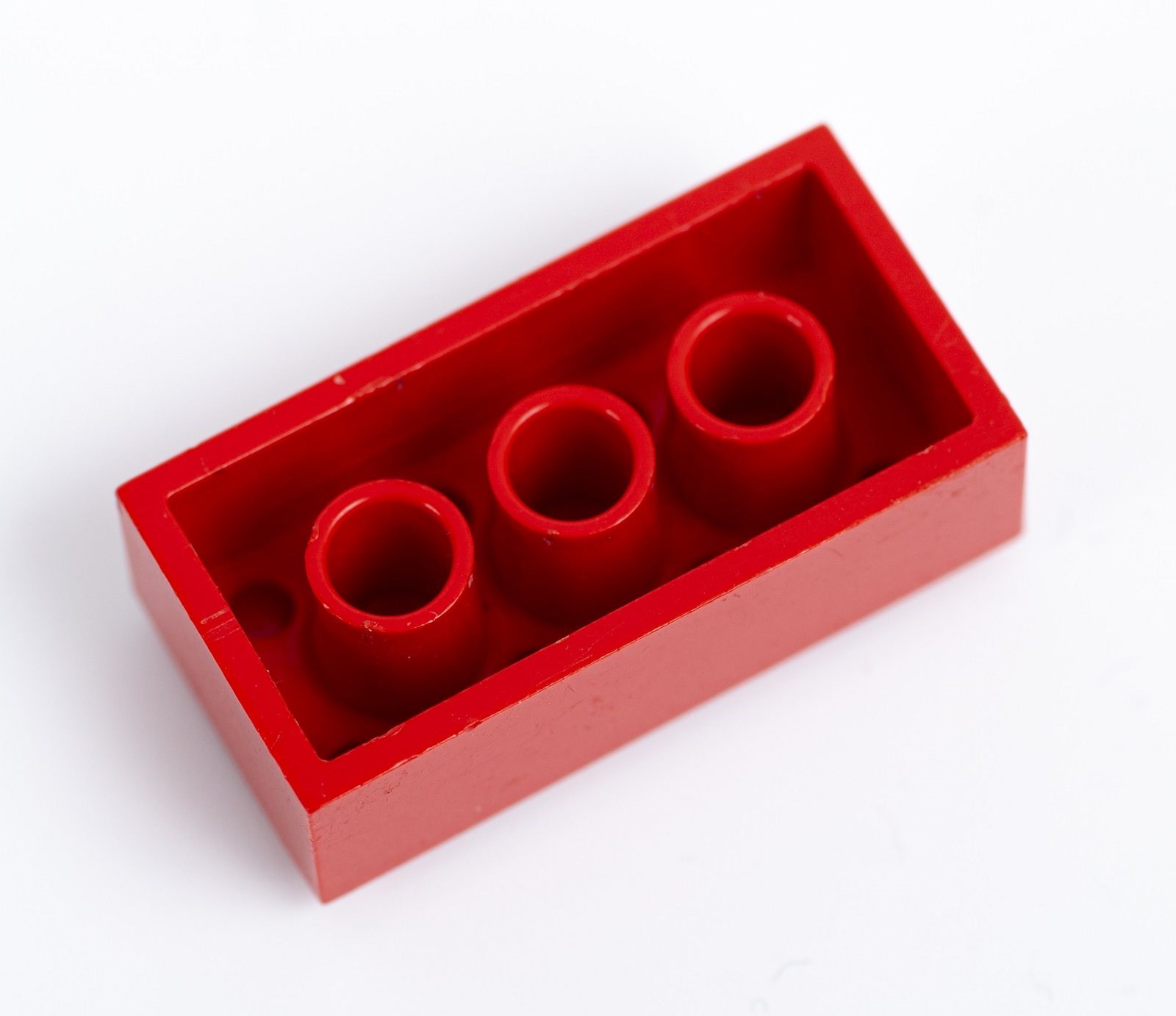
3001SPECIAL 1960–2026
This LEGO 2×4 brick, classified as 3001SPECIAL, does not correspond to a single model but rather to the category of 2×4 brick prototypes manufactured outside standard specifications. It includes material tests, experimental colours, and mould variations intended to validate strength, compatibility, and thermal behaviour. Since 1960, factories such as Billund, Basf, Bayer, DSM, Borg-Warner, Hohenwestedt, Wrexham, Kladno, Grangemouth… have produced these variants for technical, aesthetic, and functional trials. The 3001SPECIAL prototypes reflect the internal evolution of the 2×4 brick and the engineering work that ensured the long-term compatibility of the LEGO system.
Origin: Billund, Denmark (development) + European satellite factories. Manufacturer: LEGO System A/S.
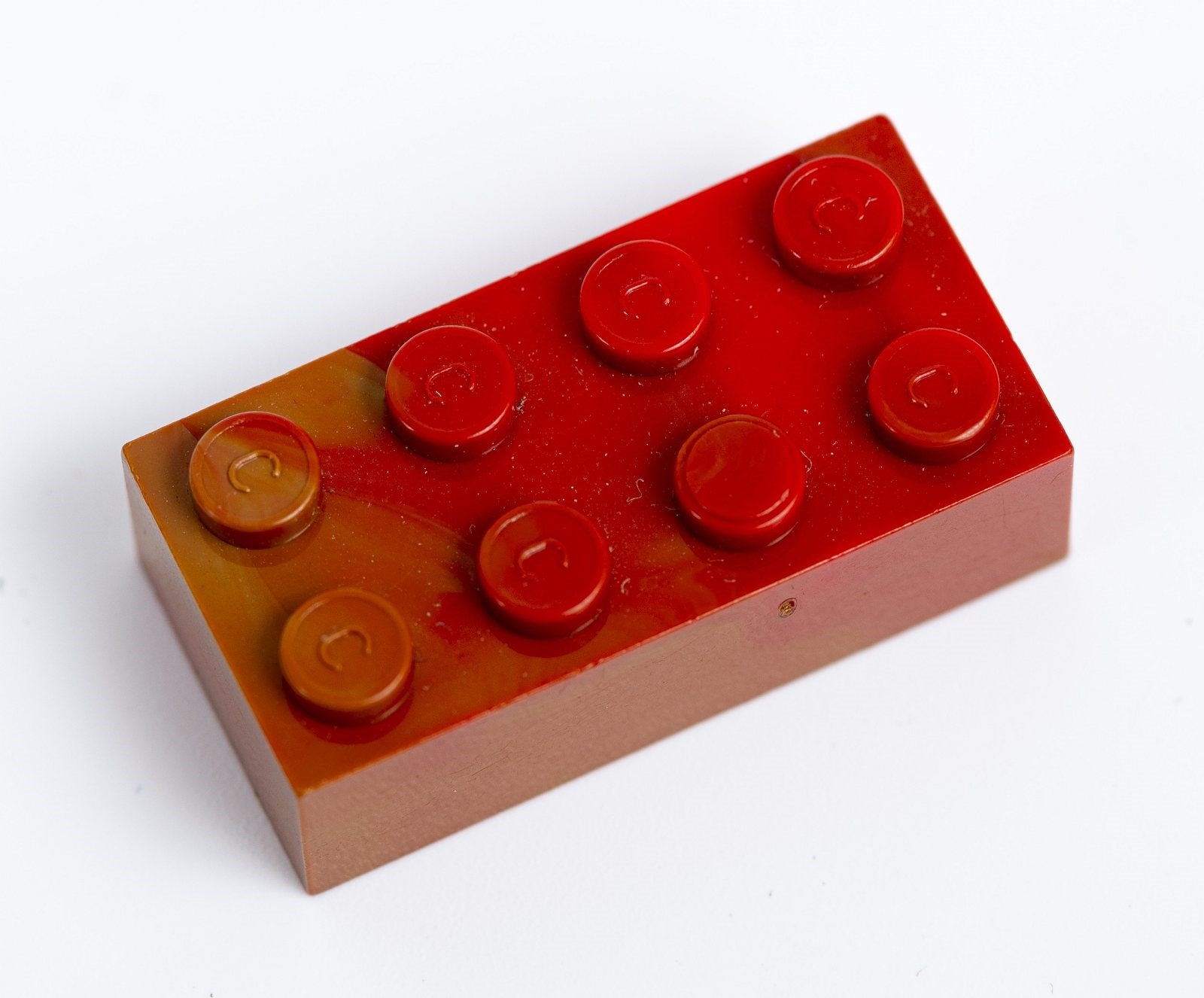
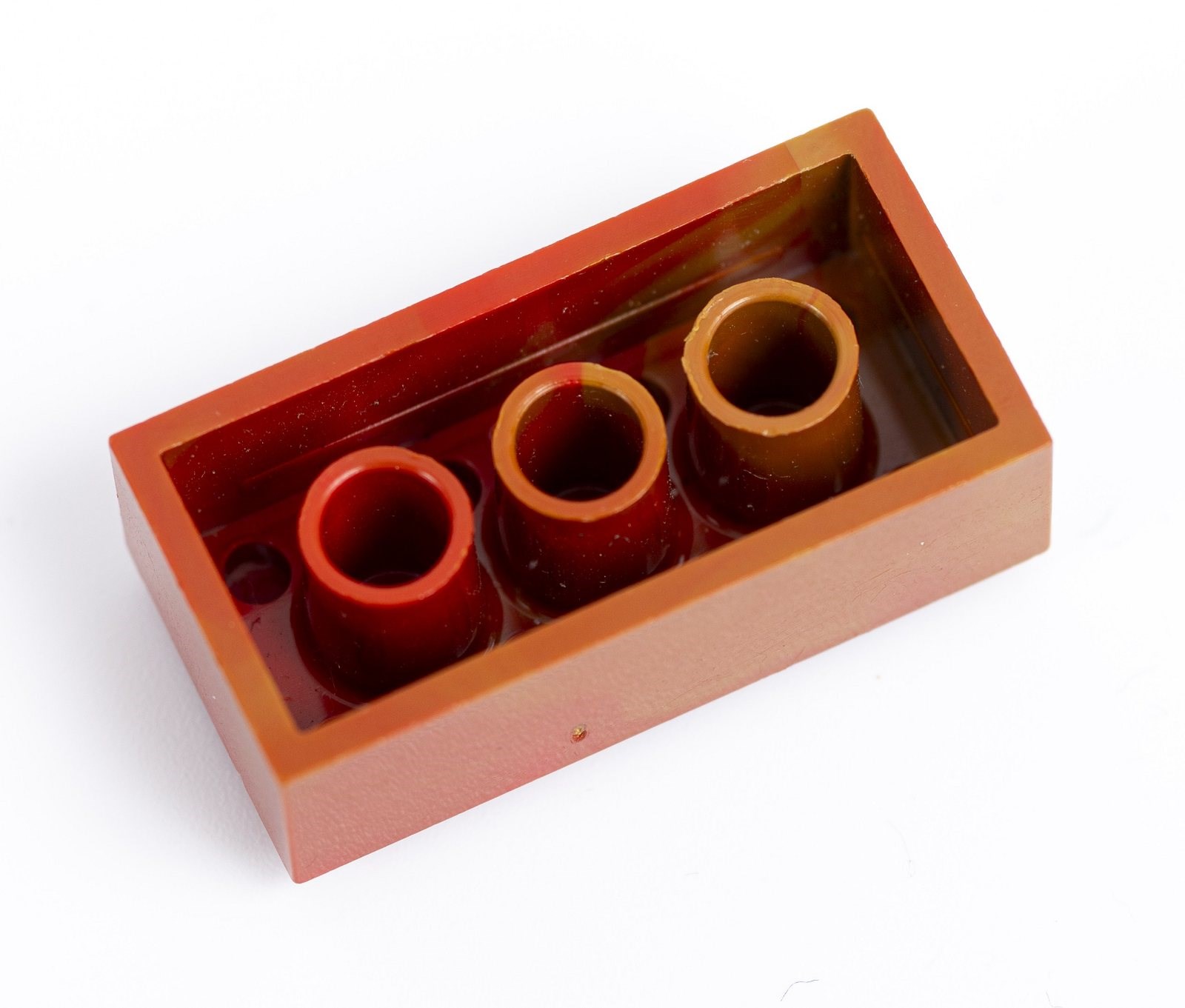
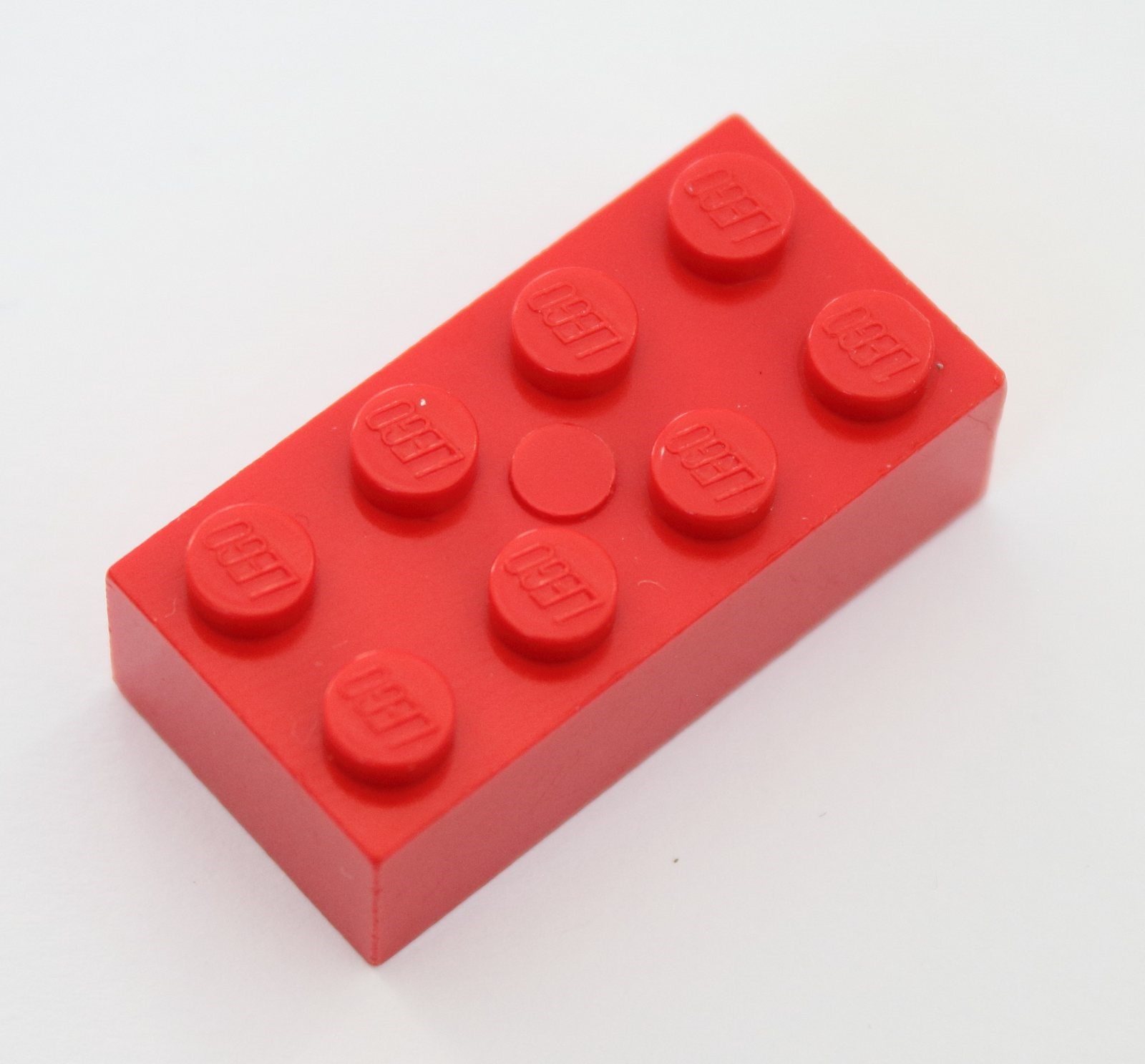
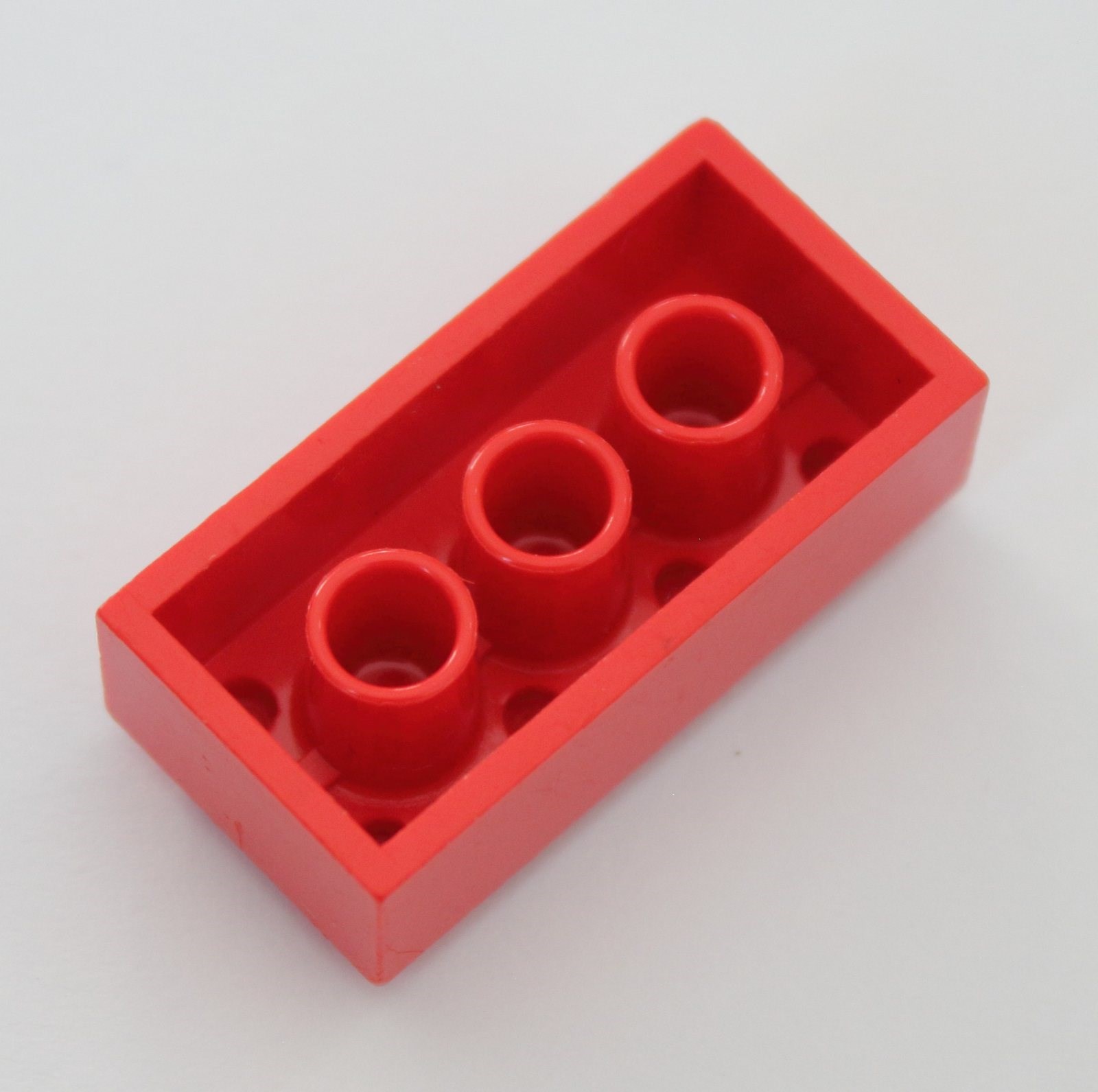
3001OLD_SAM 1961–1988
Samsonite 2×4 brick with “narrow open O logo”: manufactured between 1961 and 1988 by Samsonite under license for the North American market, features mould, colour, and finish variations compared with European models. It is associated with the “LEGO by Samsonite” logo and production in the United States and Canada, with differences in pigmentation and tolerances. The 3001OLD_SAM variant reflects this distinctive period in which Samsonite adapted LEGO moulds to its own industrial lines, producing compatible pieces that did not always align with Billund’s standards.
Origin: Samsonite Corporation, USA and Canada. Manufacturer: LEGO System under Samsonite license.
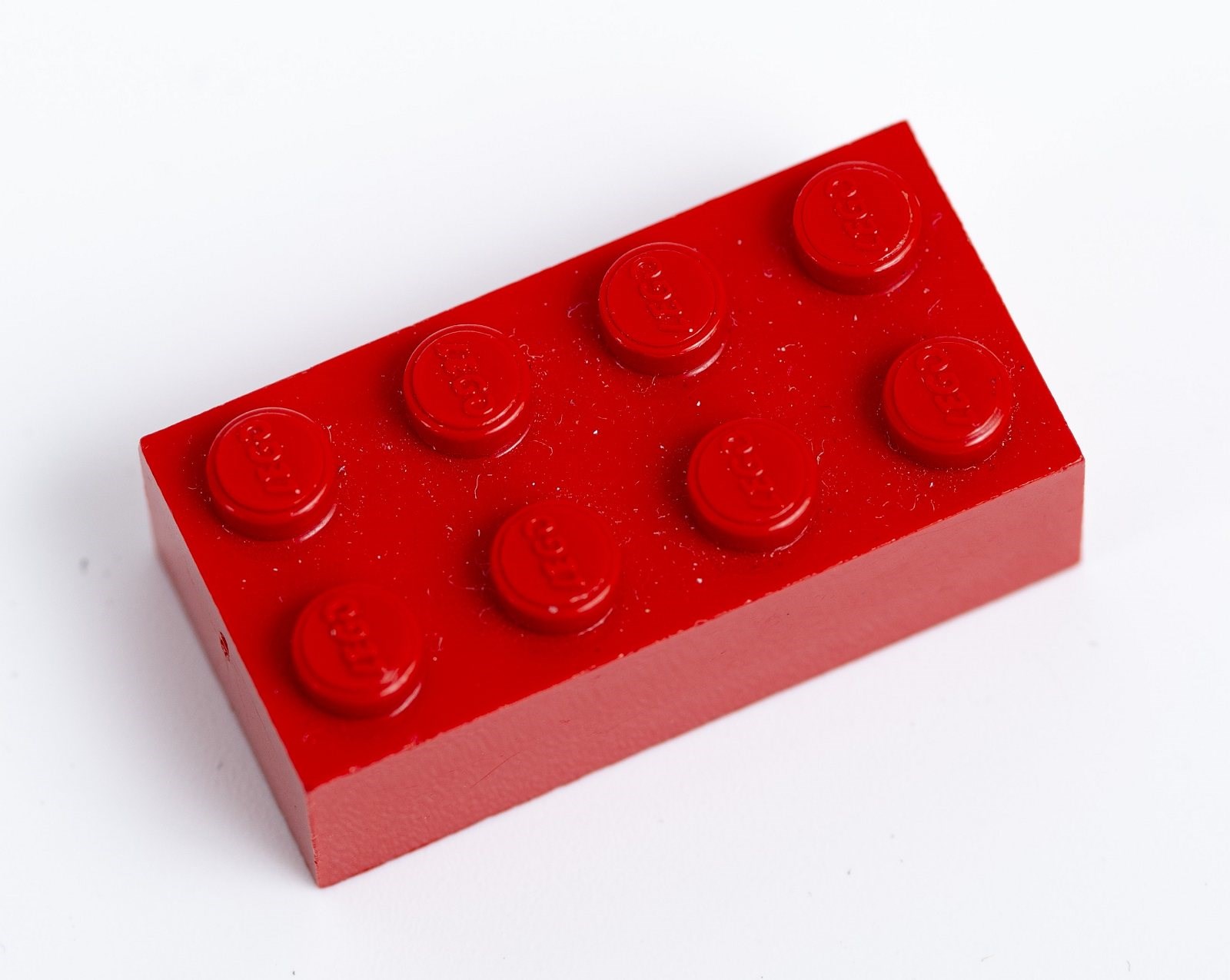

7049A/B_WH 1963–1996
Brick Modified 2x4 with Wheels Holder: manufactured between 1963 and 1996, is part of the LEGO Wheels Holder system and is designed to house axles through three aligned internal cylinders. The red variant corresponds to a prototype, as commercial models were produced mainly in black, grey, and white. The 7049A/B_WH piece allowed axles to be inserted without additional elements and played a key role in the evolution of LEGO vehicles, from early Samsonite models to pre-Technic systems.
Origin: LEGO System A/S – Billund / Samsonite / Enfield / Kladno. Manufacturer: LEGO System A/S.
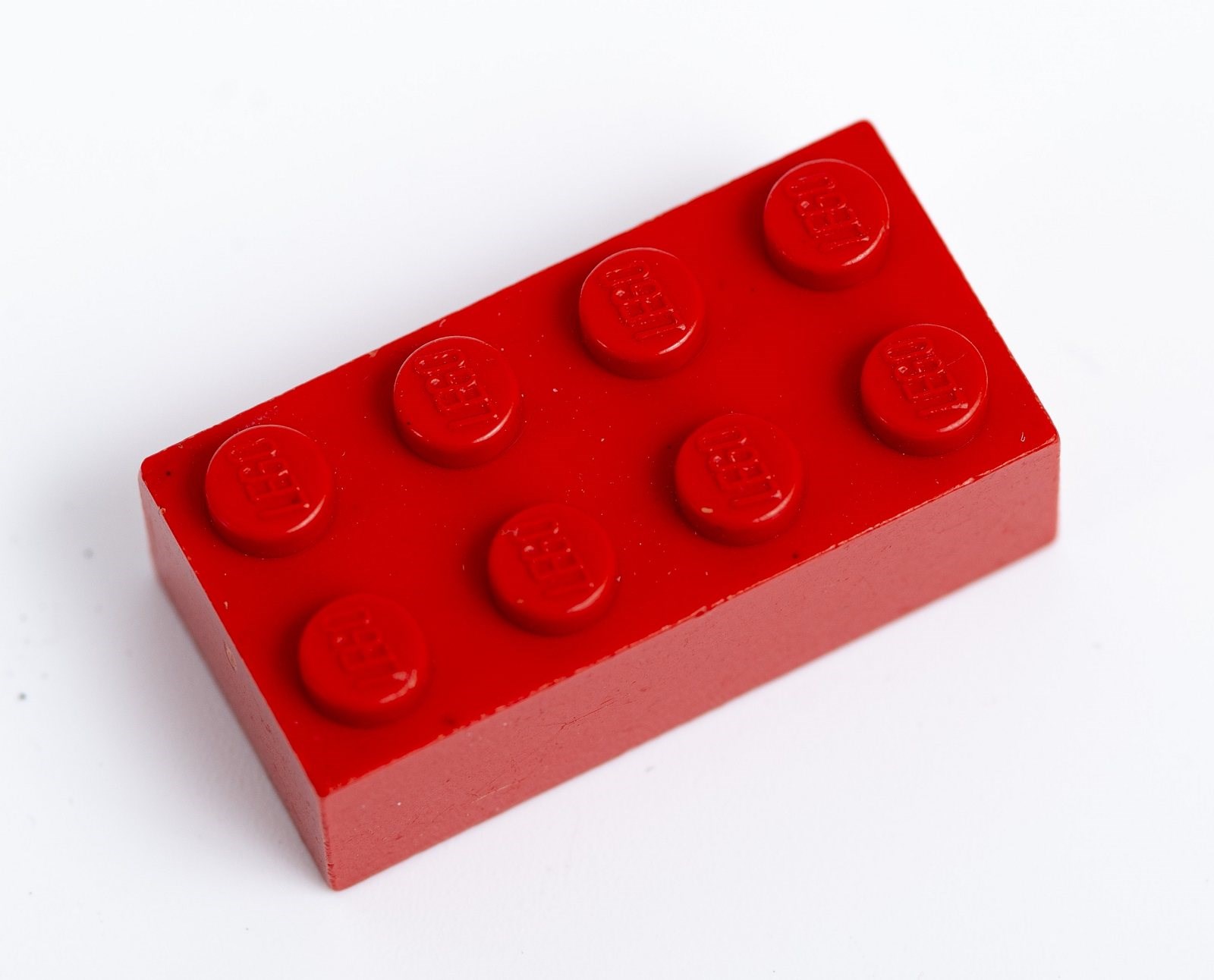
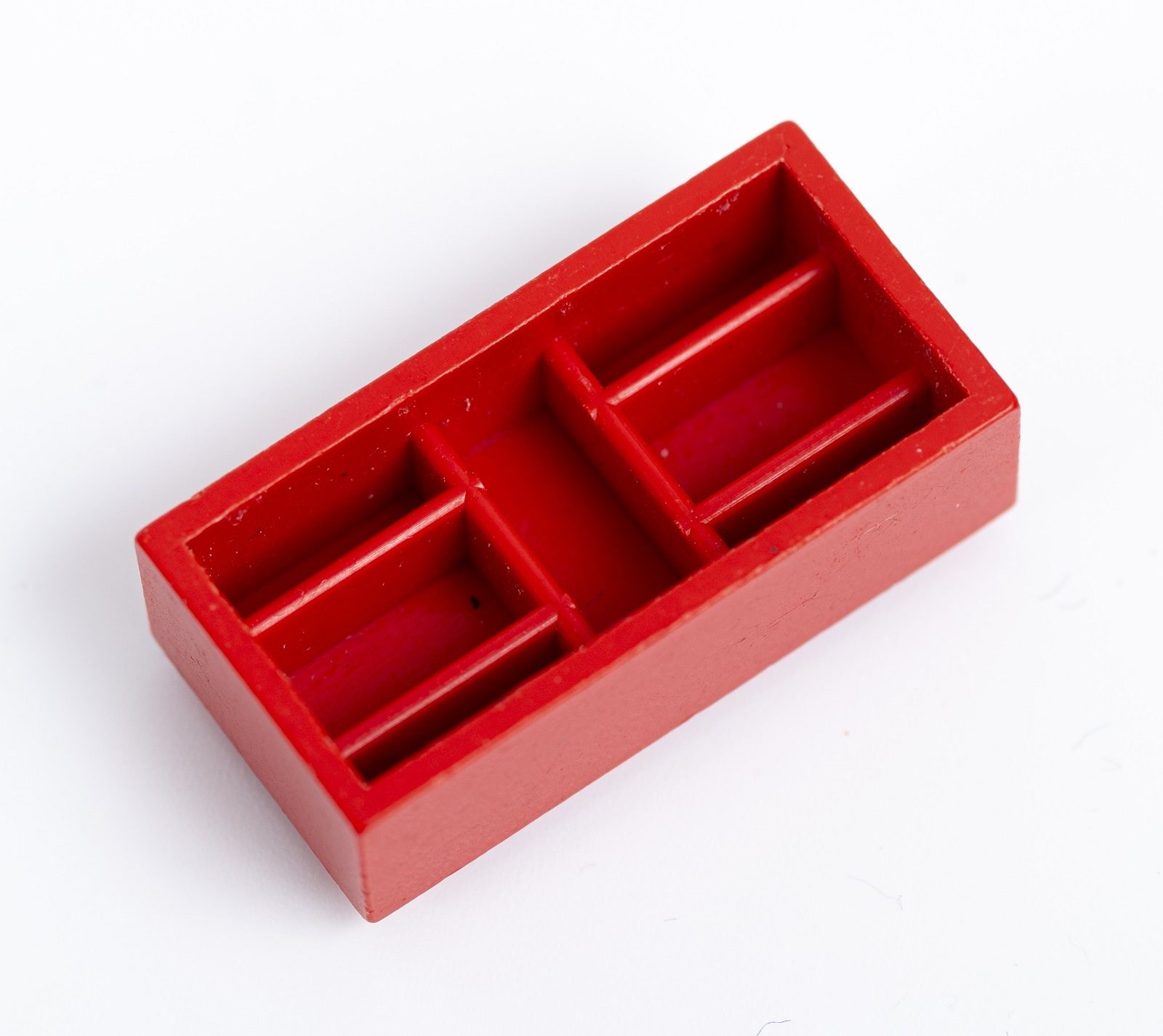
800_GA 1967–1977
Brick Modified 2x4 with Wheels Holder for Car Steering Gear Axle: manufactured between 1967 and 1977, is part of the steering system for LEGO vehicles. It features two longitudinal compartments separated by a central divider and side slots designed to hold a rotating axle. Its design enables the orientation of the front wheels through a steering mechanism predating Technic. The 800_GA variant, commonly found in white, was essential in the development of LEGO vehicles before the arrival of more complex systems in 1977.
Origin: LEGO System A/S – Billund / Samsonite / Enfield. Manufacturer: LEGO System A/S.
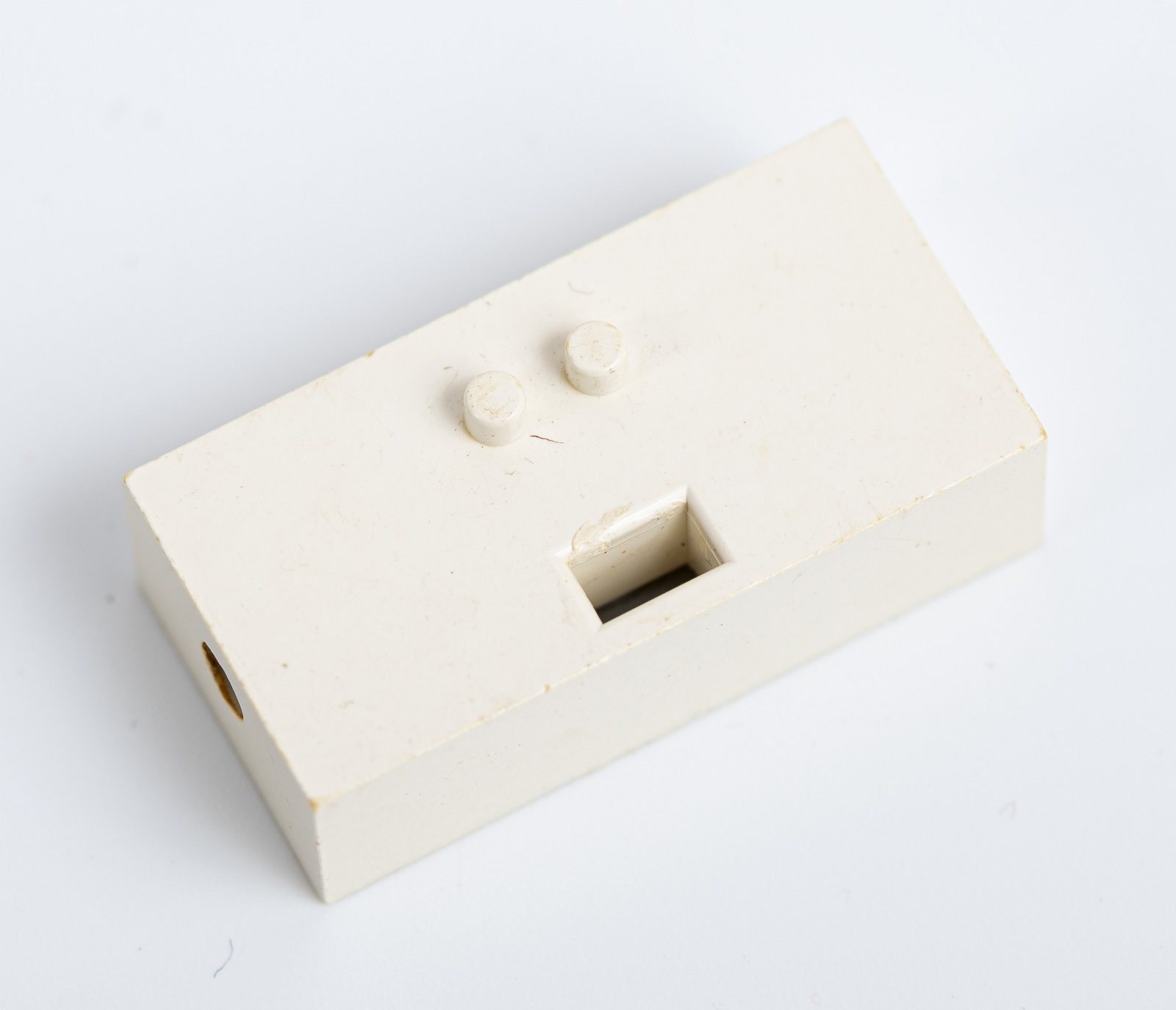
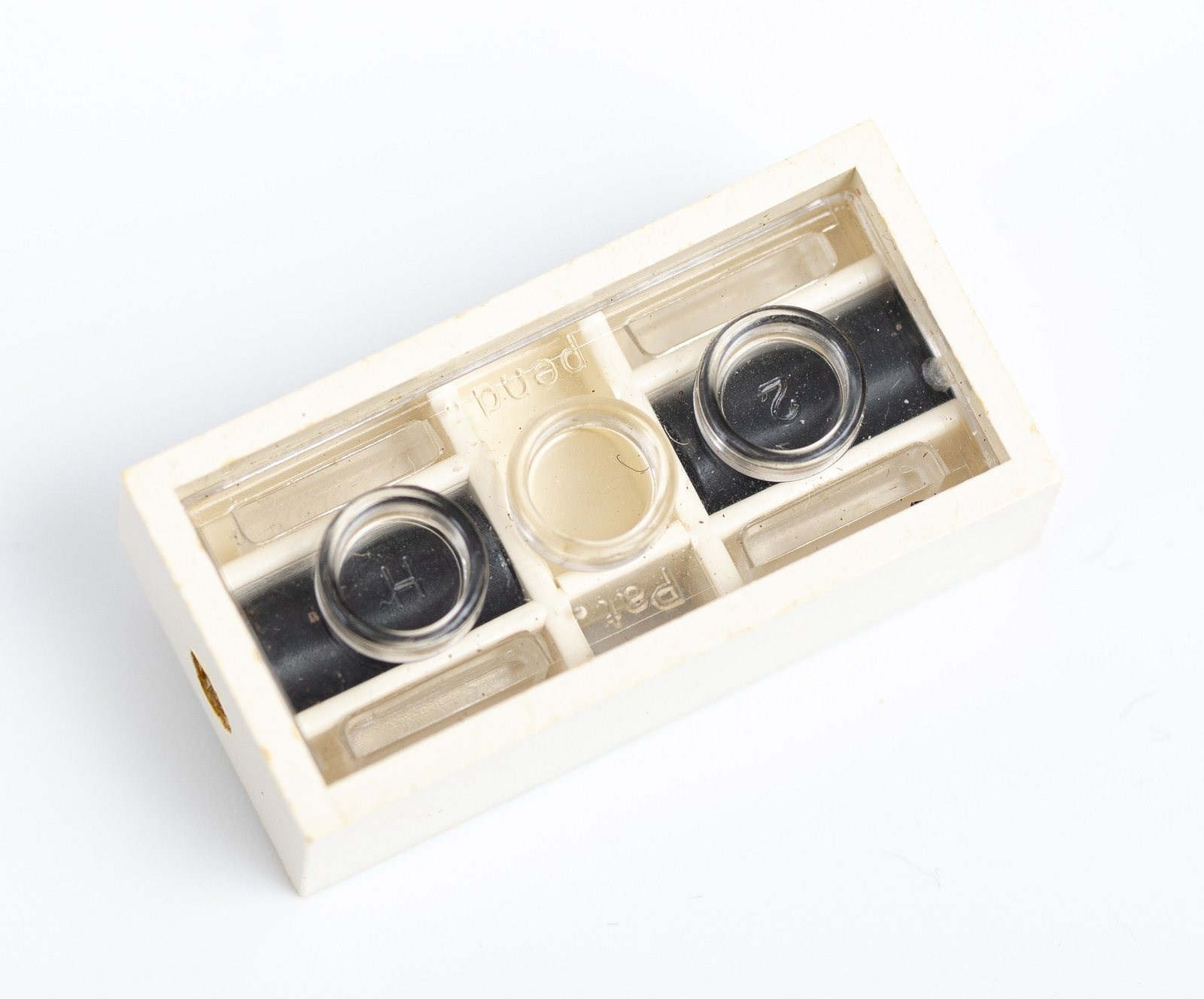
3001OLD_FR 1968–1972
Brick 2x4 with Flowrib: produced between 1968 and 1972, belongs to the transitional phase between the earliest ABS moulds and the optimised versions of the 1970s. It is distinguished by a central flowrib on the interior base (a flow rib designed to improve ABS injection and reduce defects). The 3001OLD_FR variant reflects the technical adjustments required to adapt acetate-era moulds to the new polymer and stands as a key witness to the industrial evolution of the LEGO system.
Origin: LEGO System A/S – Billund / Samsonite / Enfield. Manufacturer: LEGO System A/S.
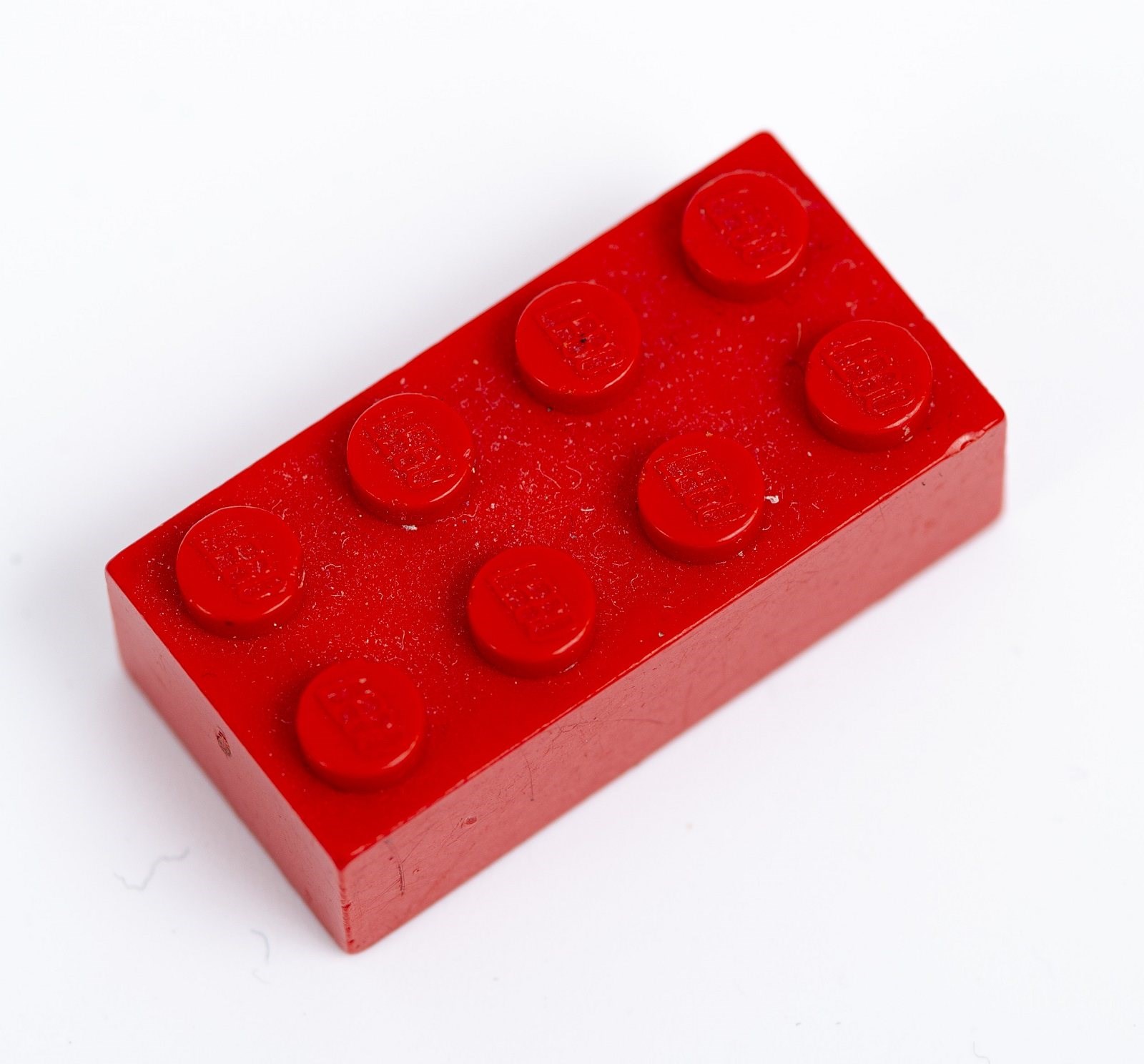
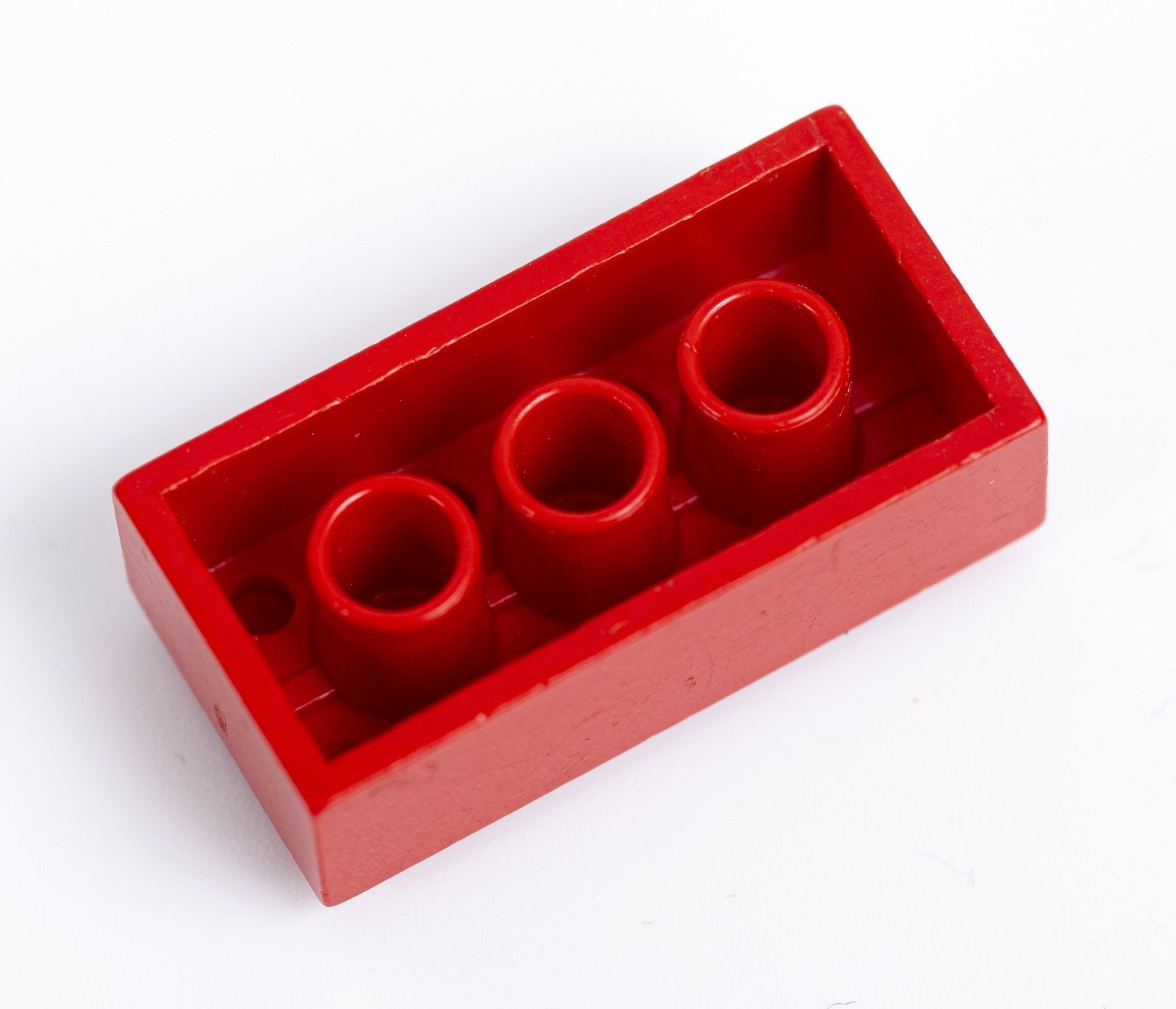
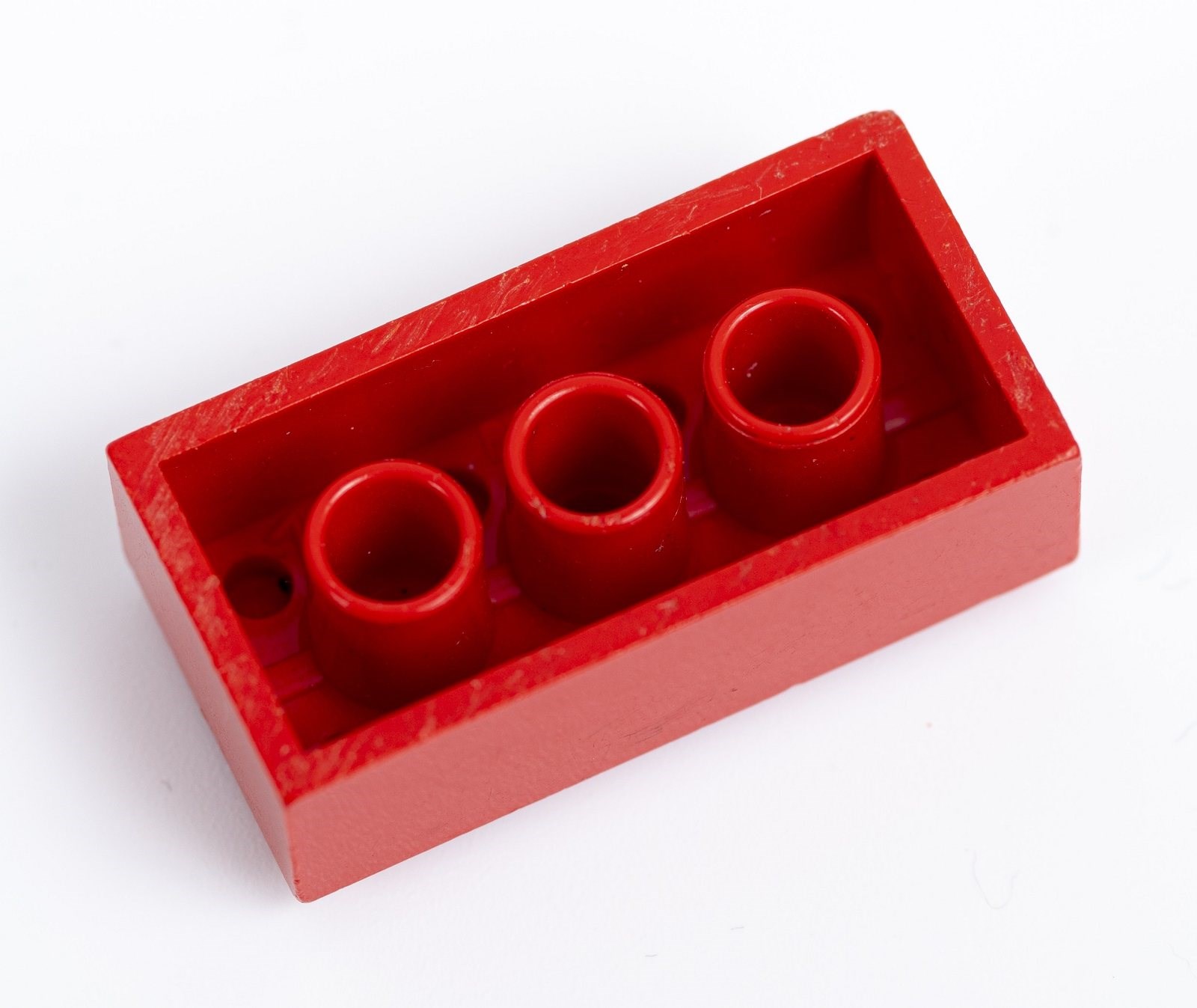
3001OLDB_HIT 1970
Brick 2x4 without Cross Supports, with Hole in Top: produced in 1970, belongs to an experimental series aimed at integrating mechanical and electrical functions into standard elements. It features a central through-hole for axles or wires and an interior flowrib that improves plastic injection. The 3001OLDB_HIT variant combines both characteristics and reflects LEGO’s attempts to hybridise the classic system with technical functions, anticipating the development of Technic.
Origin: LEGO System A/S – Billund / Enfield. Manufacturer: LEGO System A/S.

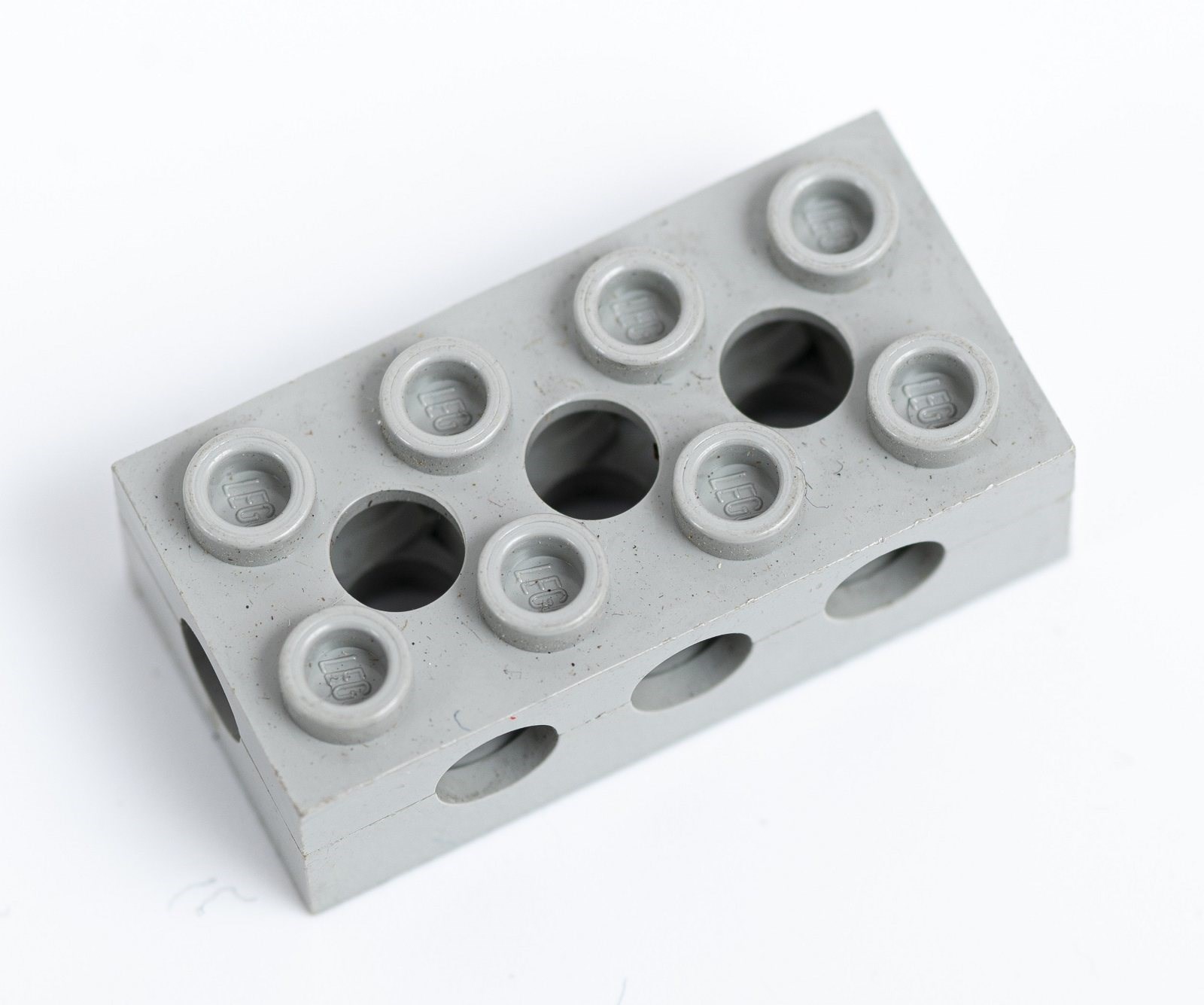
3709A/C_TB 1970–1977
Technic Brick 2x4 with Holes on All Sides: produced between 1970 and 1977, belongs to the early mechanical systems that preceded Technic. It is distinguished by circular side holes designed for inserting axles, pins, and gears, enabling the creation of functional mechanisms. The 3709A/C_TB variant, commonly found in light grey, was used in steering, transmission, and machinery sets, and stands as one of the first LEGO bricks conceived specifically for technical functions.
Origin: LEGO System A/S – Billund / Enfield. Manufacturer: LEGO System A/S.
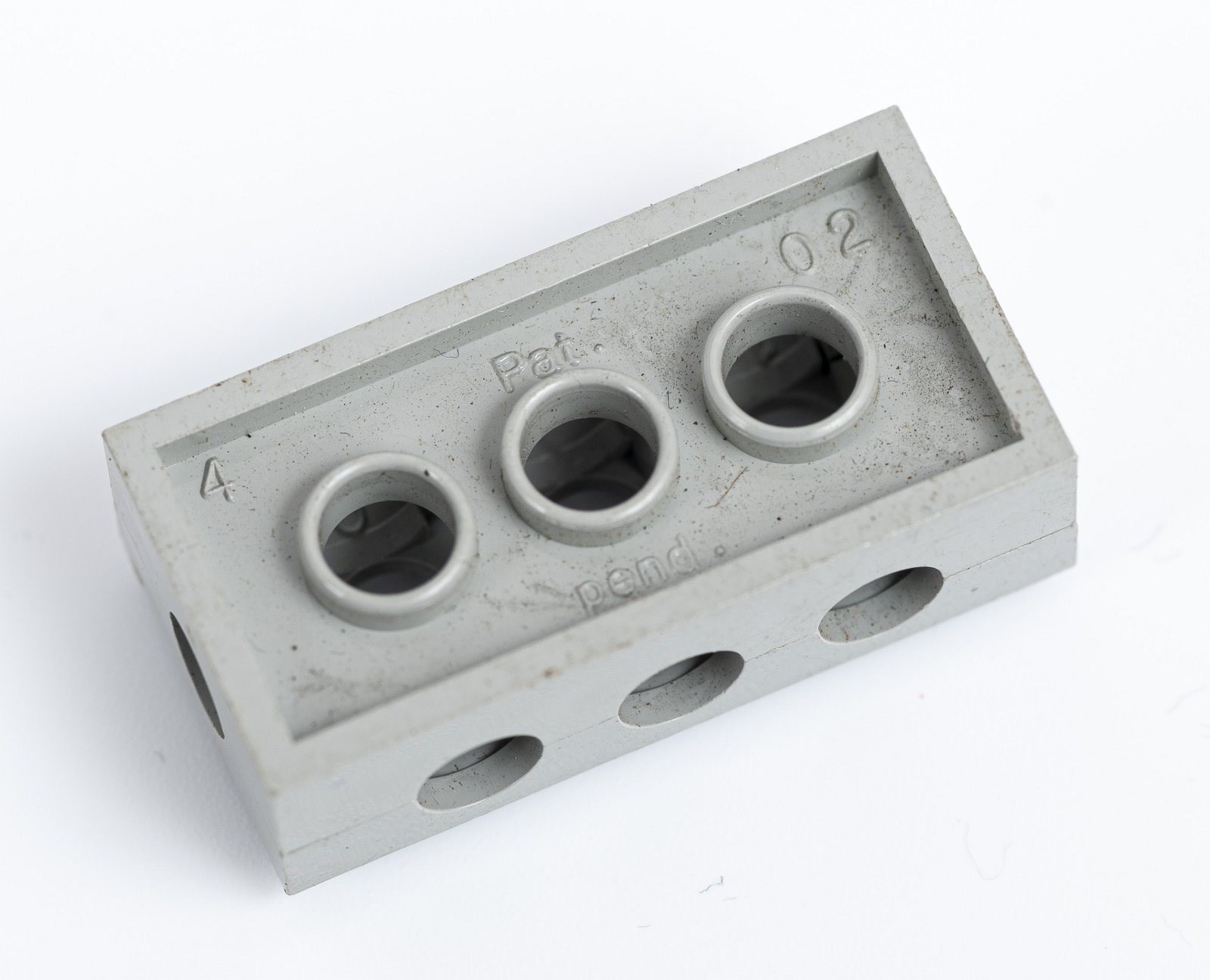
3001MIA_X 1970–1972
Minitalia Brick 2x4 with Bottom X Supports: produced between 1970 and 1972 exclusively in Italy, belongs to the Minitalia system and is distinguished by an “X” shaped underside instead of tubes. It also features an internal pattern of reinforcement lines and, in some examples, a central flowrib characteristic of transitional Italian moulds. The Minitalia Type X variant reflects a structural design unique in LEGO history, developed according to local manufacturing criteria.
Origin: Minitalia S.p.A. – Lainate, Italy. Manufacturer: LEGO System A/S under Minitalia license.
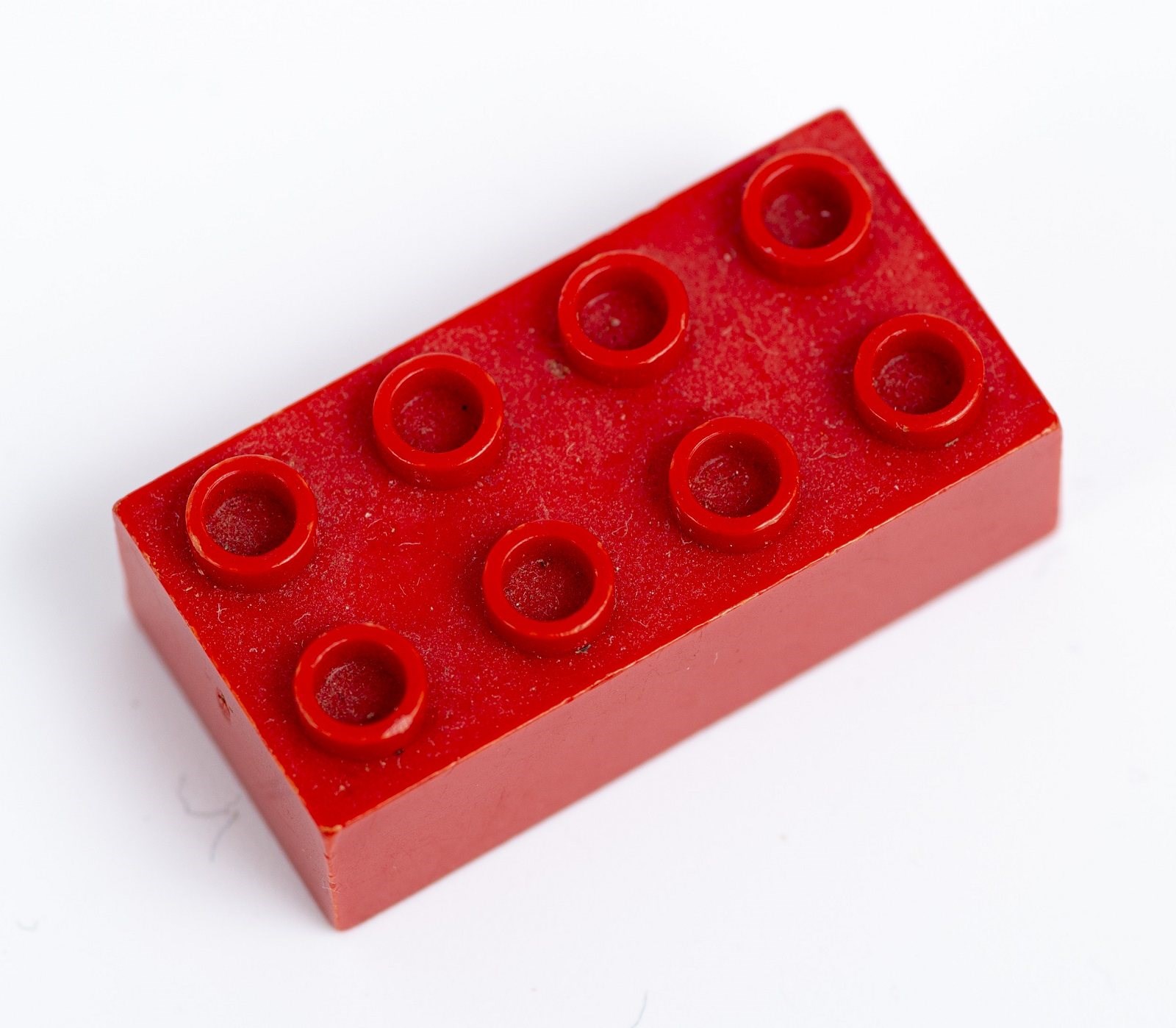

3001MIB_Ø 1973
Minitalia Brick 2x4 with Bottom Tubes: produced in 1973 during the second phase of the Minitalia system, is distinguished by an underside based on split tubes, a simplified version of the LEGO tubular system. It features an internal pattern of parallel lines and, in some examples, a central flowrib characteristic of transitional Italian moulds. The 3001MIB_Ø variant reflects the attempt to standardise Minitalia after the issues of the Type X design, marking the technical closure of this line before its discontinuation in 1974.
Origin: Minitalia S.p.A. – Lainate, Italy. Manufacturer: LEGO System A/S under Minitalia license.
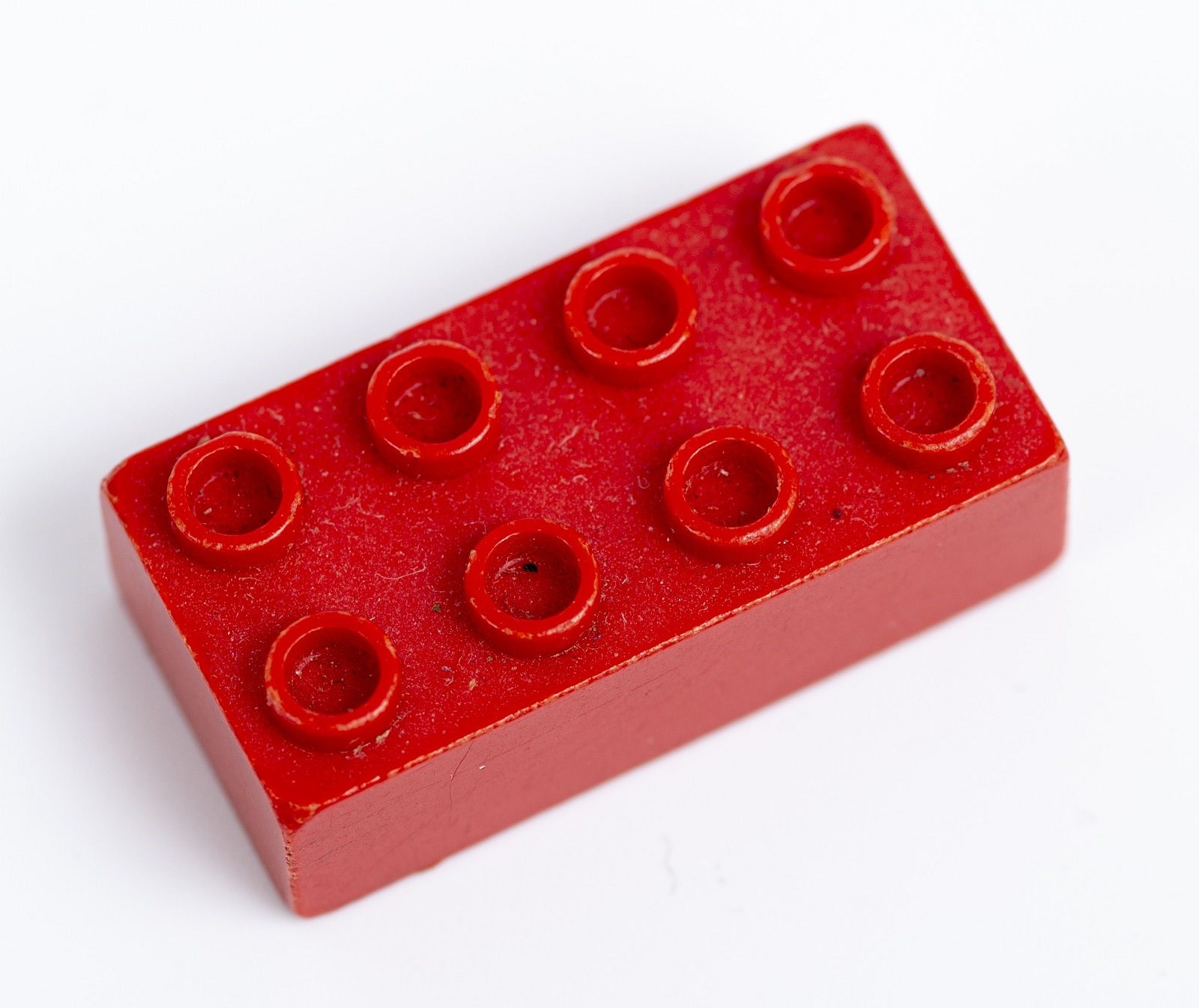
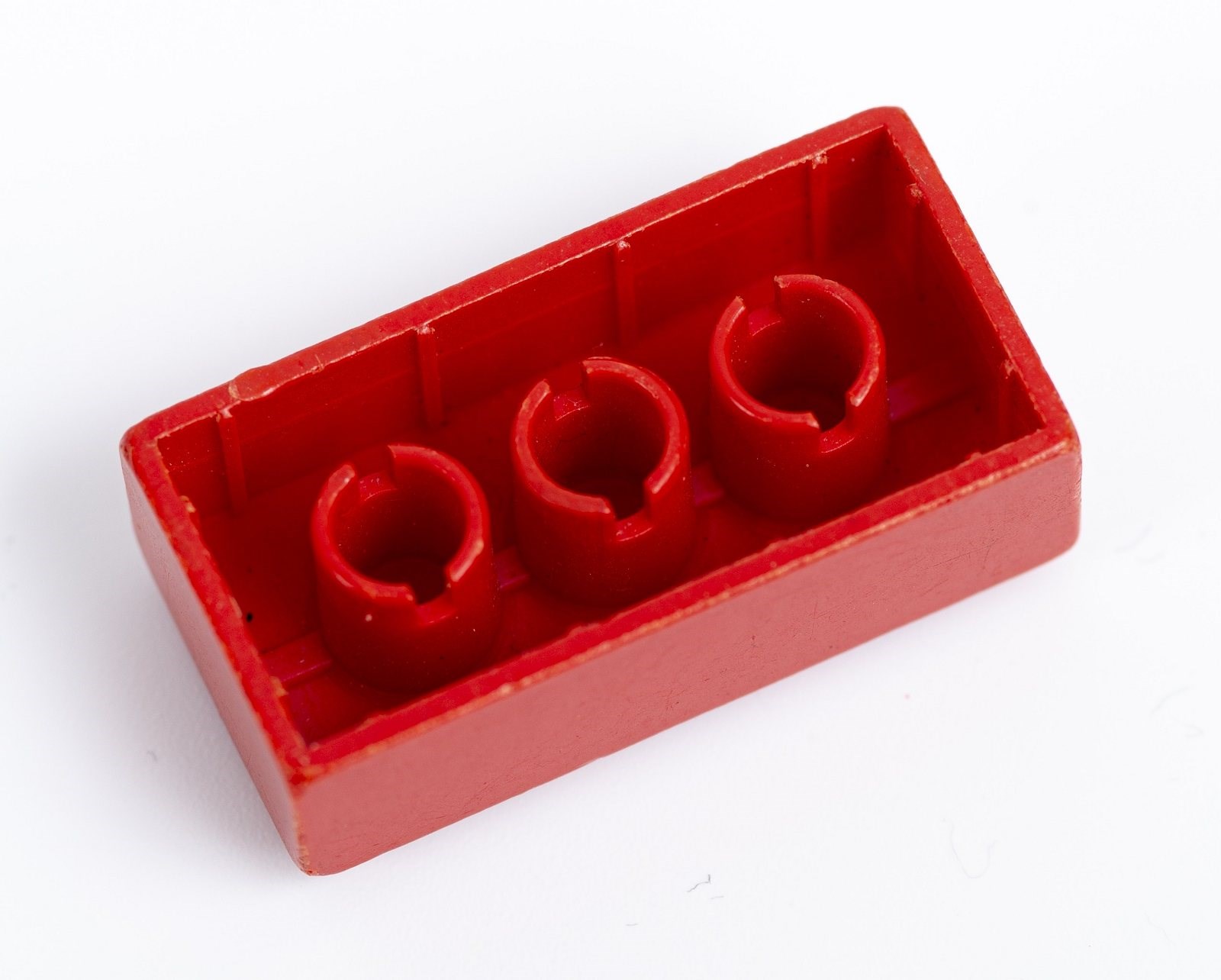
3001OLD_ST 1973–1978
Brick 2x4 with split tubes: produced between 1973 and 1978, belongs to a series of moulds optimised for ABS with a modified internal geometry. It is distinguished by an underside with split tubes and by a pattern of parallel lines “side bars” along the sides that improves injection flow and structural stability. The 3001OLD_ST variant reflects a phase of technical refinement aimed at achieving more uniform plastic flow and more precise clutch power, offering greater strength and full compatibility with the LEGO system compared with its Minitalia counterparts.
Origin: LEGO System A/S – Billund / Enfield. Manufacturer: LEGO System A/S.

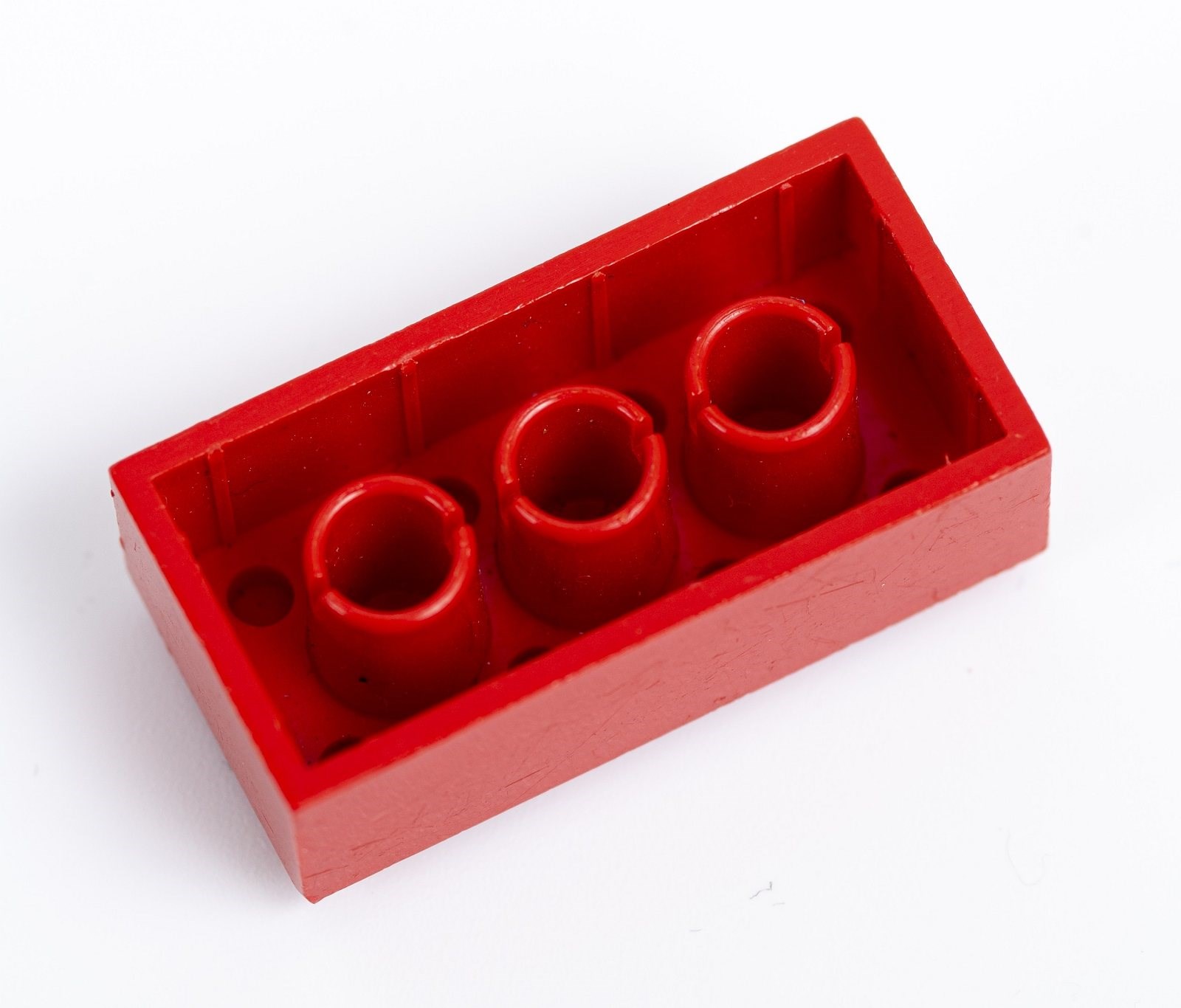
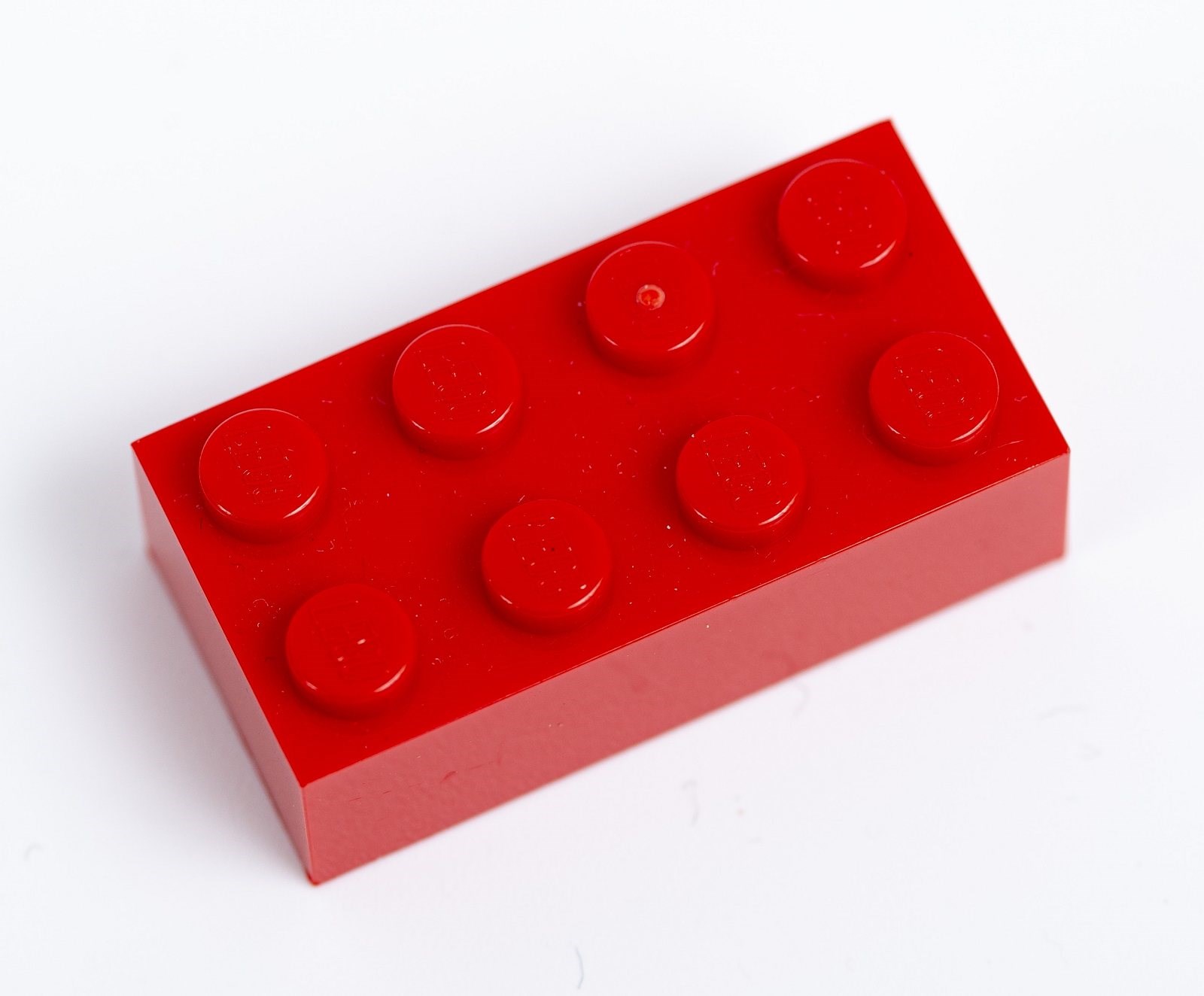
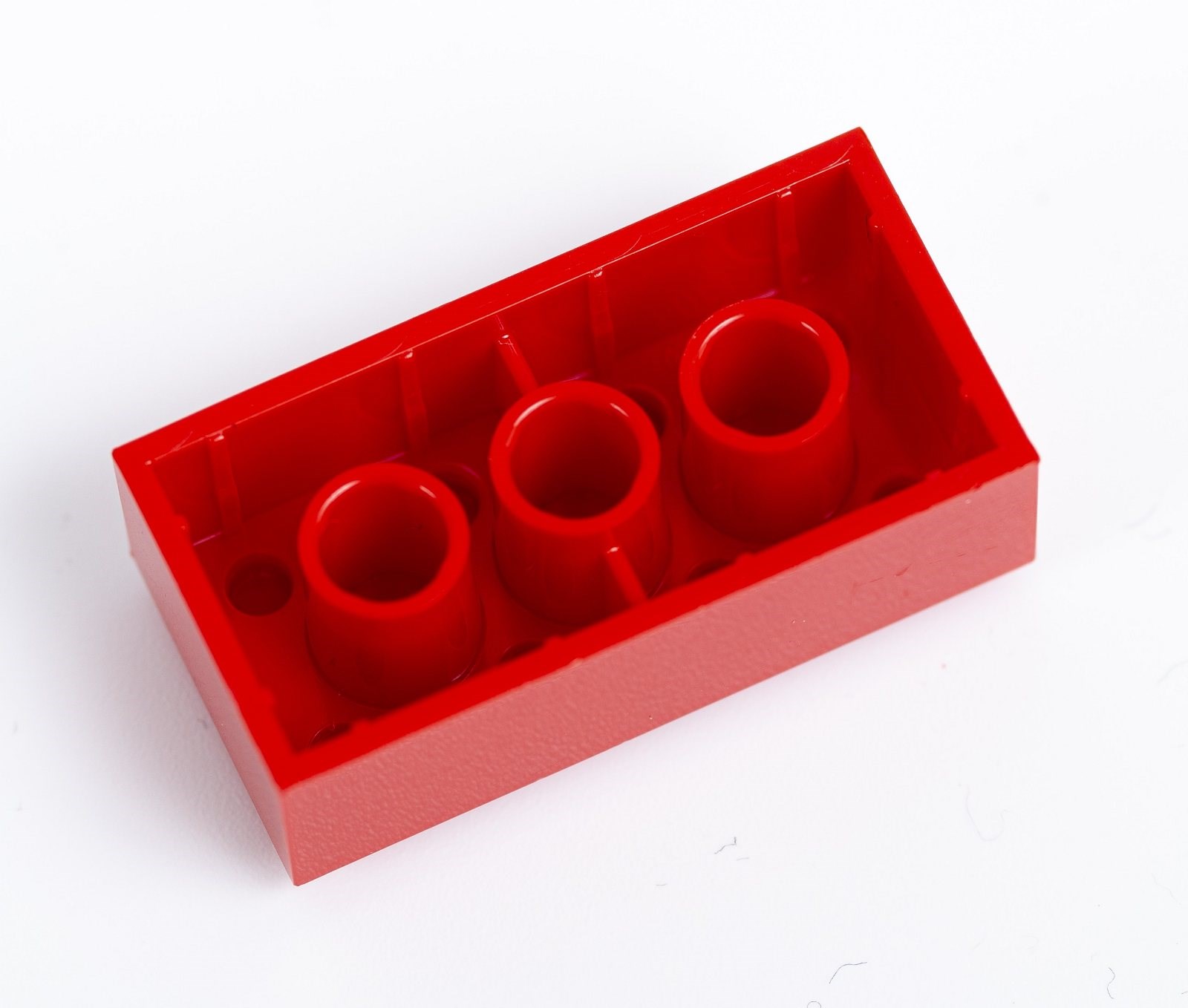
3001_CLB 1978–2026
Contemporary LEGO 2x4 brick: produced continuously from 1978 to the present, represents the definitive standard of the LEGO system. It incorporates three full internal tubes, cross support, side bars, micrometric tolerances, and a polished base that ensures a firm yet reversible clutch. Manufactured in engineering-grade ABS, it offers strength, dimensional stability, and full compatibility with all previous generations. This modern 3001 variant is the result of more than four decades of technical refinement and stands as the most precise and durable brick in the LEGO system.
Origin: LEGO System A/S – Billund / Kladno / Nyíregyháza / Monterrey / Jiaxing. Manufacturer: LEGO System A/S.
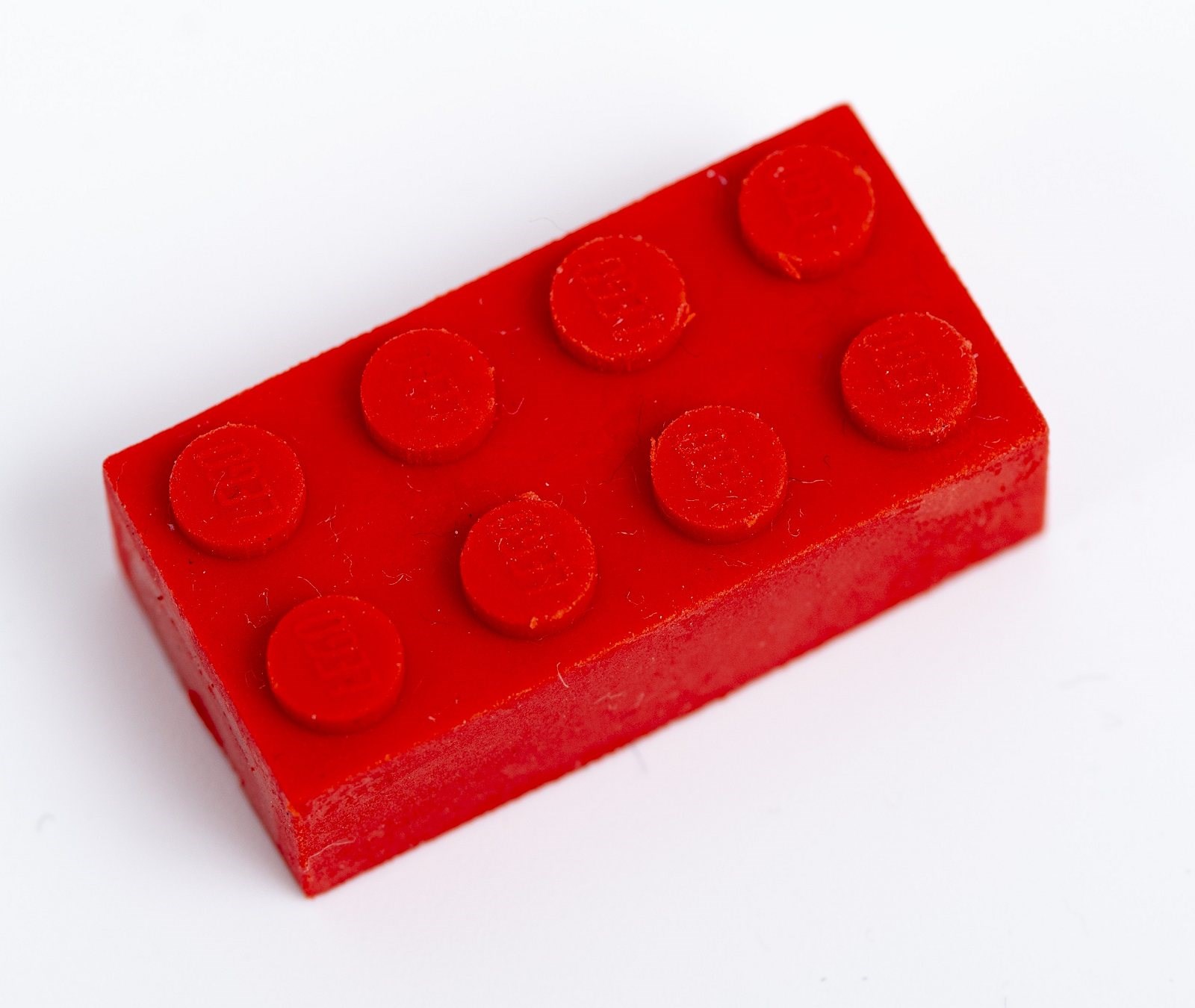
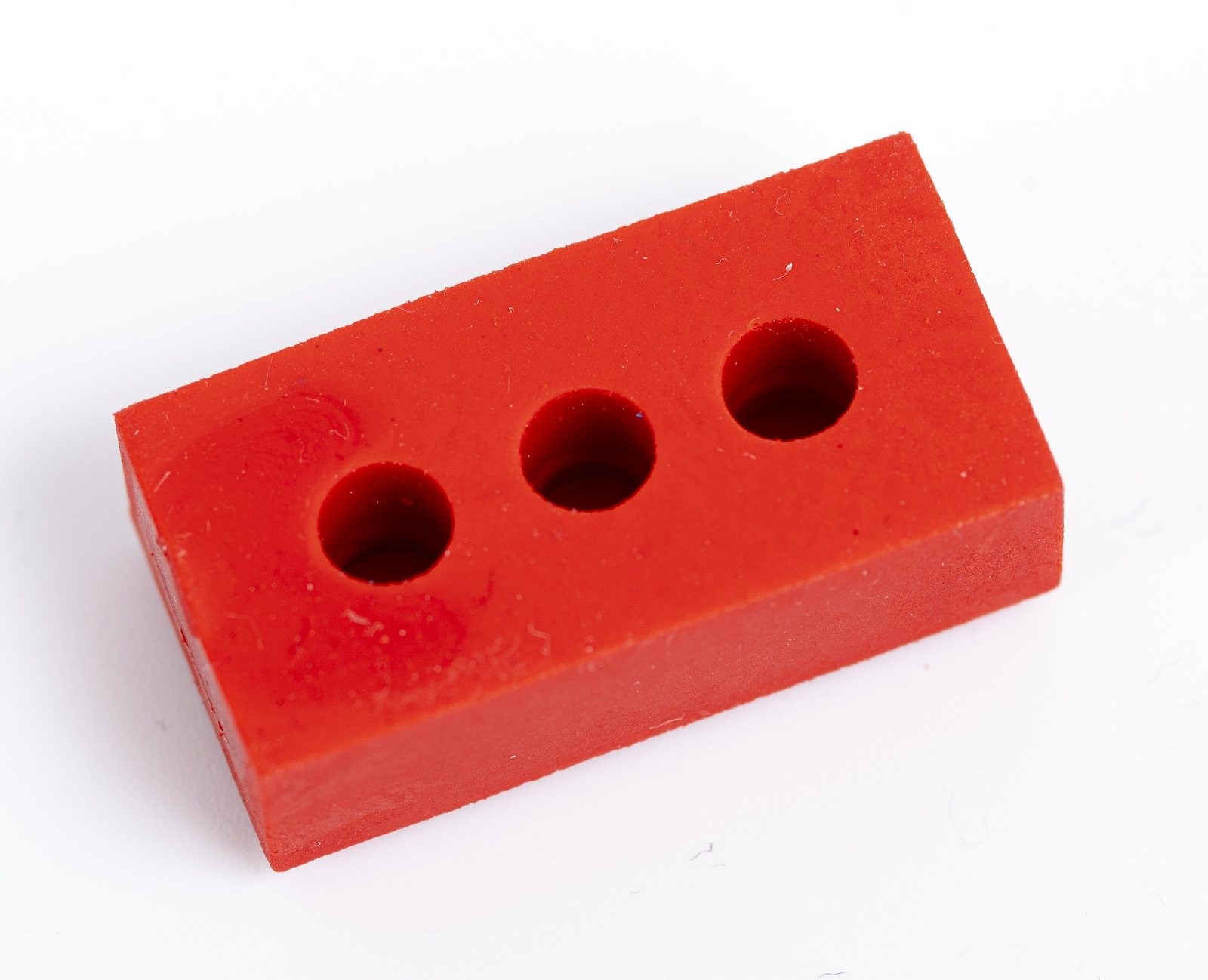
ERASER01 1992–2026
Eraser 2x4 Brick with 3 Holes on Bottom: introduced in 1992 as the ERASER01 piece, reproduces the shape of the classic brick but is made of a rubber-like material to function as an eraser. Although it is not compatible with the construction system, it retains the external geometry of the 2×4 brick and is marketed as a school accessory and merchandising item. The ERASER01 variant remained in production through 2026 in multiple colours and themed editions, becoming a collectable item within the LEGO stationery line.
Origin: LEGO Licensing / LEGO Stationery. Manufacturer: LEGO Group / external licensees (Stabilo, Santoro, Bic, etc.).
39789_AH 2019–2026
Technic Brick 2x4 with 3 Axle Holes: introduced in 2019 and still in production in 2026, is part of the modernisation of the Technic system. It is distinguished by three axle holes on the top surface, allowing vertical axle insertion and improving structural rigidity. The 39789_AH variant was designed to solve the long-standing limitation of mounting vertical axles in compact spaces, and its internal geometry is optimised to withstand torsion and axial pressure. Since its release, it has become a key element in robotics, machinery, and functional vehicles.
Origin: LEGO System A/S – Billund / Nyiregyhaza / Monterrey / Jiaxing. Manufacturer: LEGO Group.
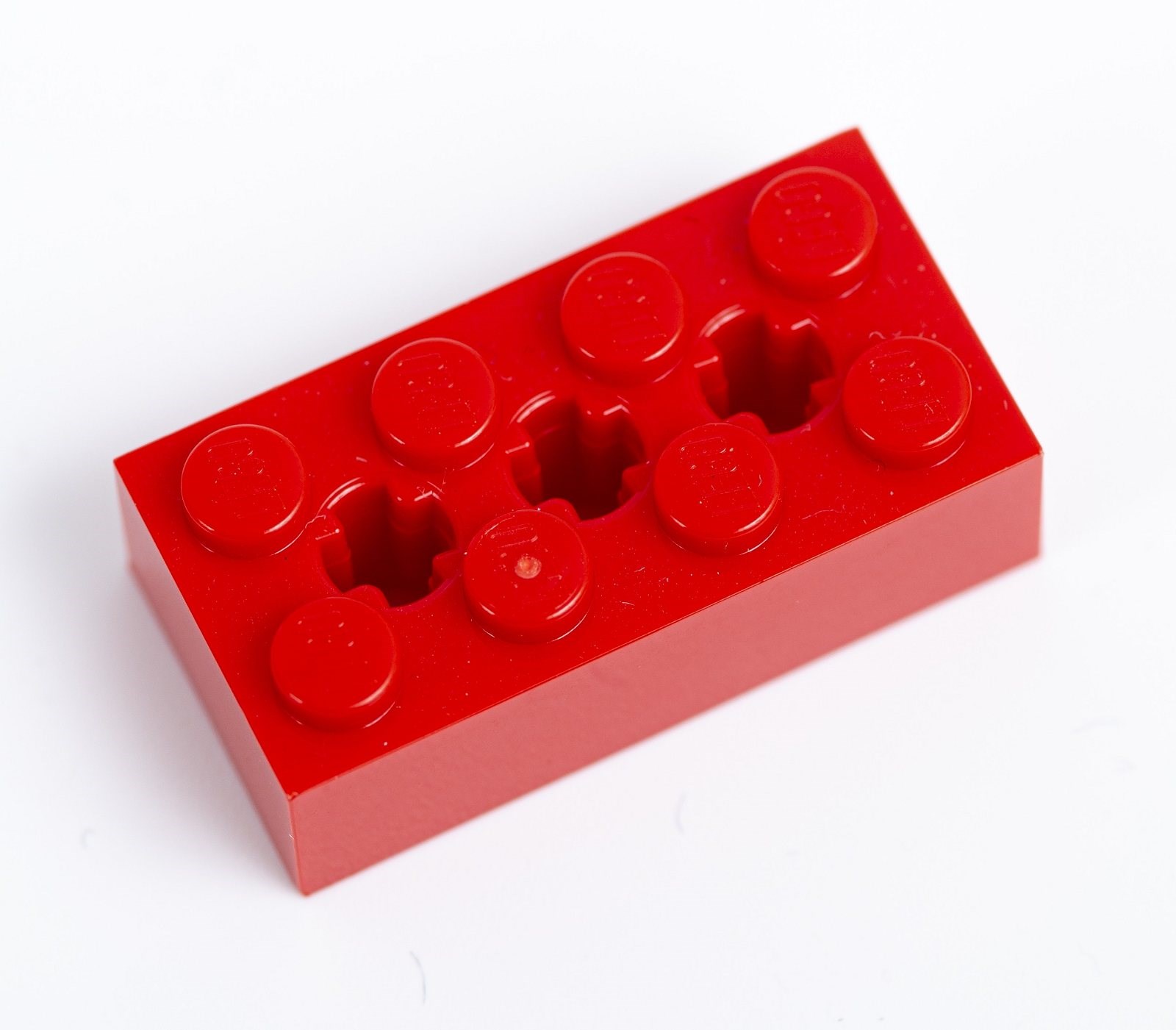
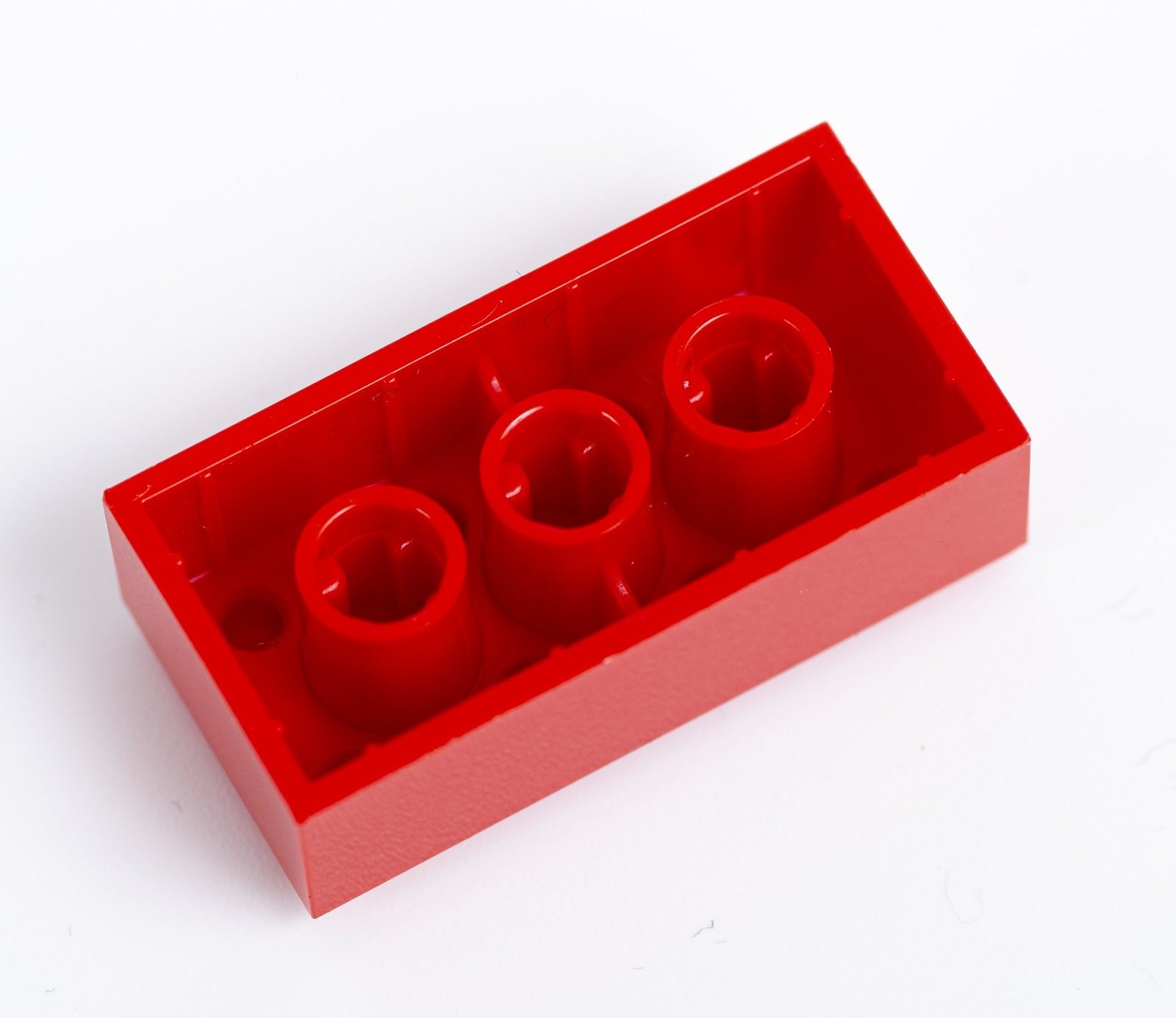
60189PB02_? 2020–2023
Brick Braille 2x4 with 1 Stud with Black Capital Letter A Pattern (dots-1 ?) (French with Antoine Numbers): produced between 2020 and 2023 as part of the LEGO Braille Bricks program, maintains the standard geometry but features studs moulded in a Braille pattern to represent letters, numbers, or symbols. The red 60189PB02_? variant is part of an educational set designed to teach Braille in a tactile and playful way, enabling blind and sighted children to build together. These bricks, distributed in more than twenty countries, symbolise LEGO’s commitment to accessibility, inclusion, and universal learning.
Origin: LEGO Foundation / LEGO Group. Manufacturer: LEGO System A/S.
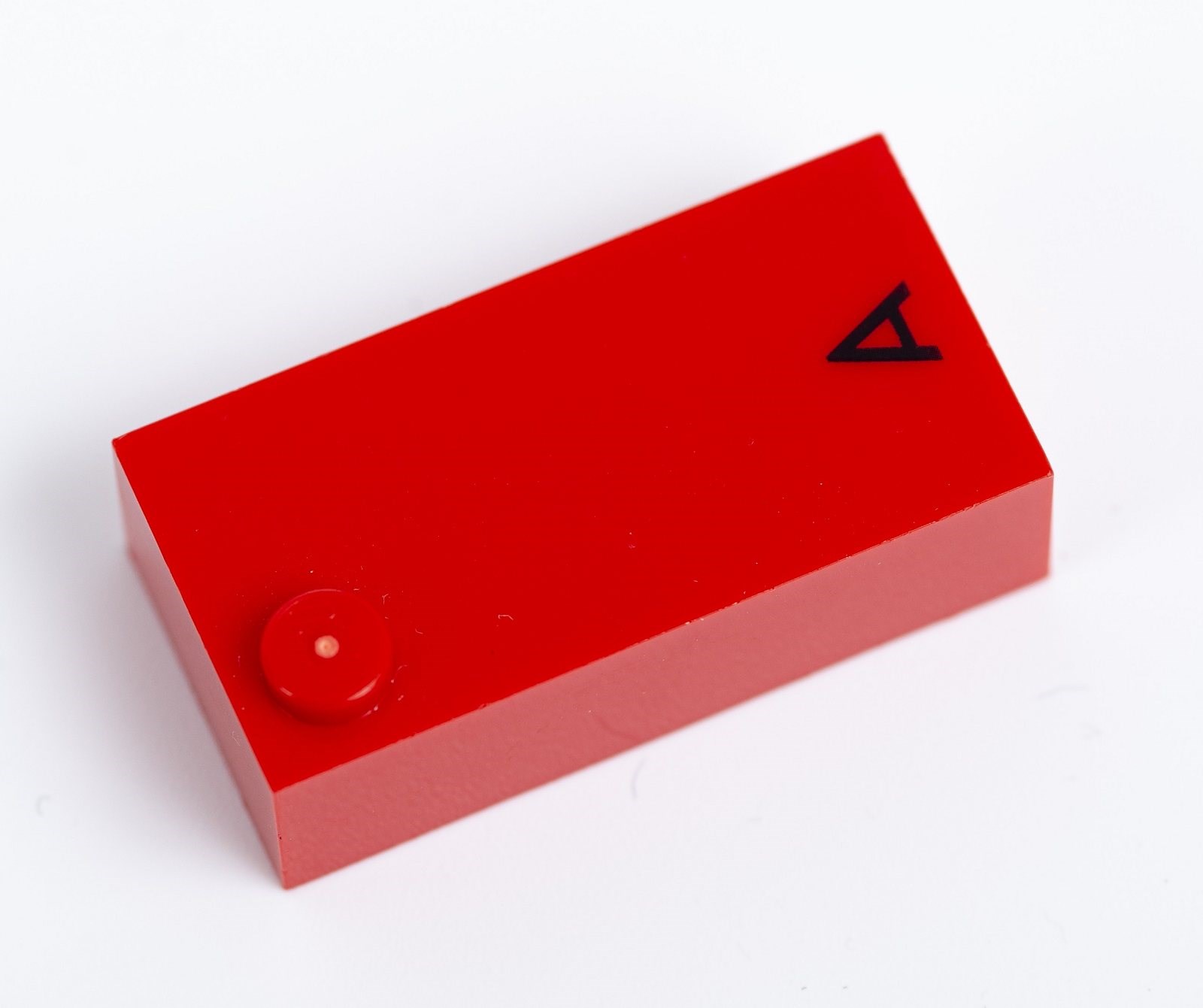
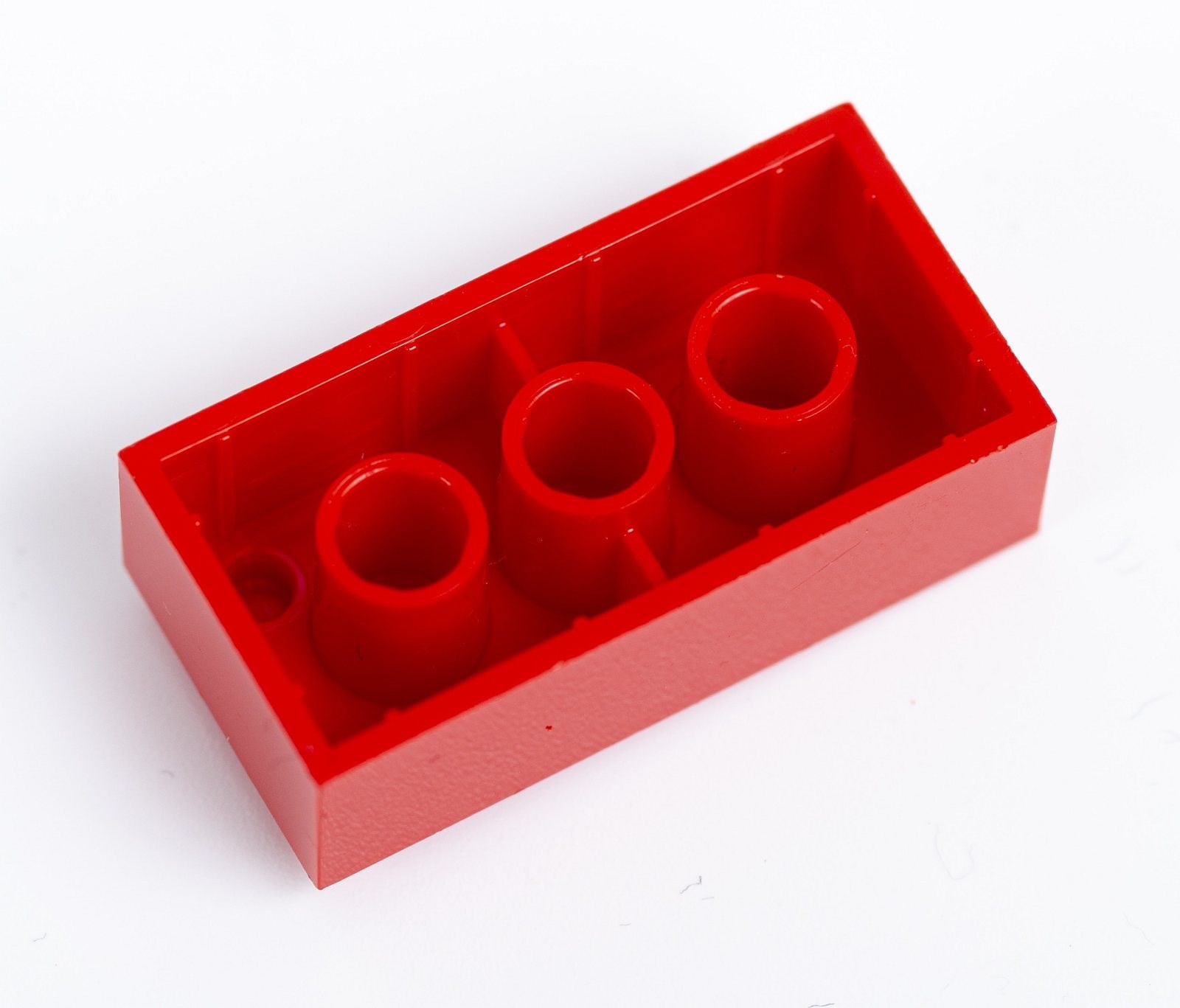
MX1142L 1963
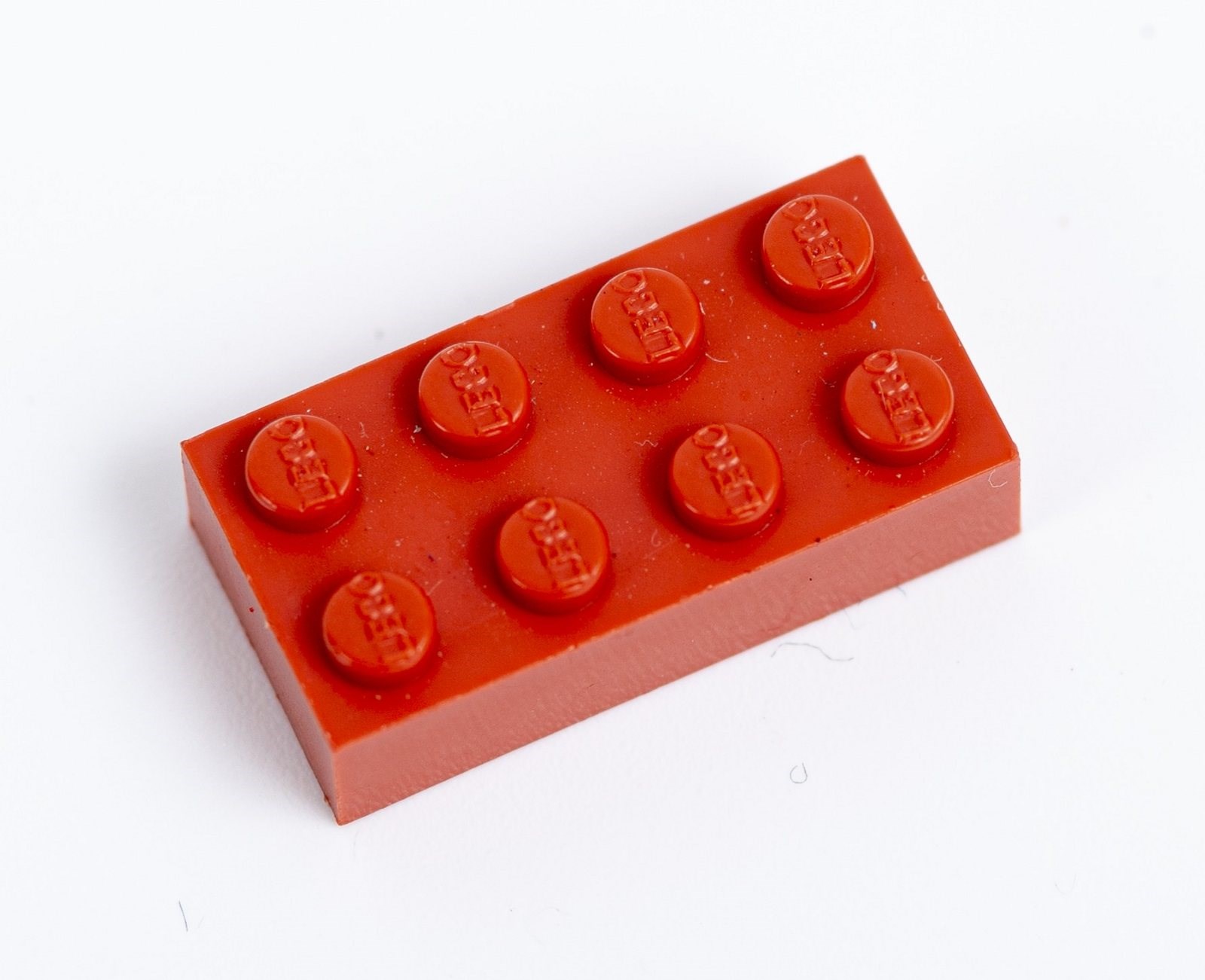
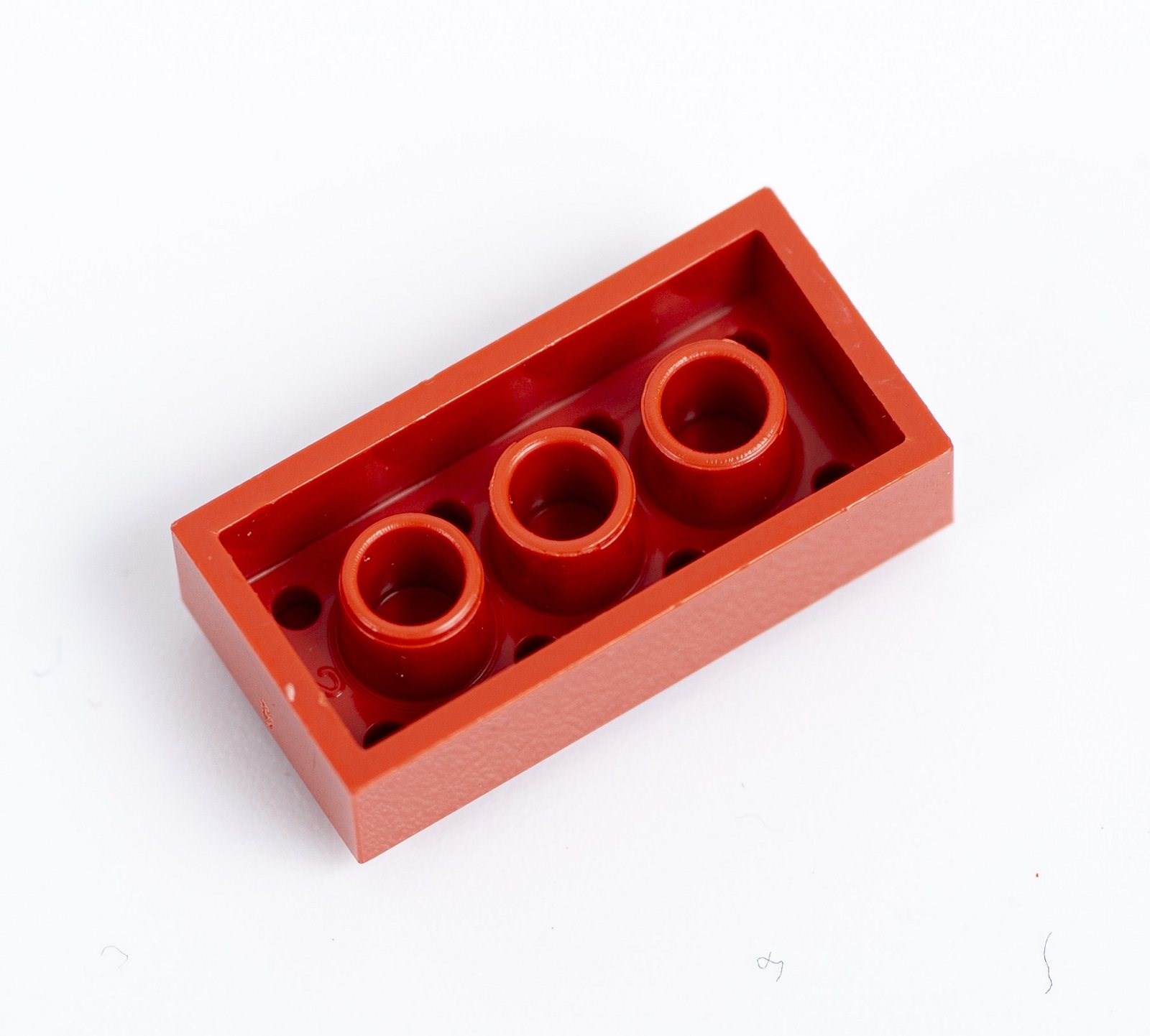
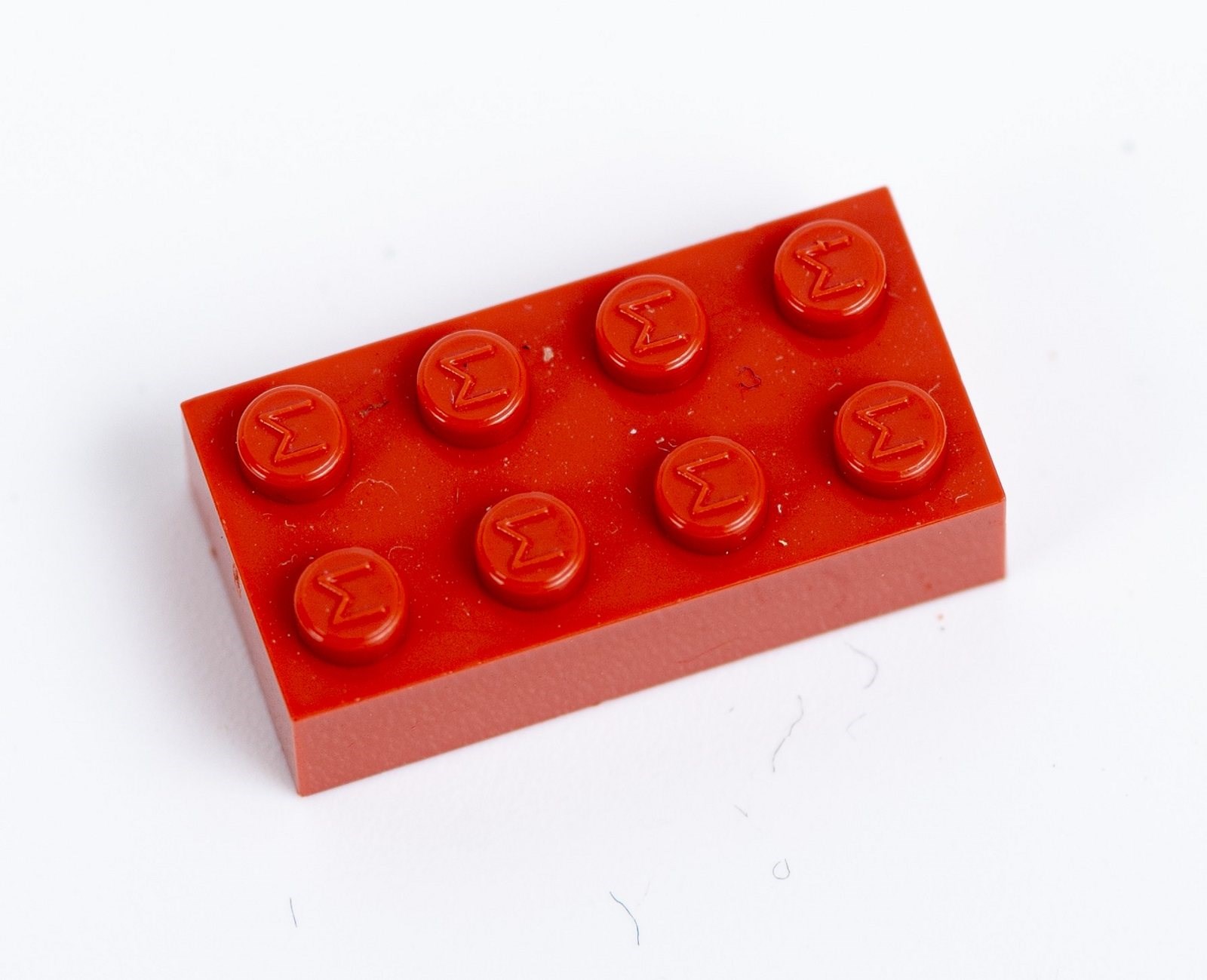
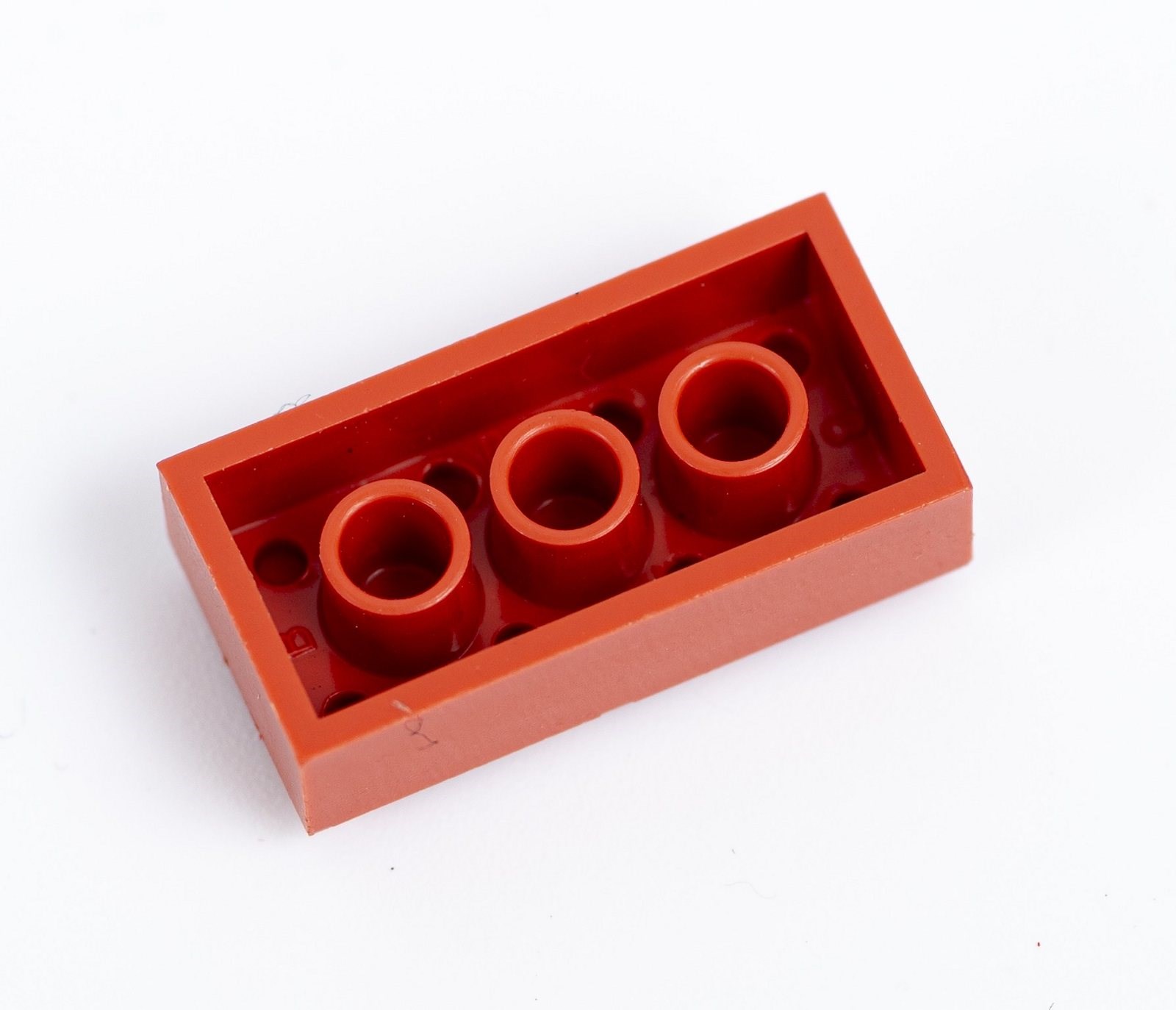
Modulex Brick 2x4 (LEGO on studs): produced in 1963 as piece MX1142L, belongs to the first generation of the Modulex system created for architecture, planning, and corporate design. It retains the LEGO logo on the studs, a feature exclusive to the earliest examples before Modulex adopted its own identity. Its reduced size and high precision make it a professional tool rather than a toy, representing the direct origin of the Modulex division within the LEGO Group.
Origin: Modulex A/S – Billund. Manufacturer: LEGO System A/S (corporate division).
MX1142M 1983
Modulex, Brick 2x4 (M on studs): produced in 1983 as piece MX1142M, belongs to the mature stage of the Modulex system, when the brand was already operating independently from LEGO. It is distinguished by studs bearing the “M” logo, symbol of Modulex’s consolidated corporate identity. Manufactured in high-precision ABS and maintaining the characteristic reduced scale, it represents the full professionalisation of the system for architecture, signage, and planning, with exclusive corporate colours and widespread use in offices and technical studios.
Origin: Modulex A/S – Billund. Manufacturer: Modulex A/S (independent from the LEGO system).
3011_DB 1969–2026
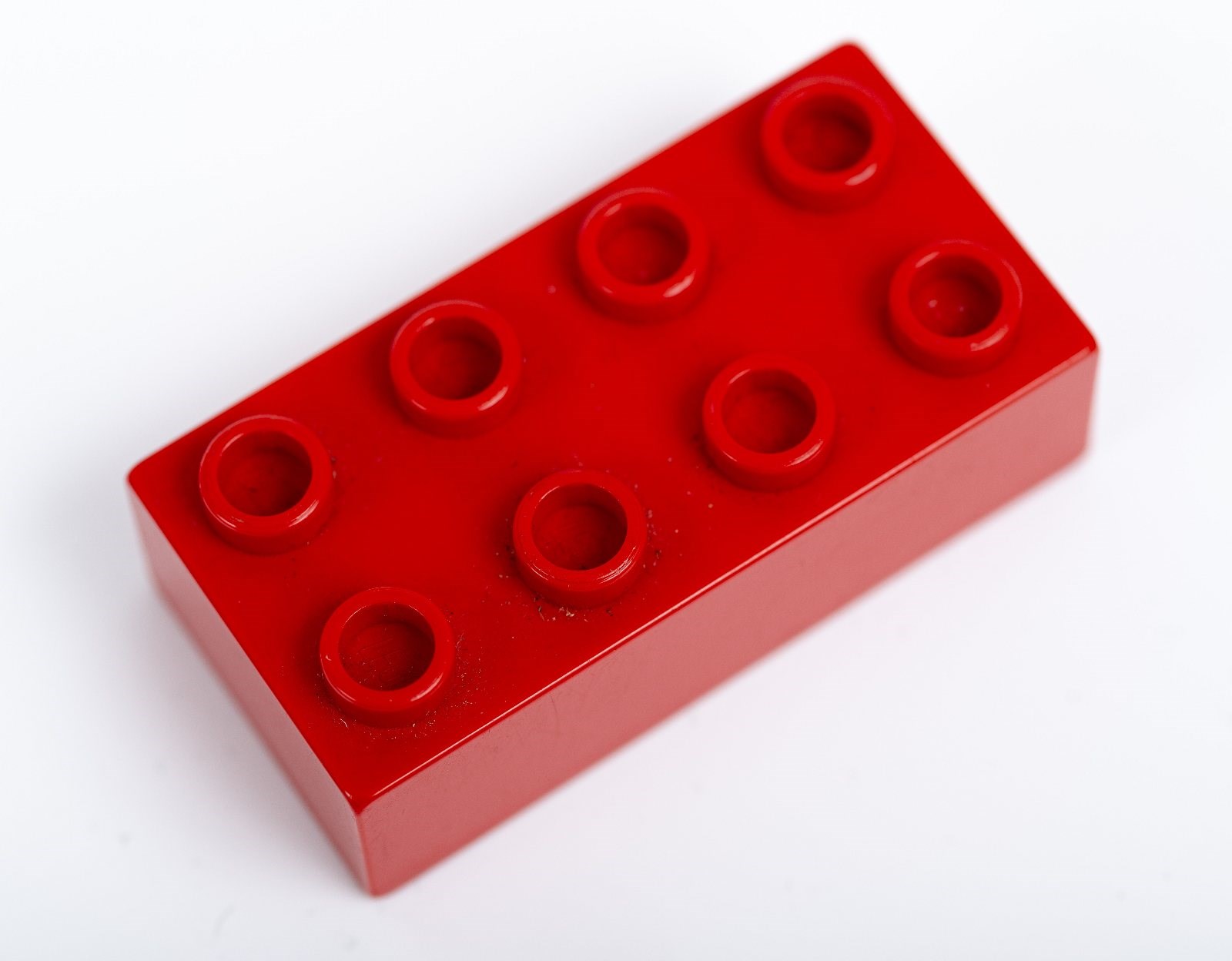
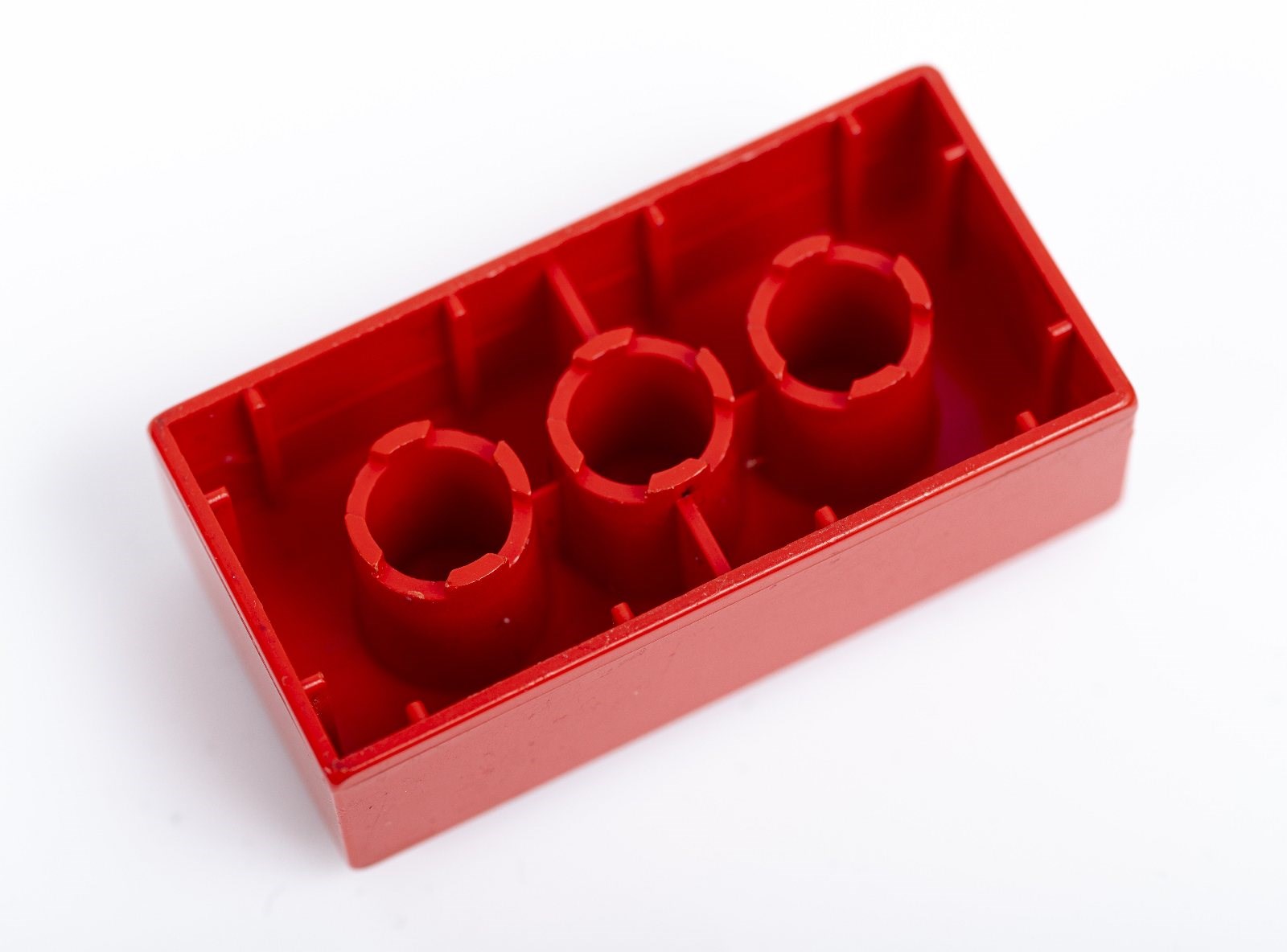
Duplo 2×4 brick: produced from 1969 to 2026 as piece 3011_DB, defines the construction standard for the LEGO preschool system. Its size—double that of the classic brick—ensures safety, easy handling, and high durability, while its internal design has been refined over decades to improve clutch power and maintain compatibility with LEGO System. This variant established DUPLO as the most robust and universal preschool system in the LEGO catalogue, evolving from simple oversized bricks into a global educational line.
Origin: LEGO System A/S – Billund. Manufacturer: LEGO Group.
6517c01_DT 1993–2015
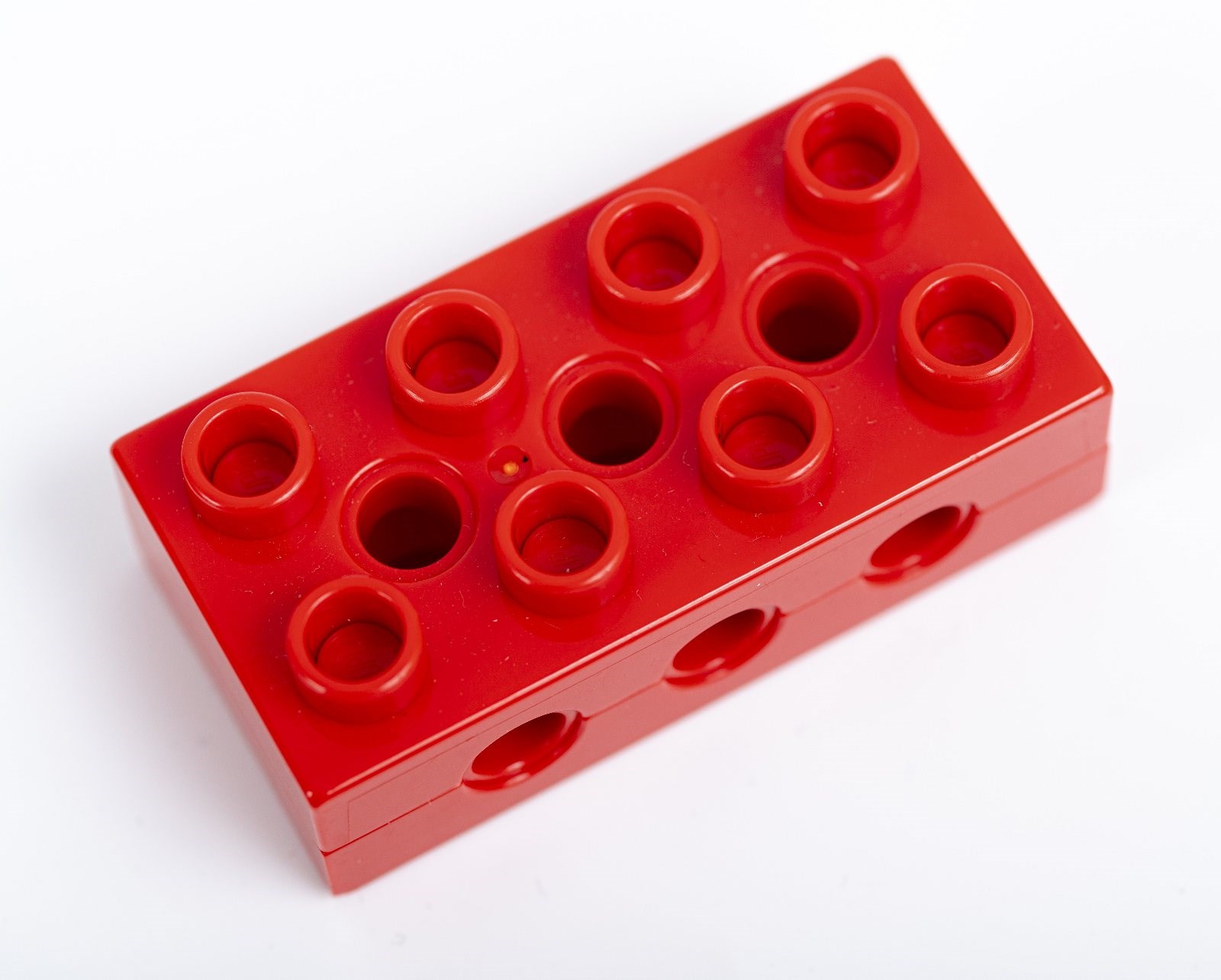
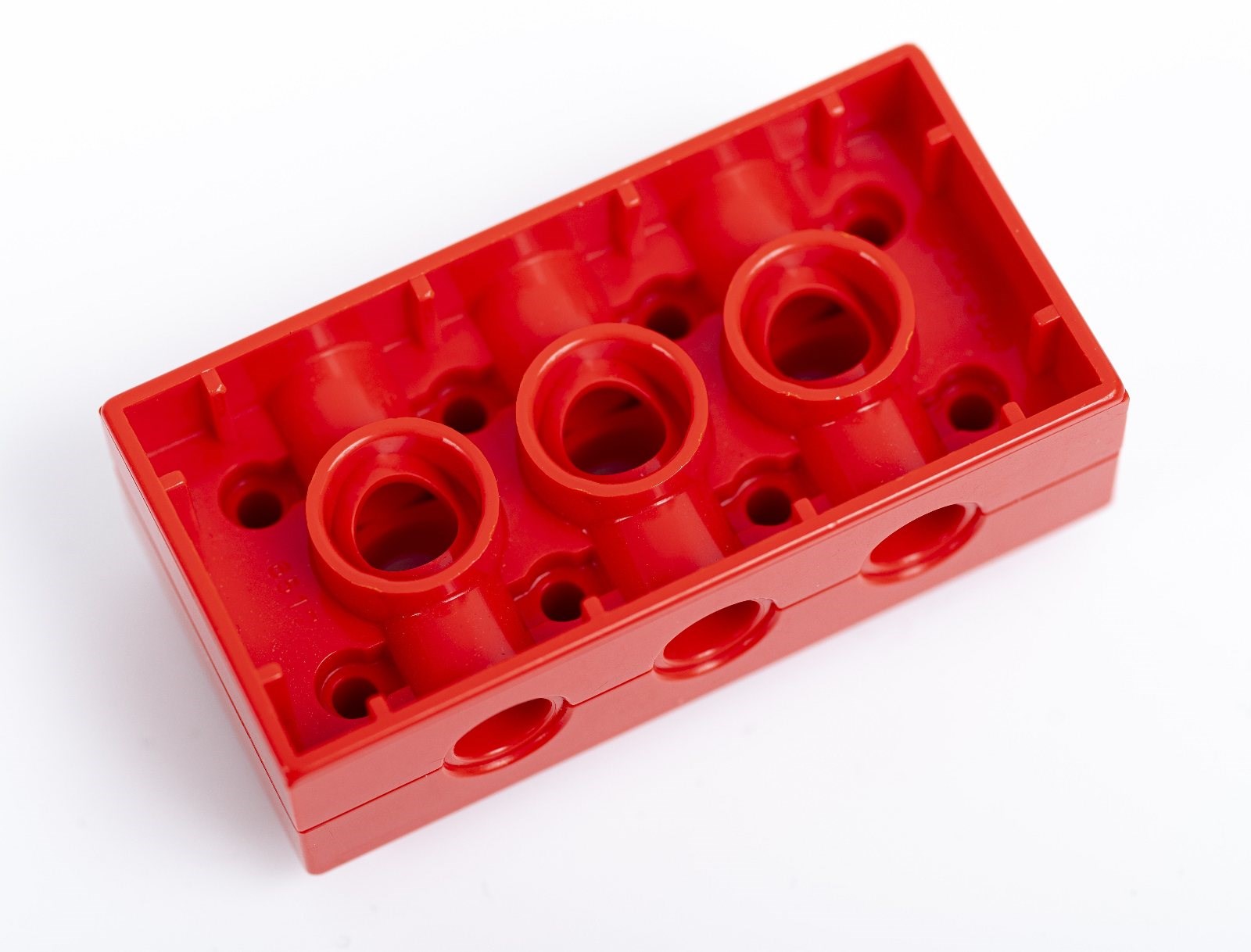
Duplo Technic Brick 2x4 with 3 Holes: produced between 1993 and 2015 as piece 6517c01_DT, belongs to the DUPLO Toolo system and is distinguished by three transverse holes designed for DUPLO screws, screwdrivers, and axles. Its reinforced internal structure allows wheels, gears, and mechanisms to be attached with greater stability than standard DUPLO elements. This variant brought real mechanical principles into the preschool environment, combining tools, robust construction, and early technical learning for more than two decades.
Origin: LEGO System A/S – Billund. Manufacturer: LEGO Group.
Bb1370_JB 1964–1972
Jumbo Brick 2x4 - Samsonite Version: produced between 1964 and 1972 as piece bb1370_JB, belongs to the first system of giant bricks created for very young children before the introduction of DUPLO. The American Samsonite versions were larger and lighter, while the European version refined the design with thicker walls and greater stability. These Jumbo Bricks represent the direct bridge between the earliest experiments with large-scale bricks and the creation of DUPLO in 1969, marking a key stage in the transition from classic LEGO to preschool play.
Origin: Samsonite (USA / Canada) and LEGO System A/S (Europe). Manufacturer: Samsonite / LEGO.


If anyone is interested in learning more about the display, contributing more pieces or making a comment, please contact me on Instagram or Facebook.
And finally, I would like to mention that the third and next article I will show will focus on one of the bricks featured in this article. Let’s see if anyone can guess which one it is…??
69 likes
13 comments on this article
Very nice article. The images for the Modulex variants are swapped.
X456C01_LB seemed quite astonishing at the time. Lego with lights! What was this electrickery? I was a lot more excited by this at the time than 'Smart Bricks' now! (Although being only 4 might have had something to do with it.)
redbrick redbrick redbrick redbrick redbrick redbrick redbrick redbrick redbrick redbrick redbrick redbrick redbrick redbrick redbrick
(Peddles his tricycledown the hall)
@yellowcastle said:
"redbrick redbrick redbrick redbrick redbrick redbrick redbrick redbrick redbrick redbrick redbrick redbrick redbrick redbrick redbrick
(Peddles his tricycledown the hall)"
All work and no play makes Jack a dull boy...
I had always understood the slots were used for cardboard inserts, like background scenery, or for windows and doors where no functional elements may have existed at that time. This is the first I've heard they were inteded for mold release and clutch. The placement of the slots on the long sides certainly seems to support the cardboard theory, as they would allow you to keep the slots stacked vertically when interlocking the bricks, though that may have been a repurposing rather than the original intent.
And the Duplo brick is twice the scale, not twice the size. If the ratio of height to width/length remains consistent with LEGO bricks, it would be eight times the size (excluding studs). Twice the length, twice the width, and twice the height.
I loved the previous article in this series and am looking forward to reading this one, good stuff!
Thanks for another great article!
I think the description for BSLOT04CL/R_OL 1956 could do with some text from the description of BHOL04_WØBT 1956–1957. The former also has "the LEGO logo engraved on the studs" and also appears to have "eight visible holes on the base" (as opposed to "four functional interior holes", unless that refers to something else) going by the photos.
I couldn't spot the 'wheel brick' in the previous article, but that might also be because the 7049A/B_WH 1963–1996 prototype doesn't have the holes on the side, nor the recognisable underside that the full assembly has. I wasn't familiar with the 'steering brick' 800_GA 1967–1977, so I went to Bricklink to gaze at some sets that included them. I'm the end I had to look up some instructions to figure out how they work. Quite interesting. I can imagine that the slim pin of part 805 Vehicle, Base 4 x 16 for Steering Gear was likely to break off after time.
It would also be interesting to see some more details about the development of the Duplo brick. The ones I remember are probably precursor to the ones shown here.
This is a really good resource. Over the years I've encountered many of the 60s-now bricks in one shape or another. The 3001OLD_WBT in particular I've encountered a few times in bulk lots. They were often warped and barely had clutch power due to this. At the time I thought they were Samsonite bricks, but I later learned that that wasn't the case (it would have been strange anyway because Samsonite was doing its thing on the other side of the atlantic).
I had no idea that there were so many variations! I knew about some (Minitalia X-bottomed bricks (although I didn't know about the Minitalia tube-bottomed bricks), Modulex bricks starting with Lego logos then switching to an "M," among others), but I especially hadn't realized that the basic brick had gone through so many changes between the original and the introduction of the tubed underside.
@sjr60 said:
"X456C01_LB seemed quite astonishing at the time. Lego with lights! What was this electrickery? I was a lot more excited by this at the time than 'Smart Bricks' now! (Although being only 4 might have had something to do with it.) "
Yeah, my father has noted that he thought he had something when his bricks lit up. I've noted in reply that I thought I did too, although mine also made noise. (I had to share a bucket of bricks with my brother for some time, but one of the first sets I had to myself was 6780.)
@PurpleDave said:"I had always understood the slots were used for cardboard inserts, like background scenery, or for windows and doors where no functional elements may have existed at that time. This is the first I've heard they were inteded for mold release and clutch."
Whatever they were designed for, Lego was making use of them for play purposes from the start, as if you look at 700-12's inventory on Bricklink, there are a lot of door and widow panels intended to slot into them.
Great information - thanks!
I’m curious, though, why the Samsonite brick’s end-date is listed as 1988 when Lego terminated their license in 1972.
@TheOtherMike said:
"I had no idea that there were so many variations!"
I feel like there have to be even more, though. That span from 1978-2026 can't have all been one single design the whole time. Molds wear out a lot faster than that, and it's easy to slip in minor changes when that happens. Of particular note, the brick shown in the image only has one stud with a gate mark, but I feel like I've seen them before with two. The small vertical ribs on the inside are another aspect where I believe I've seen more variation. But it's really only the older variations that serious collectors have gone after, so i don't think anyone has done a really comprehensive job of cataloging all the minor tweaks that 3001 has received over the years. These days, they're actively discouraging it, by merging the two minifig seats into one listing, plus I just don't think anyone has bothered to pay attention.
" @PurpleDave said:"I had always understood the slots were used for cardboard inserts, like background scenery, or for windows and doors where no functional elements may have existed at that time. This is the first I've heard they were inteded for mold release and clutch."
Whatever they were designed for, Lego was making use of them for play purposes from the start, as if you look at 700-12's inventory on Bricklink, there are a lot of door and widow panels intended to slot into them."
The end slots might have been for mold release and/or clutch, but the side slots don't seem like they'd help much (especially vs double end slots), and their placement makes a lot more sense for cardboard inserts.
No Quattro brick?
@PDelahanty said:
"No Quattro brick?"
No, no Audi parts. But seriously, that *is* a bit of an oversight (although making space for that big of an element might have proved troublesome), and the line was spelled "Quatro," with one "t."